
The brief for this exercise was to take three or four exposures of the same scene, without changing anything on the camera and keeping the framing the same.
Following that the histogram for each photo was to be examined and the small variations in the histogram noted.
The sequence, along with time info from the camera’s shooting data was to be included in the learning log.
The sequences below were taken on a wet and windy evening between 18:03 and 18:04. Each image in the sequences were taken several seconds apart.
I used a Nikon D7200 with 24mm prime lens mounted on a tripod for this exercise.
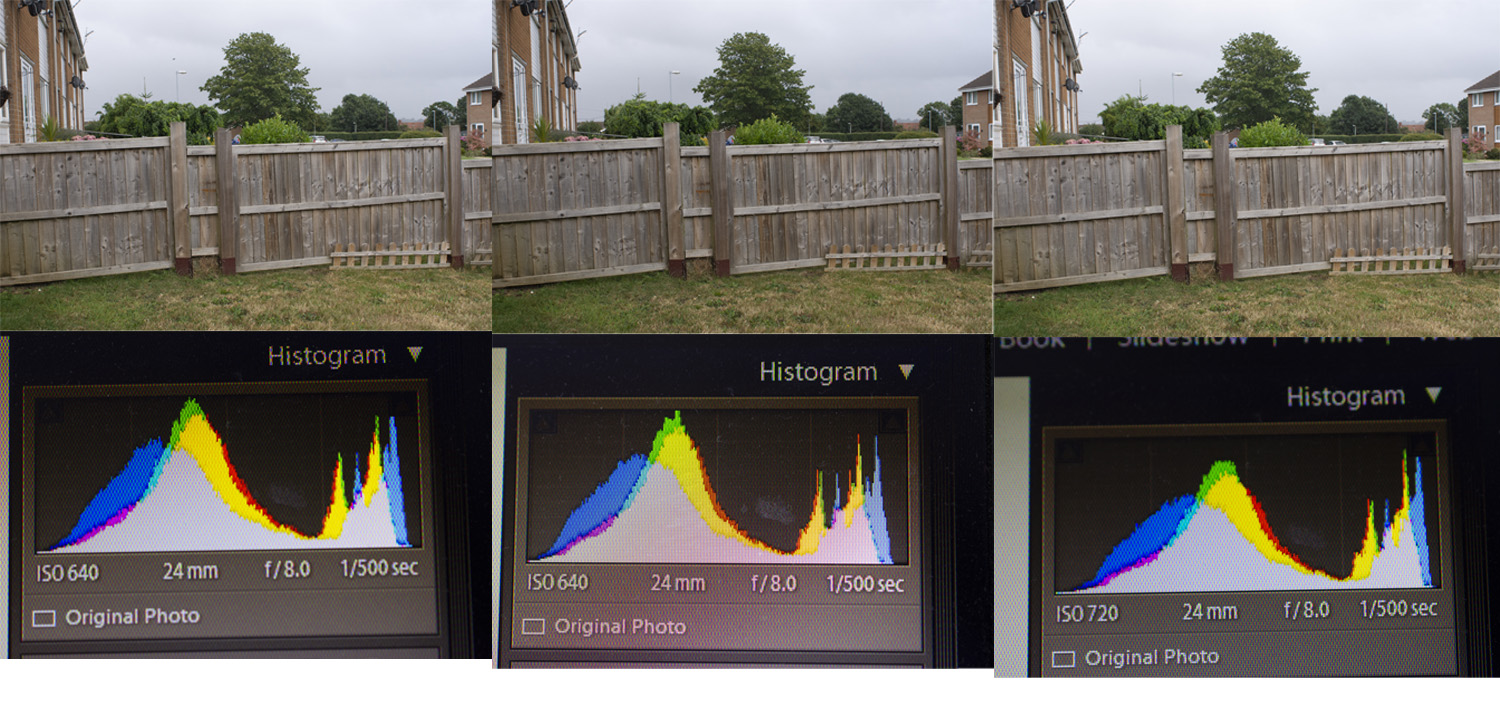
The above images appear very much the same to the naked eye but the camera histogram shows that they are different. The first to are very similar but it is possible to see some variation between the two. The third histogram shows a marked different as the main peak is lower than the first two.
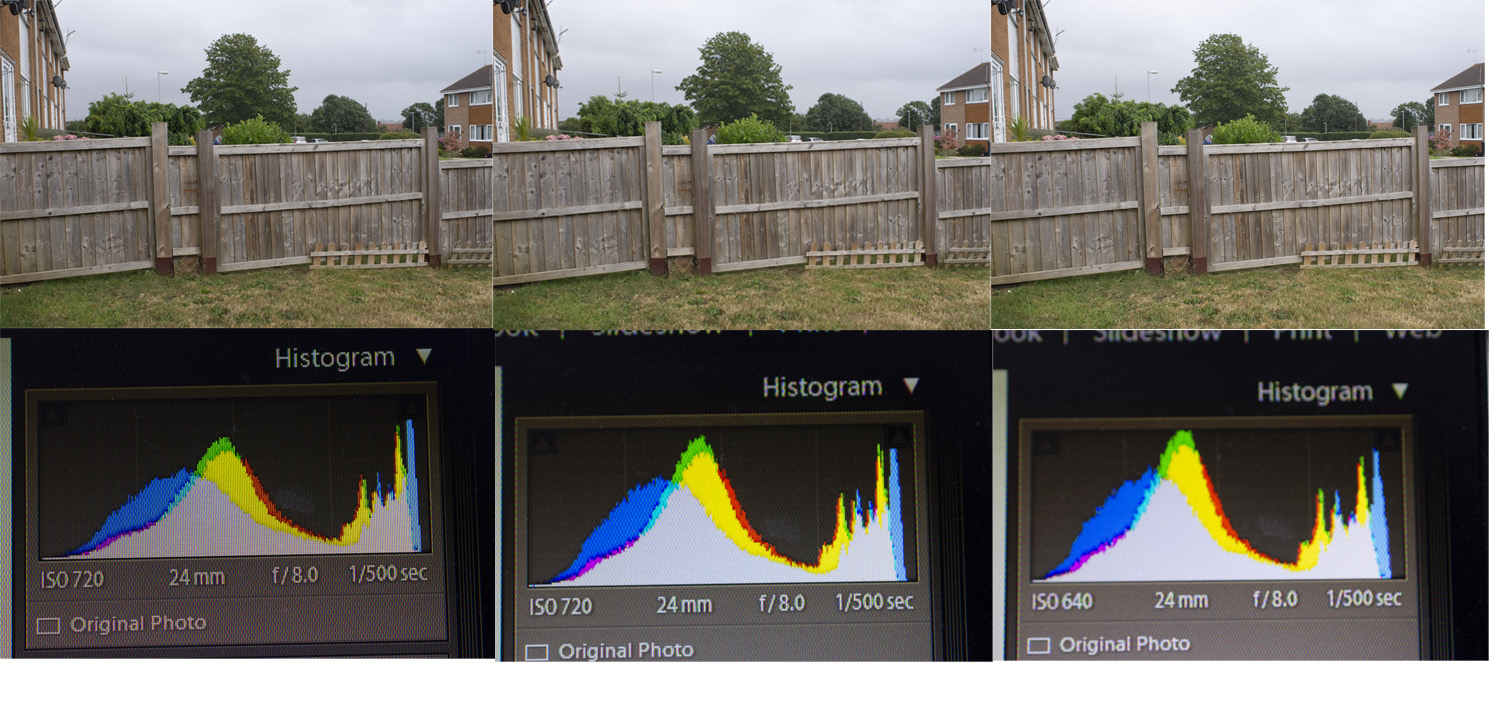
In the sequence above it is easy to see the differences between the images as the fence appears darker in the first image and bcomes a lot brighter by the third. The peak on the first histogram is smaller than the other two, but as can be seen from the ISO value the camera did adjust between capturing the two images.
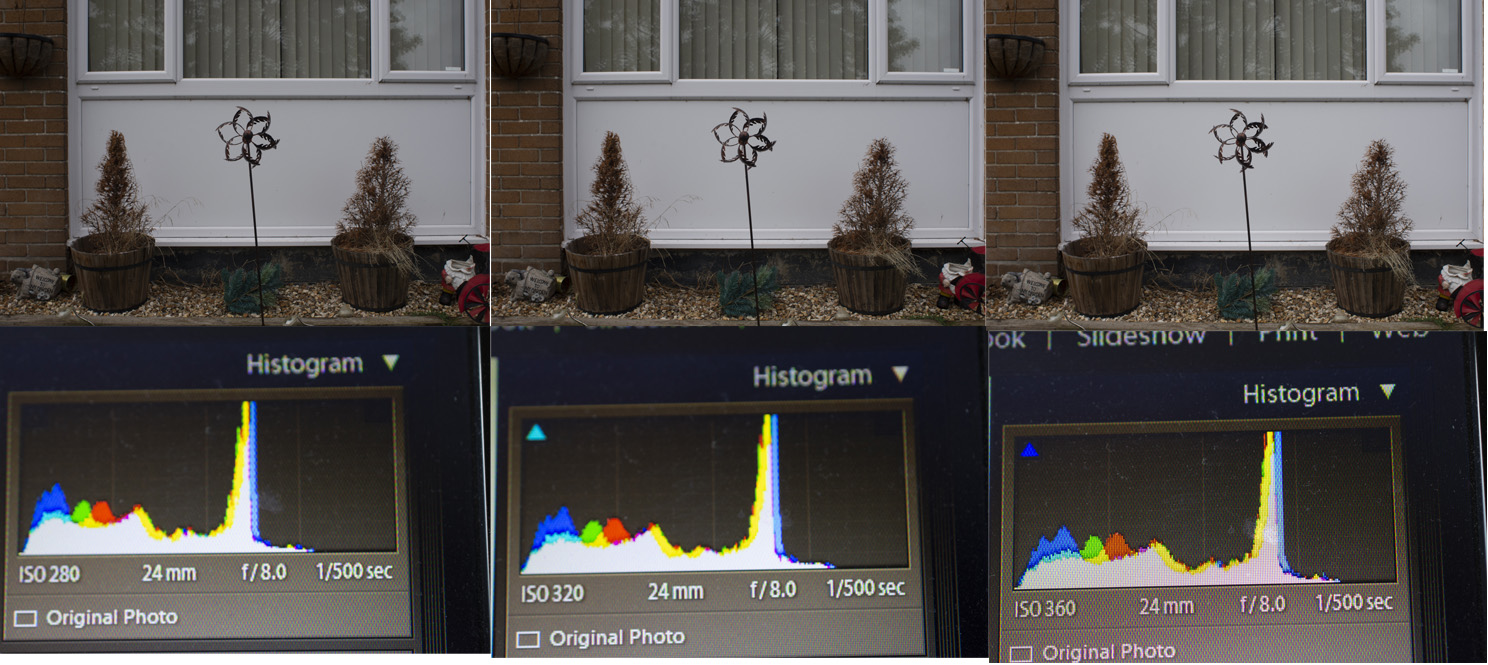
The above set of images show a marked difference as shown by the blue triangles in the top left hand corner of the second and third histograms indicating that these particular colours are below the bottom of the scale shown. Additionally the ISO (camera was set to Auto mode and so was selecting the ISO used itself) increased across the 3 images.
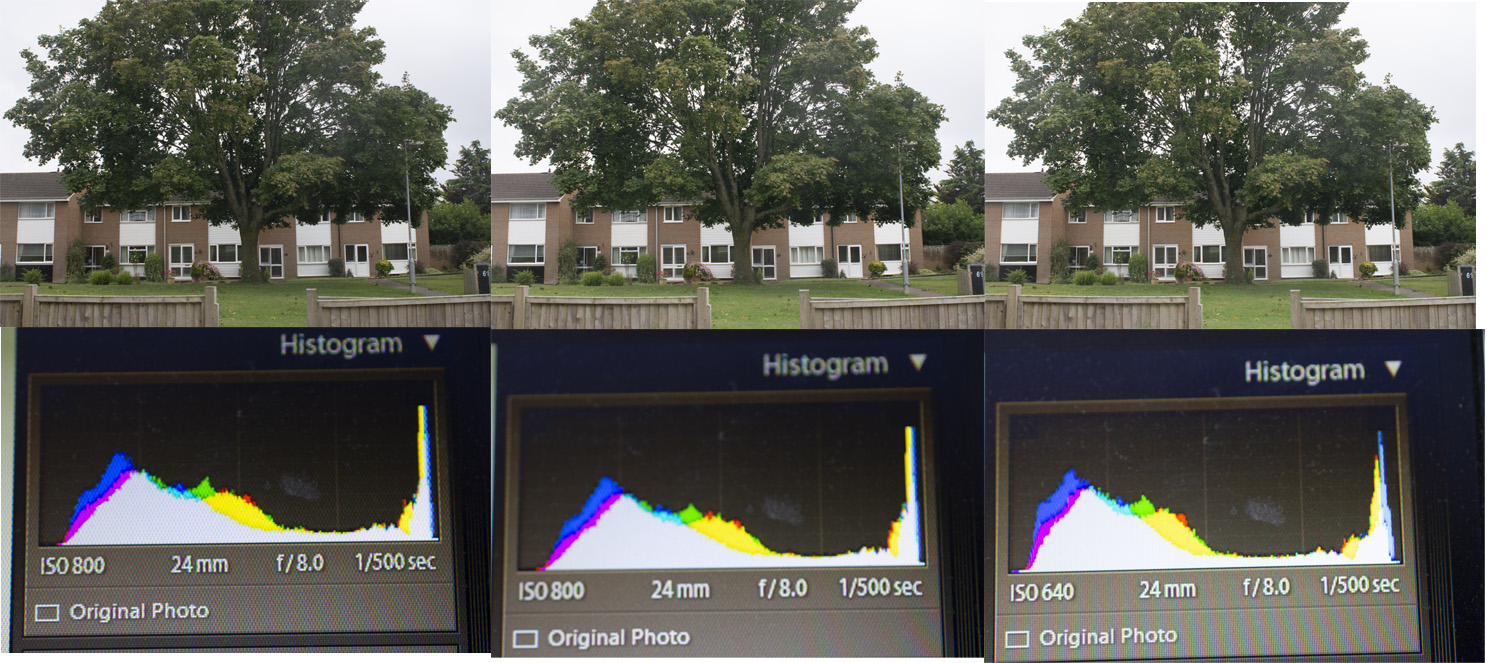
Again the camera adjusted the ISO when capturing the images. The histograms appear very similar but it is possible to make out differences. In the thuird image for instance the main peak is compacted compared the the other two.
From the histograms and other camera information it can be seen that even when photos appear very similar there are subtle differences due to movement and change in light. Changes that the human eye would find difficult to detect.
 Jenna Powell - Expressing Your Vision