
On a rainy day in November I went to the National Museum in Wales with my wife, sister and twin neices. The museum were exhibiting Dippy the Dinosaur as part of it’s nationwide tour. We had seen Dippy before in Dorchester but I knew that the twins would love to see it again. On top of that we had the rest of the museum to explore.
Personally I had an ulterior motive which was to see some of the photography exhibitions that were on at the time, in particular the Becher’s exhibition.
I’ve pulled out what, for me, were some of the key parts of the day.
Paintings
After we’d visited the ground floor of the museum and having a break for refreshments we started on the first floor. The museum is quite large and I would have needed a couple more hours to do it justice. However, we did manage to see quite a bit.
Portrait of a Girl – Antonio Mancini (1852-1930)
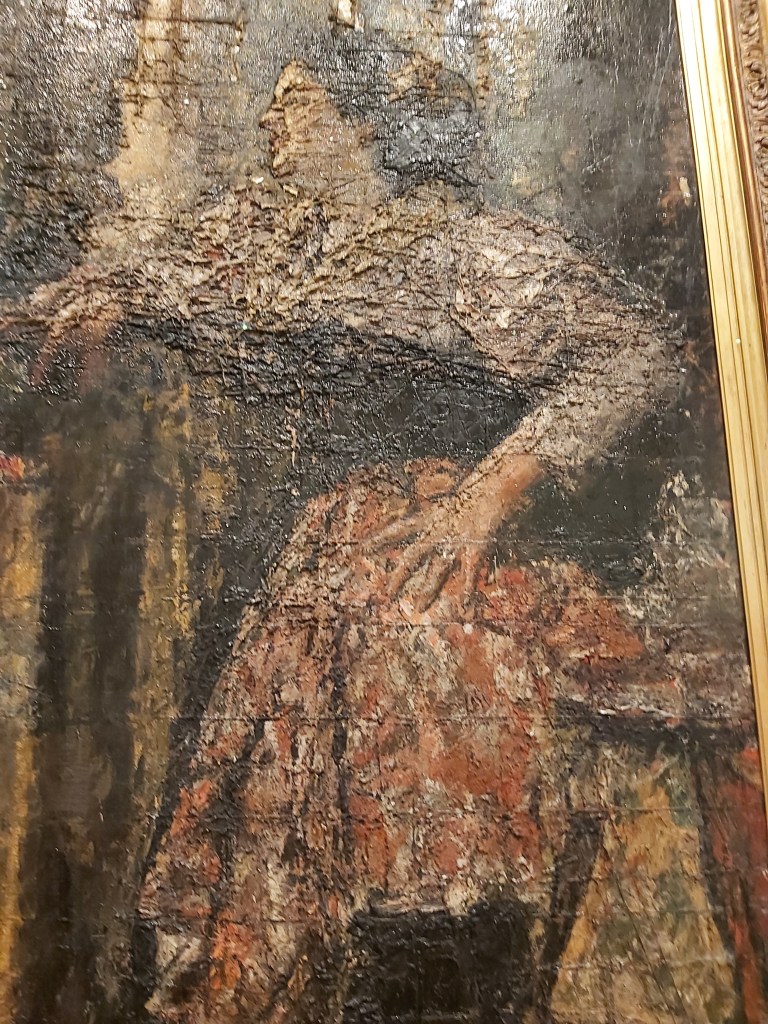
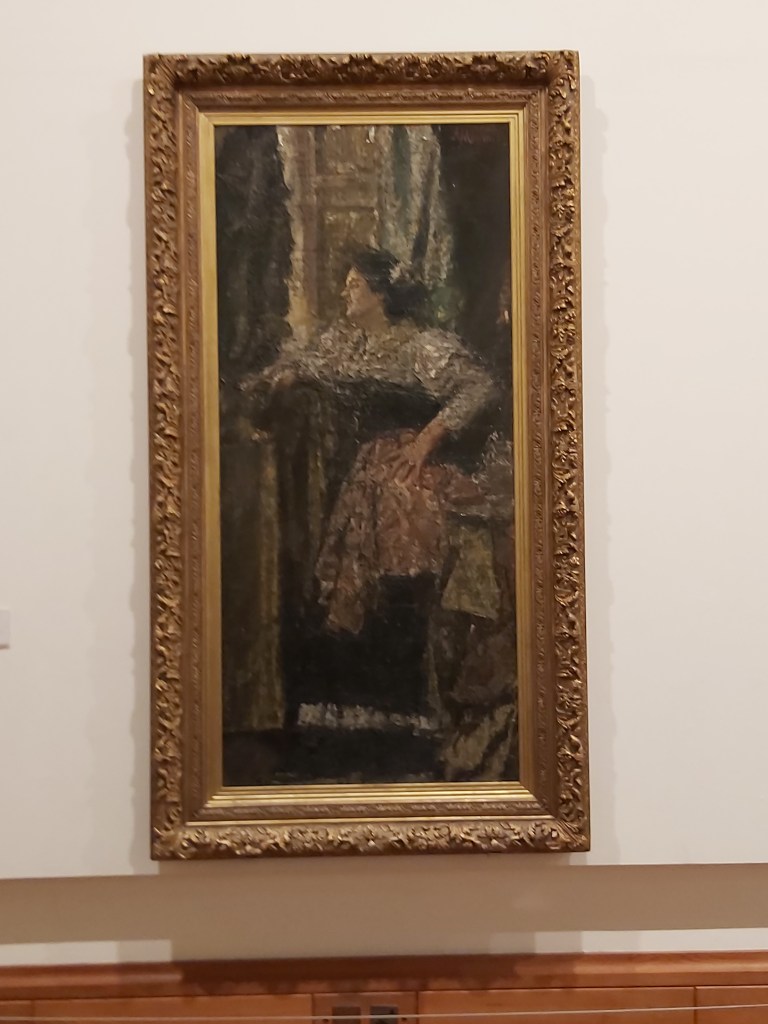
I found this an interesting painting. From a distance it is easy to make out what the subject matter is. However, as you move in closer to the painting it becomes much harder to make out details. Painfully so I found. This is definitely a painting that is intended to be seen from afar, maybe symbolising that girl is to be seen from a distance and not approached.
The other interesting feature of this painting that you can see clearly in the image above is the grid lines. Mancini’s technique was to use a grid when painting. This grid matched one that was placed in front of the person that was sitting for the painting. As a result the remains of the grid lines can be seen when you look closely at the painting.
Kashan – Bridget Riley (1931-)
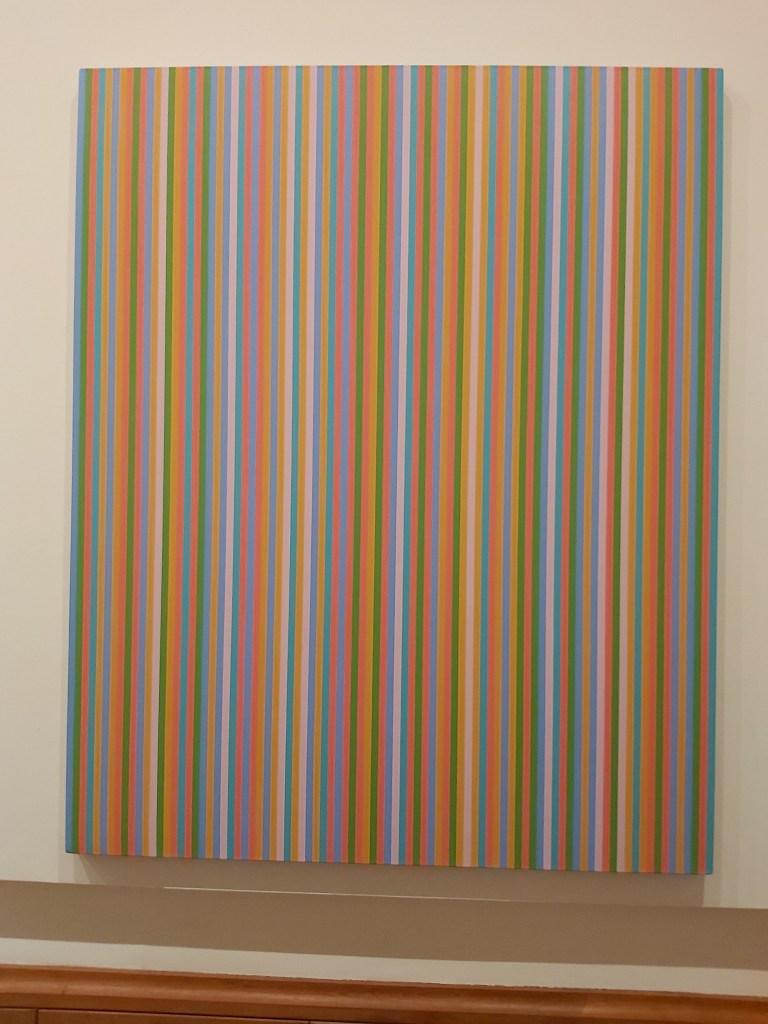
Kashan is an artwork that reminds me of the seeing eye pictures that were popular several years ago. If you looked at the picture in a certain way you saw an image form.
With Kashan I found that depending on where I stood in relation to the artwork, the lines had a rolling, moving effect. Something quite fascinating from something that is, effectively, a series of vertical lines.
Parr in Wales
Martin Parr’s exhibition entitled Parr in Wales brought back memories of childhood memories of holidays in Barry Island and Porthcawl. Hundreds of people sitting and lying on sandy beaches enjoying the summer son during the factory fortnight holidays.
The exhibition features a number of photographs that take Wales and it’s people and locations as it’s theme.
There is a book Martin Parr in Wales that ties in with the exhibition.
The exhibition contains a number of images, of which I just want to look at a couple.
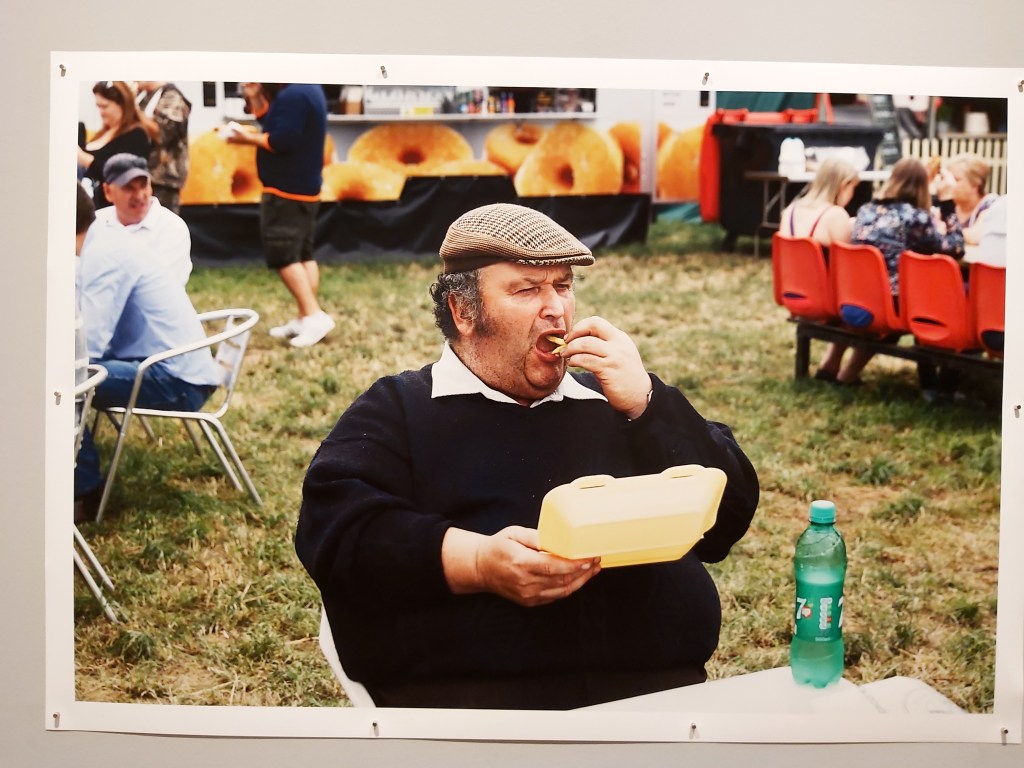
My reason for highlighting this image is that it was one that you could not ignore. Positioned across the room from the entrance to the exhibition, this had to be the largest photograph on display in the whole space. It was also an image that kept bringing your attention back to it as you wandered through the exhibition space.

A second photograph that I wanted to look at briefly is of three miners showering after a shift in the Tower Colliery mine. The reason for chosing this image is that it is quite explicit with regards to it’s content. It is also quite an intimate image, showing a group of miners in what would normally be a private moment. There is no sense of embarassment from any of the participants with regards to being photographed. If anything they are ignoring the camer and photographer and getting on with a task that they likely do at the end of every shift.
Although I do find the direction of the gaze of the left most figure interesting, which I think adds a new dimension to my viewing of the image.
The main reason that I selected this image is, that with two 10 year old girls in tow, there was a “lets move on shall we” moment when we saw it for the first time. Something that didn’t quite happen as the twins were drawn back to it two or three times.
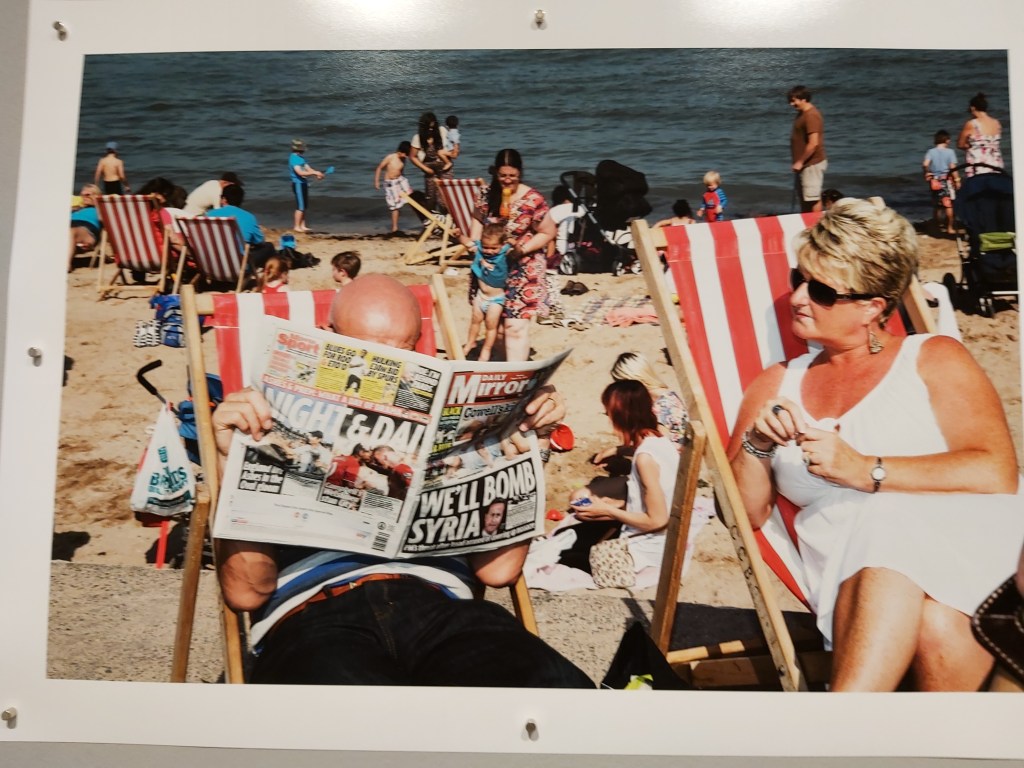
The next image I want to look at is this one from 2013. The image is a reflection of what was happening in the world at the time. In the UK, people were enjoying their holidays, while thousands of miles away in the Middle East, a country was being bombed and people being killed. Six years on, as we face the possibility of a USA/Iran conflict, there is still conflict in Syria and ISIS is regrouping as an organisation.
An image from 2013, may be one that we see again in 2020 but most definitely in years to come if something is not done to end the conflicts in the Middle East.
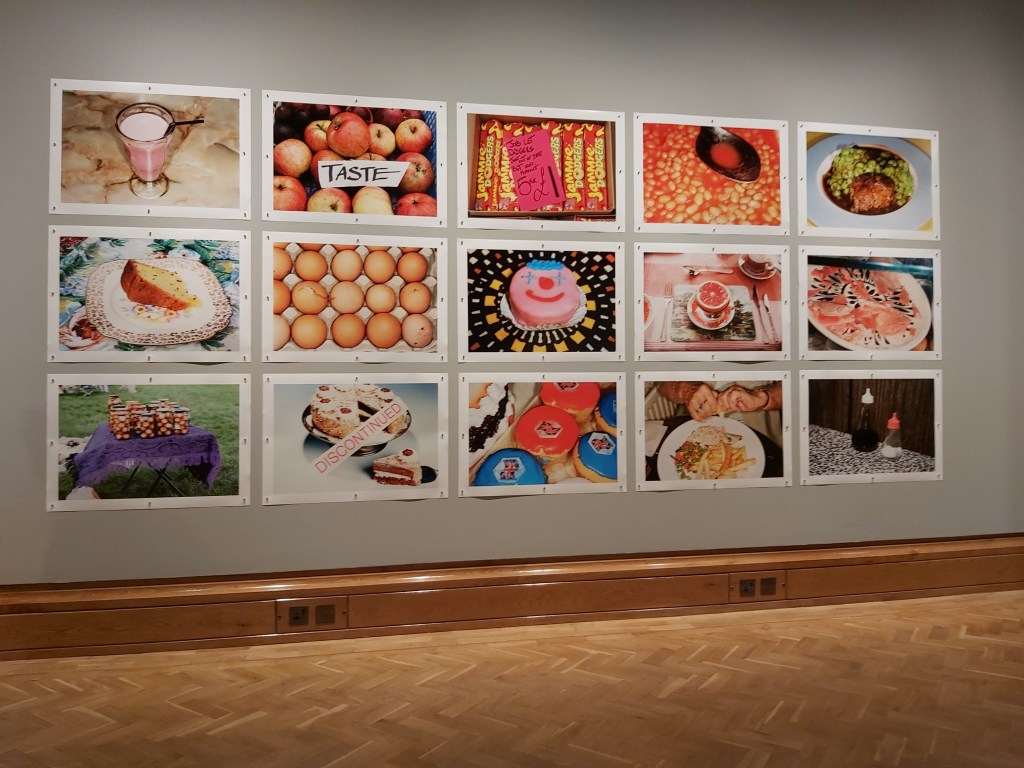
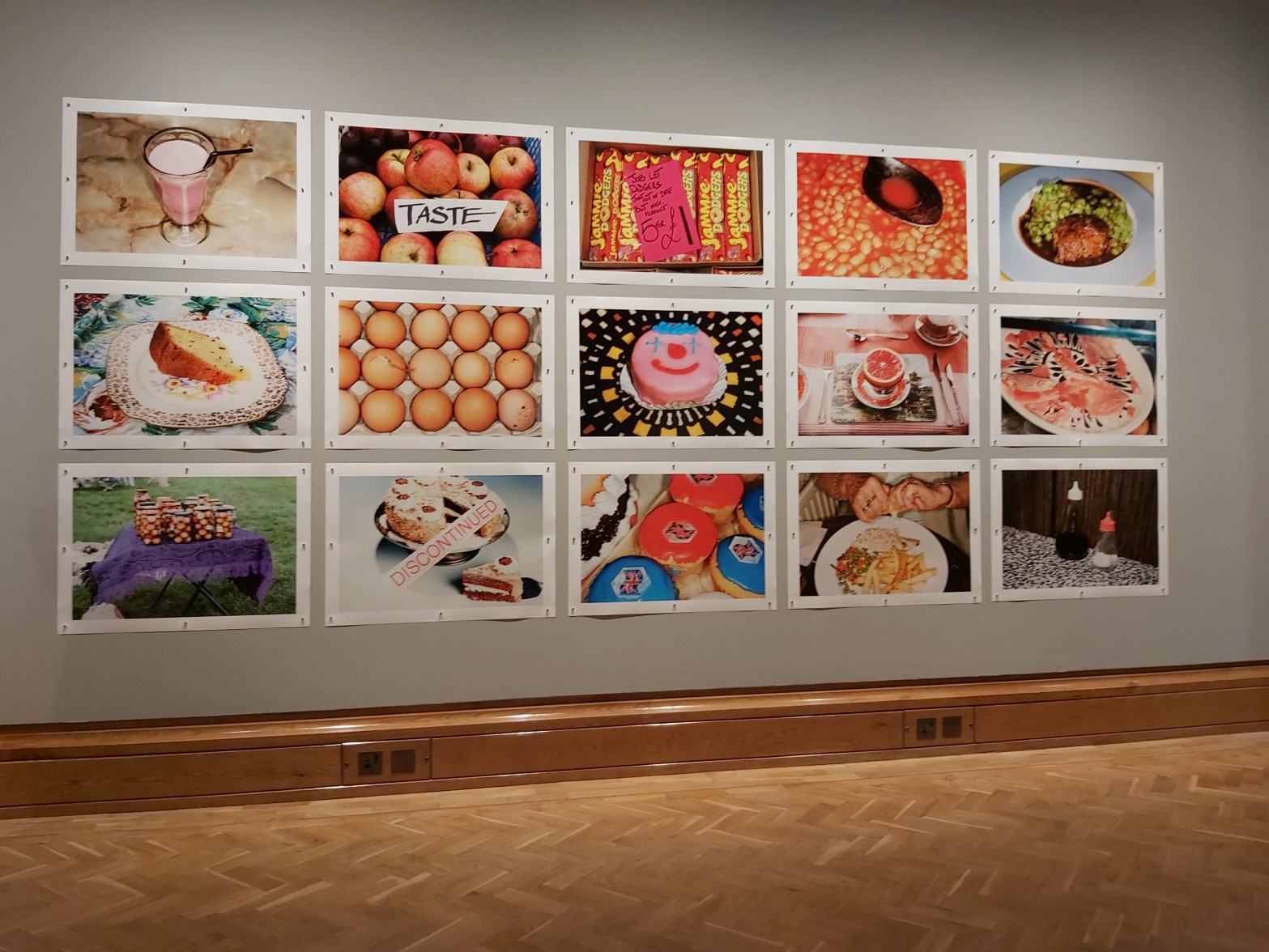
The last thing I want to touch upon with regards to Martin Parr’s exhibition is the series of food photographs that adorned one of the walls. Each one was of a perfectly, ordinary item of food that can be found in Wales, as well as anywhere else in the UK. The thing that I found interesting about them was that they were taken over a period of time.
Looking at the photos I could not help but wonder if Parr set out to produce a series over a number of years or just found that he had gathered enough images to make a series.
If the latter then it goes to highlight how photographs that you take at one point in time, but decide not to use, may come handy at some future point.
August Sanders
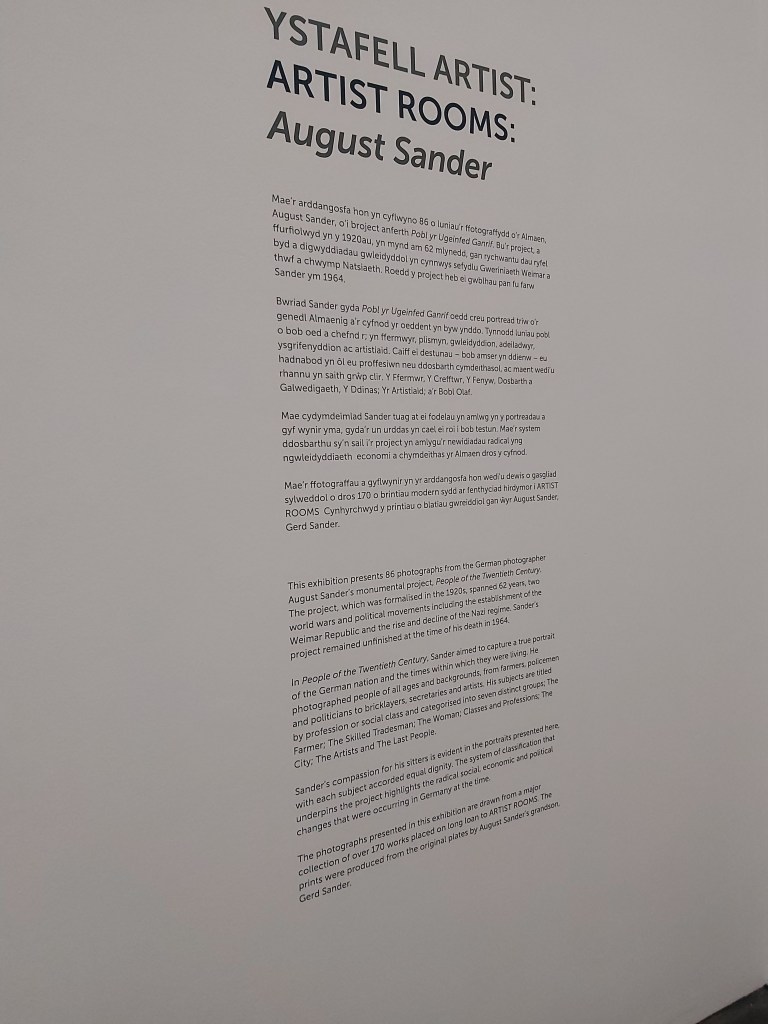
The section PPortfolio of Archetypes within the exhibition was reminiscent of the racial by Francis Galton Illustrations of Composite Portraiture, the Jewish Type and also Alphonse Bertillon’s Synoptic Table of the Forms of the Nose. See Hacking (2014) pages 140 and 146 respectively. All of the photographs were taken in this section of the exhibition were taken pre-World War 1 but weren’t systematically arranged until the 1920s.

© Die Photographische Sammlung/SK Stiftung Kultur – August Sander Archiv, Cologne; DACS, London, 2019.
https://www.tate.org.uk/art/artworks/sander-engineer-and-advertising-manager-al00043
The photograph above was one that stuck out particularly for me. My background is in software development and so I am familiar with the engineering and advertising disciplines. Although companies are always happy when their staff are looking out for opportunities to sell existing products or develop new ones, the roles of engineering manager and advertising (business development) manager are performed by separate individuals. Today, both these roles, are very different, with somewhat different skillsets. It is also a reflection of the way the world has changed since the 1930s where businesses had smaller markets in which to sell their products compared to today’s global market place.
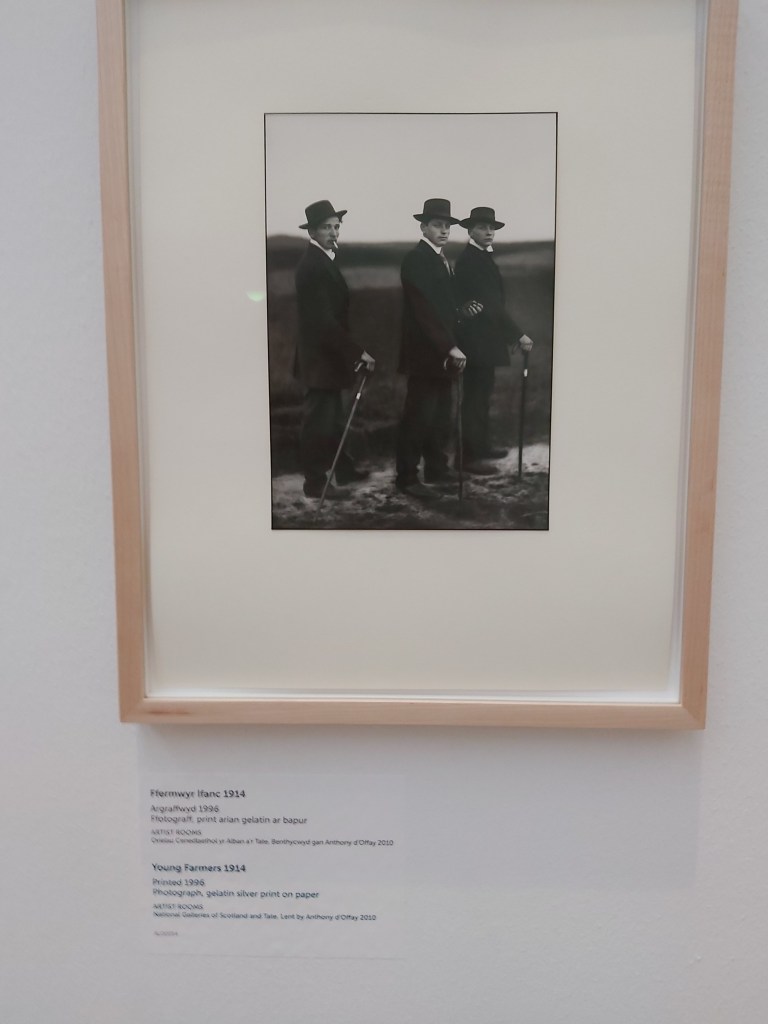
The Young Farmers portrait reminded me of photographs I have seen of young farmers from the late 20th century, going off to dances and events. The clothing may have changed but there is something timeless about this image.
The other thing about this particular image that I found myself wondering is concerning the date it was taken. 1914. World War 1 had just about to start, or had started. Did these young men, go off to fight in the war, did they stay home and farm exempted from serving their country. Did they survive the war? For all we know this may be the last record of these three young men.
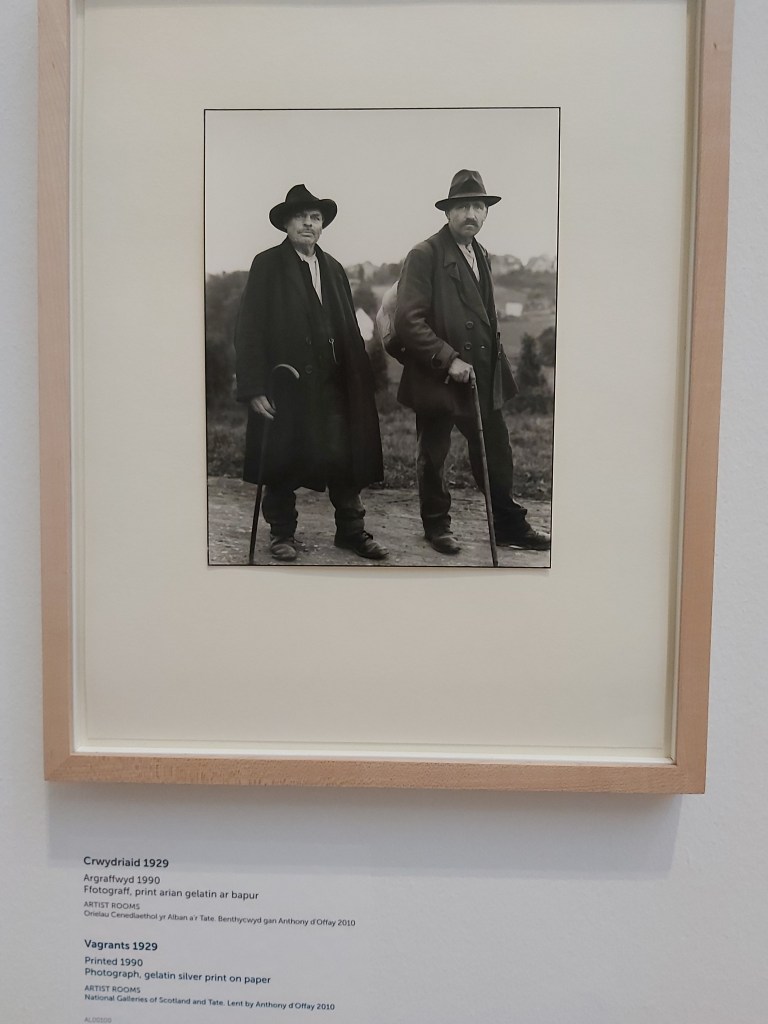
How important is the title you give an image? Very I think. Take away the title of this print and you could be looking at anyone. Two gentlemen out for a walk in the countryside, two farmers tending their fields, shepherds tending their flocks. Change the title and you change how people see an image.
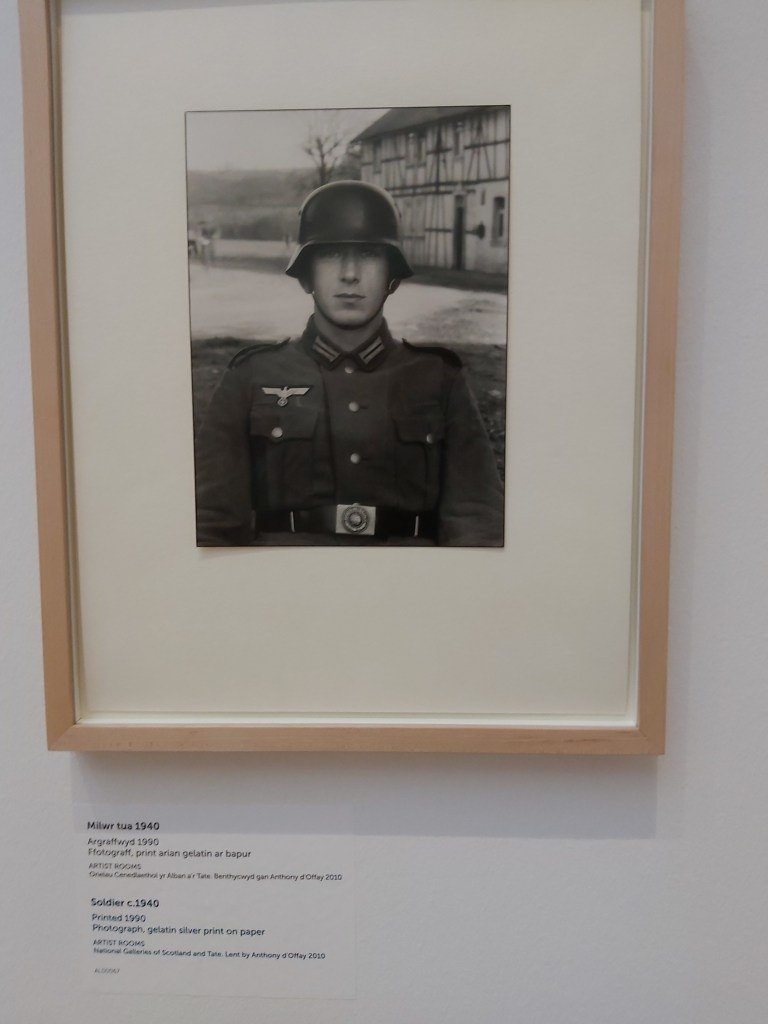
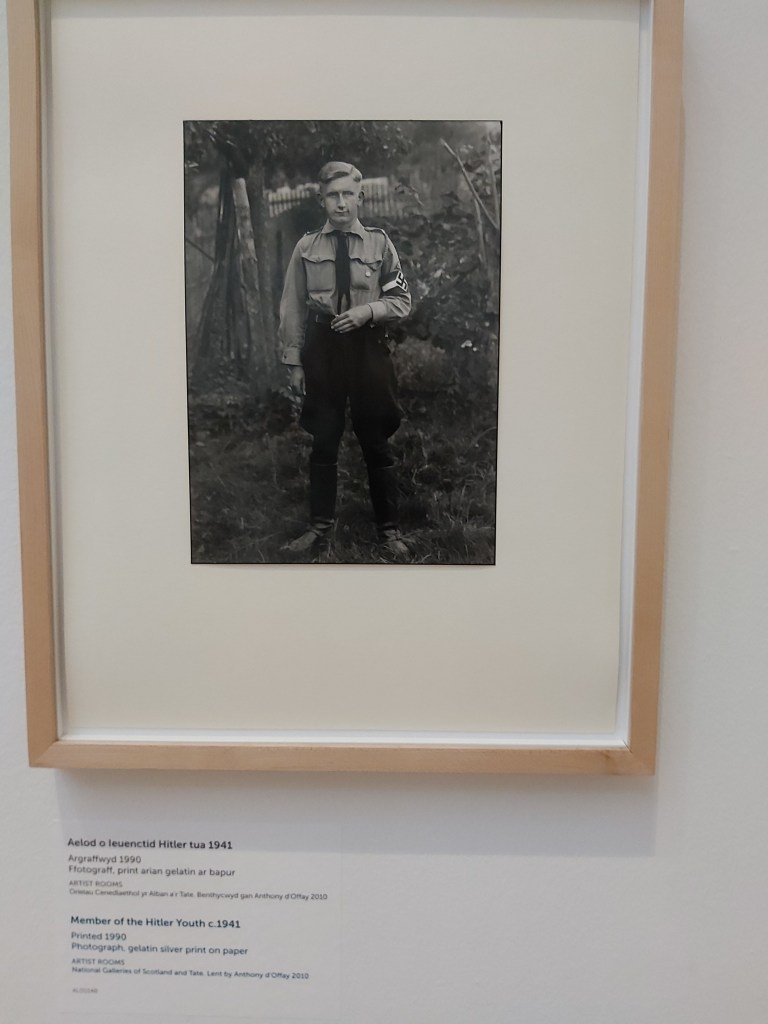
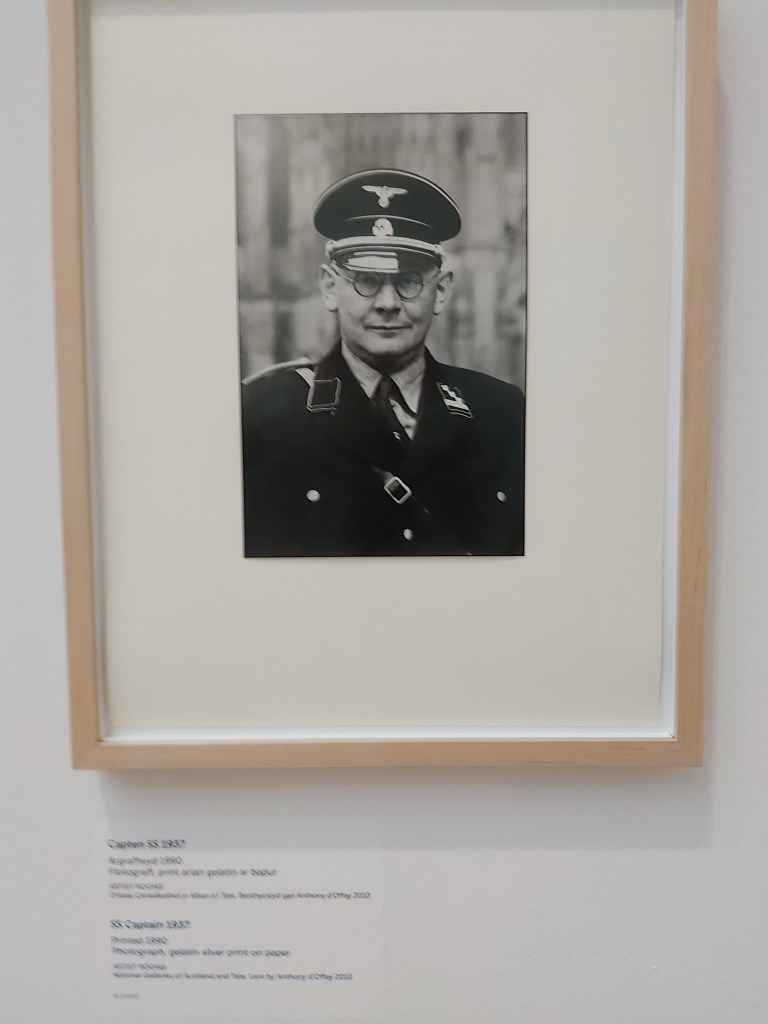
I was surprised when I saw the three images above as they don’t fit with the other images which are of ordinary people going about their lives. These portraits do, however, reflect the times that Sanders was living in and the fact that even ordinary people can do things for, their country, that we would think terrible, even horrific now.
Bernd and Hilla Becher
I don’t intend to go in to a lot of detail about the exhibition of the Becher’s work here. This was the primary reason for my wanting to visit the museum.
Bernd and Hilla Becher are reknowned for their industrial images and as assignment 1 for the course could be reworked to have an industrial architectural feel to it, I wanted to look at their work more closely. I’ll therefore be writing up that part of the exhibition separately.
References
- National Mueseum of Wales (2019) Martin Parr in Wales. 1st edn. Gomer Press.
- Juliet Hacking editor (2014) Photography: The Whole Story. London: Quintessence
 Jenna Powell - Expressing Your Vision