
Brief
Using fast shutter speeds, try to isolate a frozen moment of time in a moving subject. Depending on the available light you may have to select a high ISO to avoid visible blur in the photograph. Add a selection of shots, together with the relevant shooting data and a description of process (how you captured the images).
Water
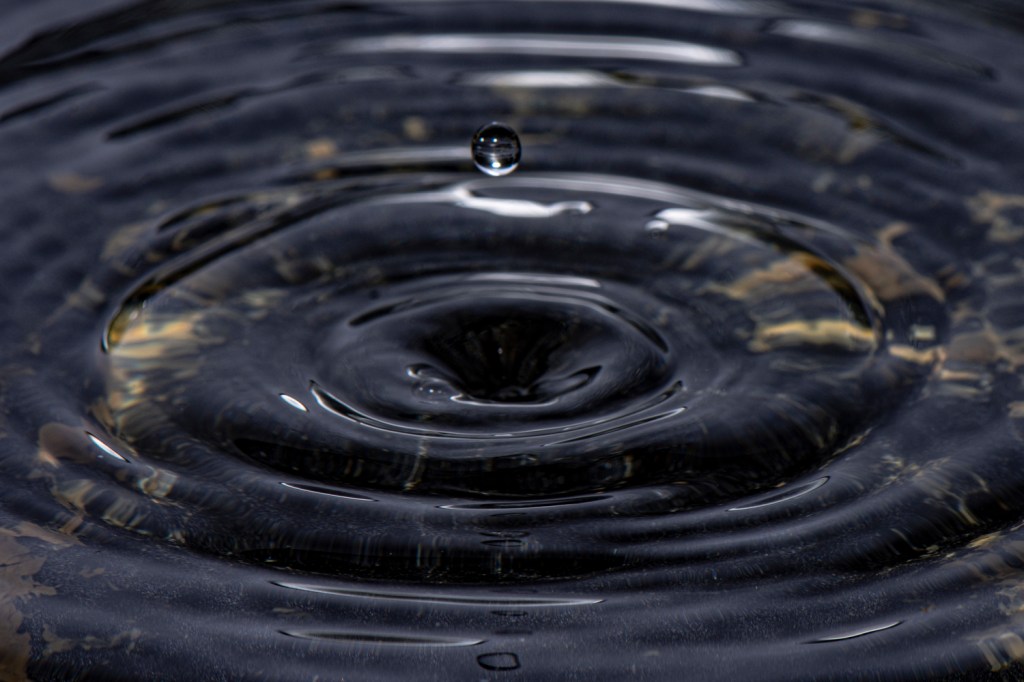
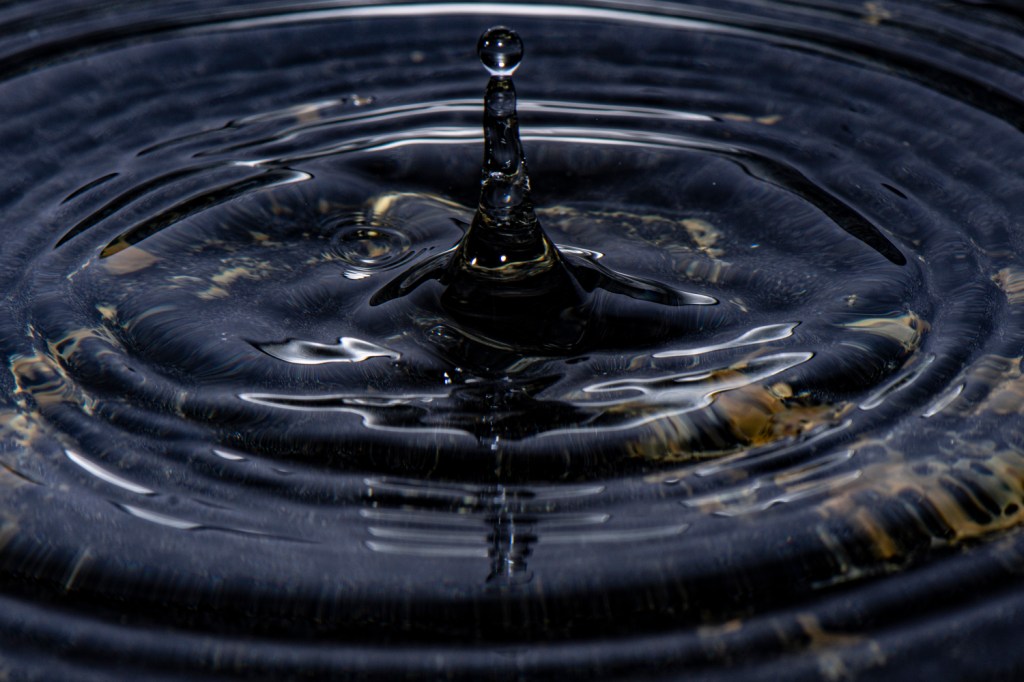
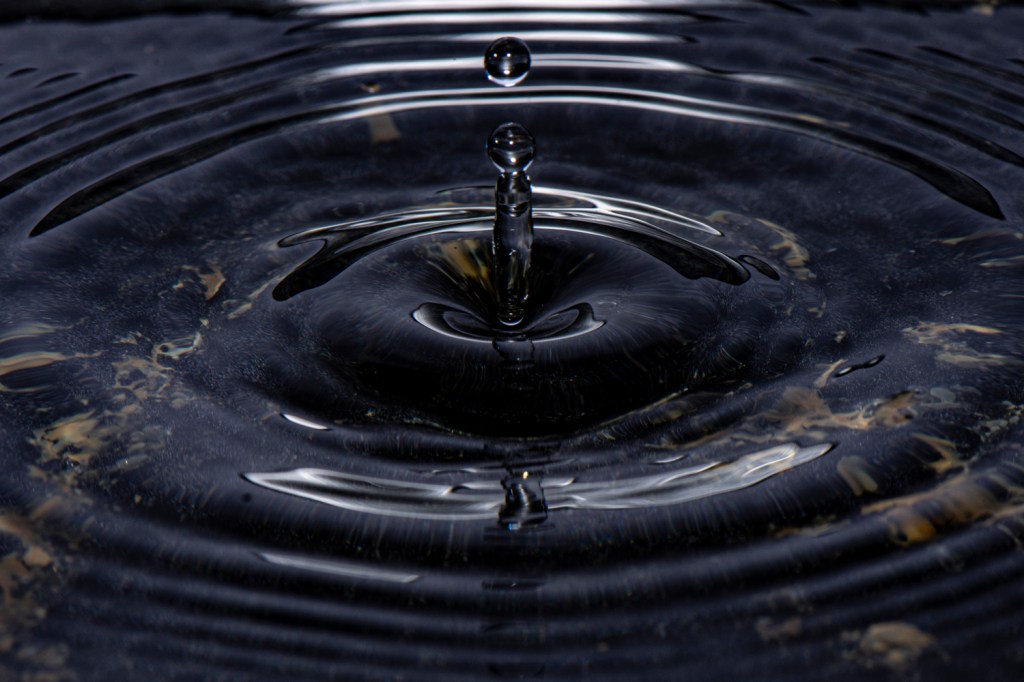
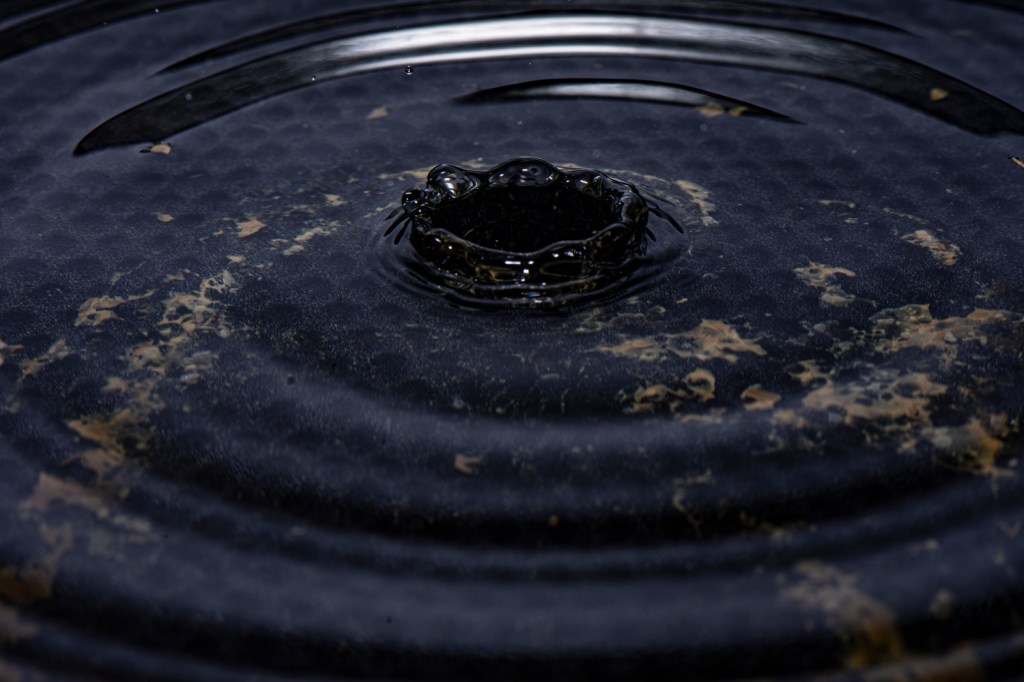
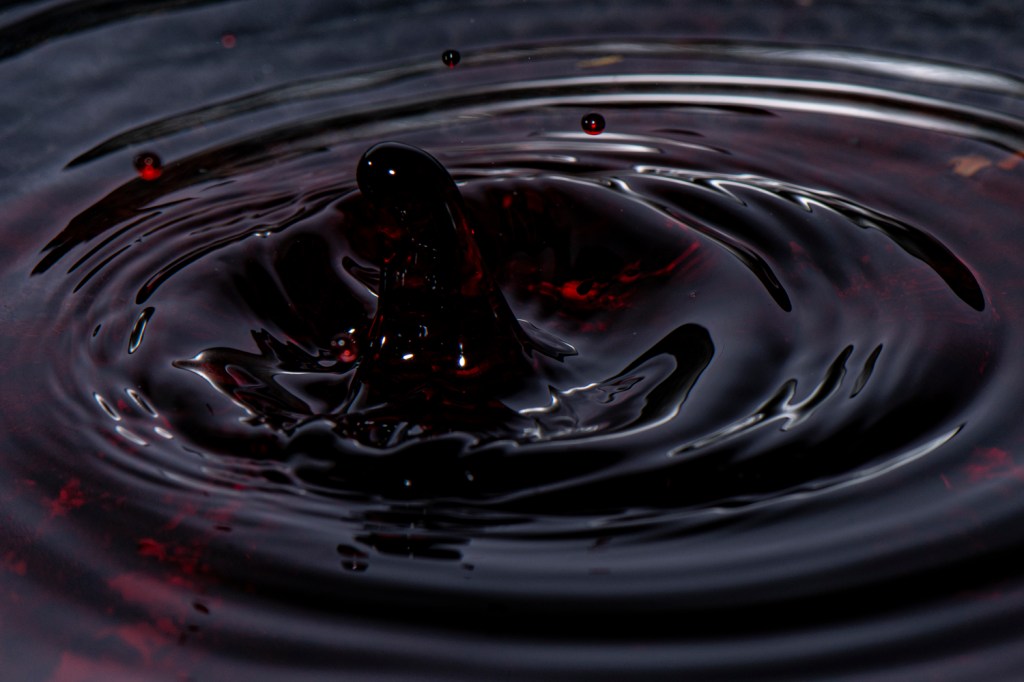
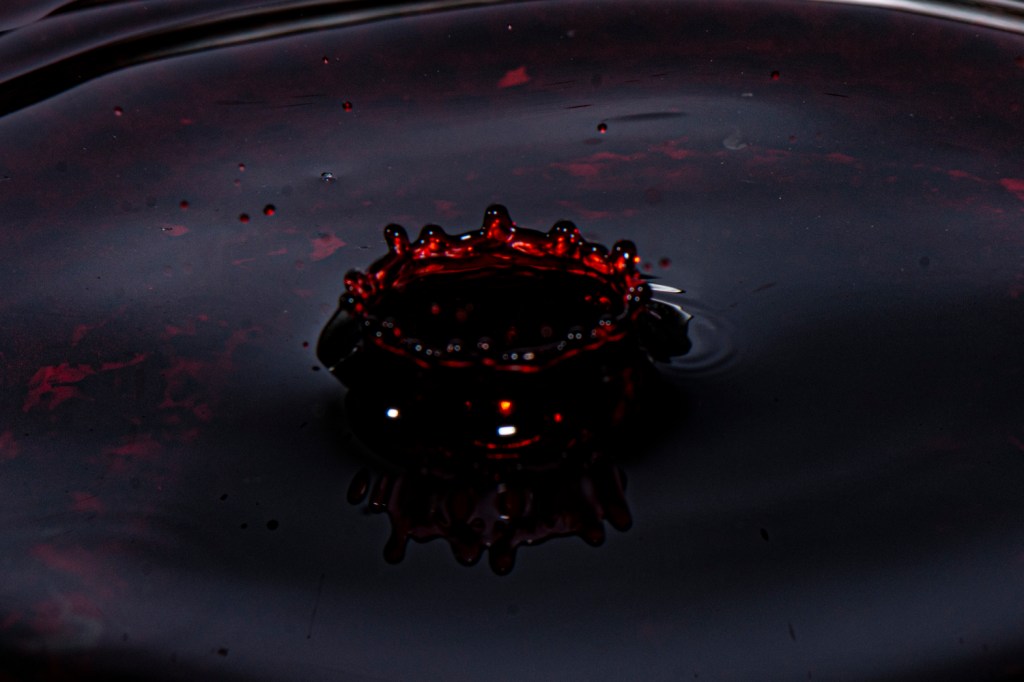
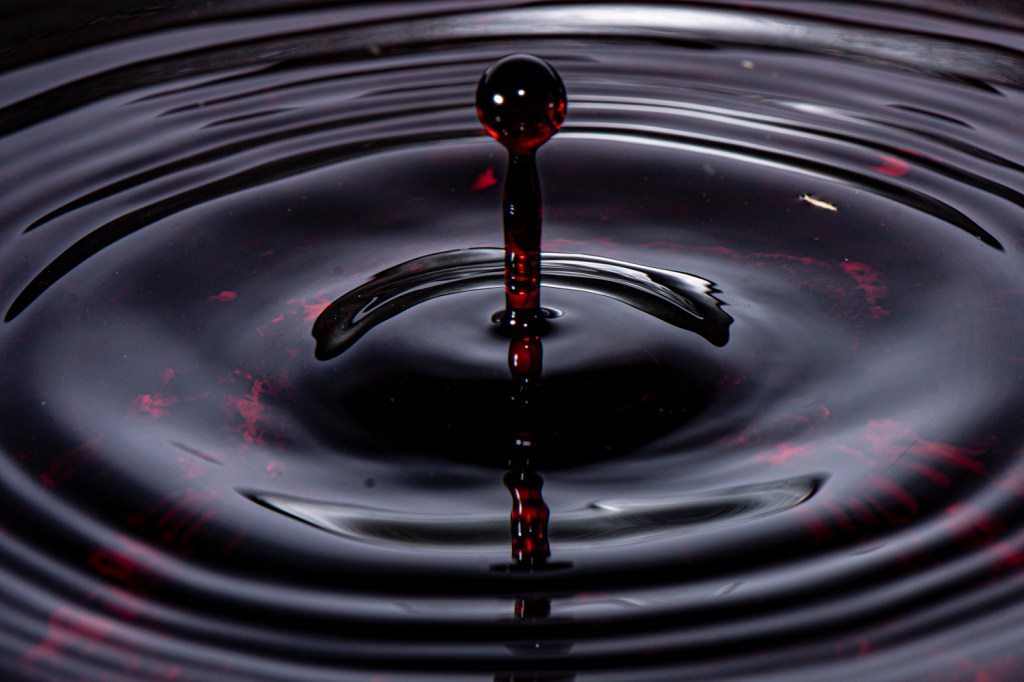
This was my first attempt at capturing droplets hitting water.
Milk
For my second attempt, I used milk rather than water.
The setup was like my first experiments. A rectangular, plastic container to hold the liquid I would be releasing droplets into, in this case milk. A turkey baster attached to the body of an enlarger which would release the droplets. The camera was set up on a tripod directly in front of the container with a flash attached via a remote trigger. A second flash was placed almost 90 degrees to the left of this with the flash aimed so that it would bounce off a piece of white card placed directly in front of the camera but behind the container.
An 85mm lens was attached to the camera and manually focussed on the area where them drops would land. Shutter speed was set to 1/250 second.
The camera was set to burst mode so that several shots would be captured each time the camera was manually triggered. As it would not be possible to guarantee the result triggering the camera manually with for a single shot, multiple shots seemed the best way to capture something.
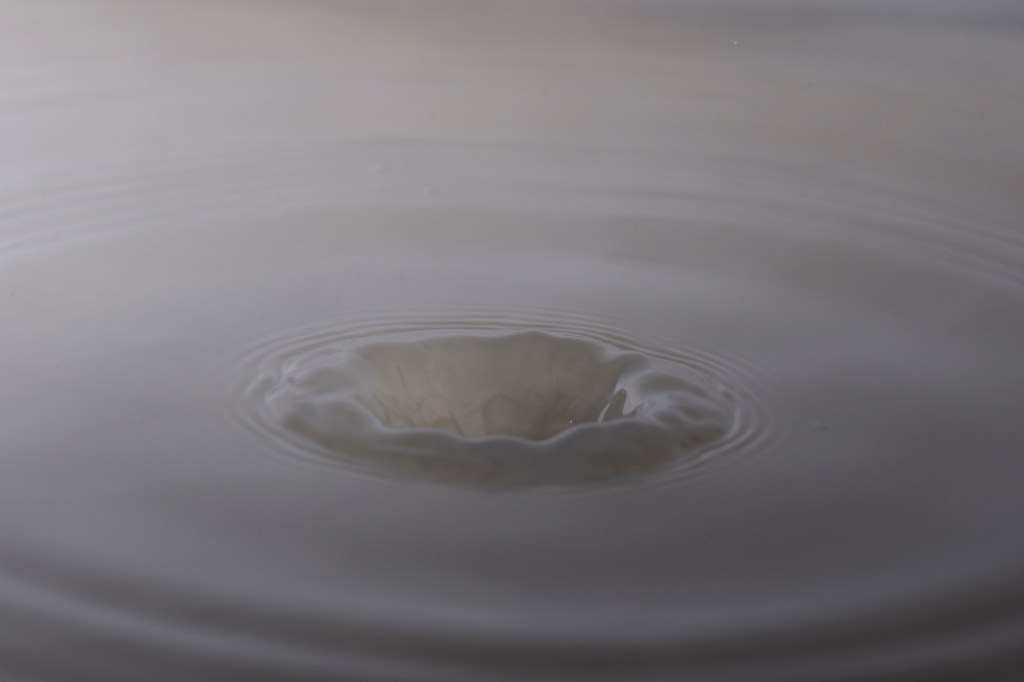
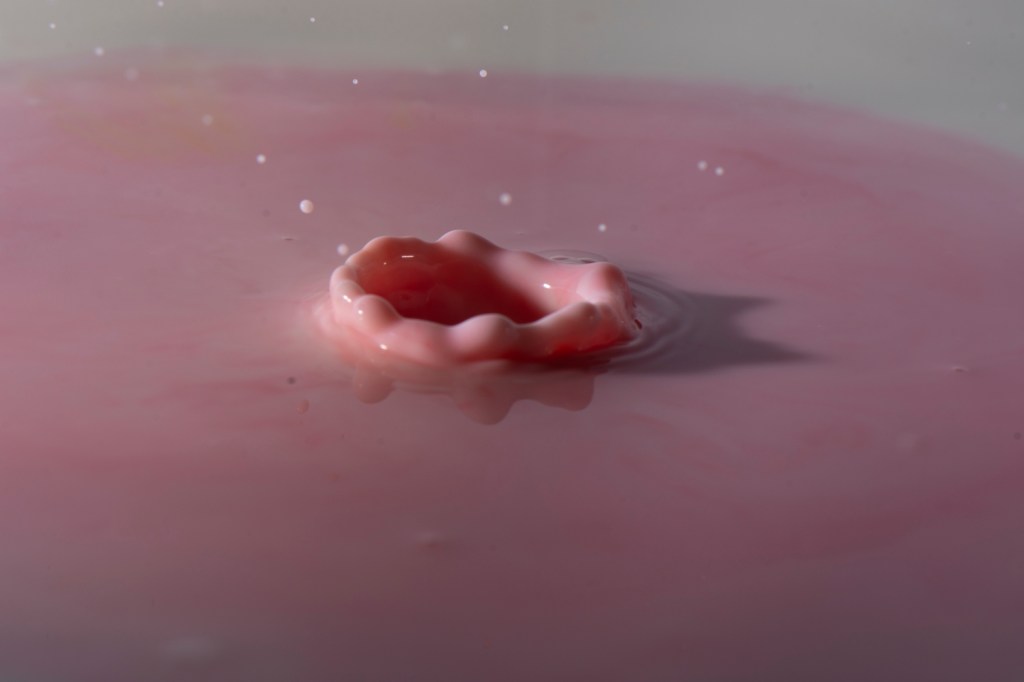
The first few images were checking out the setup using water while releasing droplets of milk from a turkey baster. Of these very few of the images were noteworthy. The exception being the ones below where I captured the crater formed when the droplet hit the water, and a crown was beginning to form.
With everything set up the container was emptied and refilled with full fat milk. Focussing was then rechecked, and milk used to recheck positioning of the drops.
Reviewing the images captured at this point, there were no interesting ones, with the majority showing the after effect of the drop with just ripples and the liquid setting back.
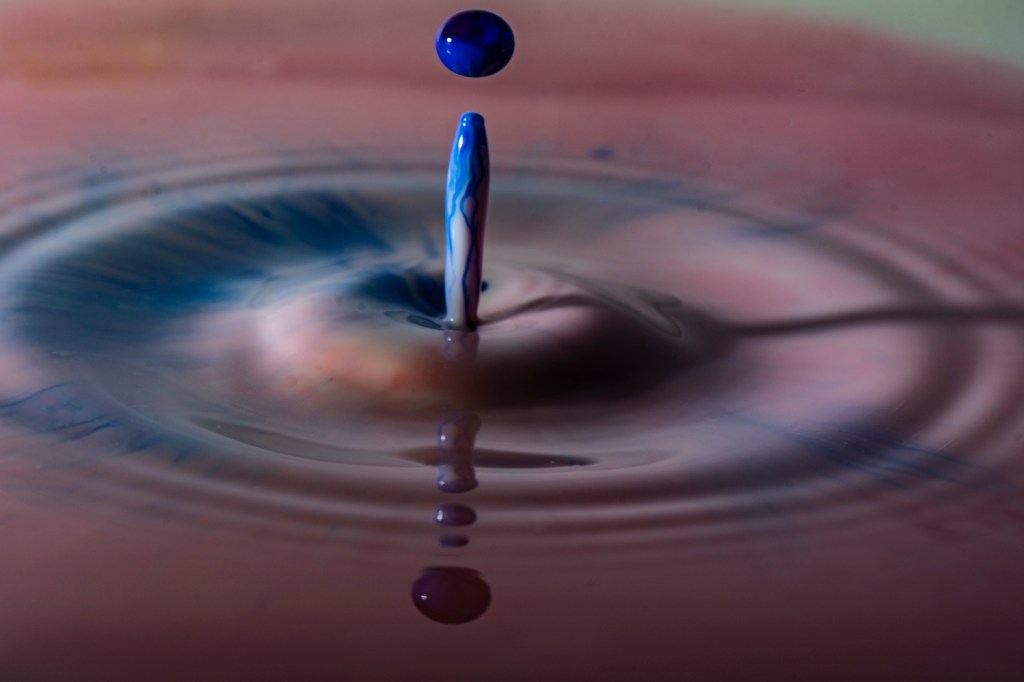
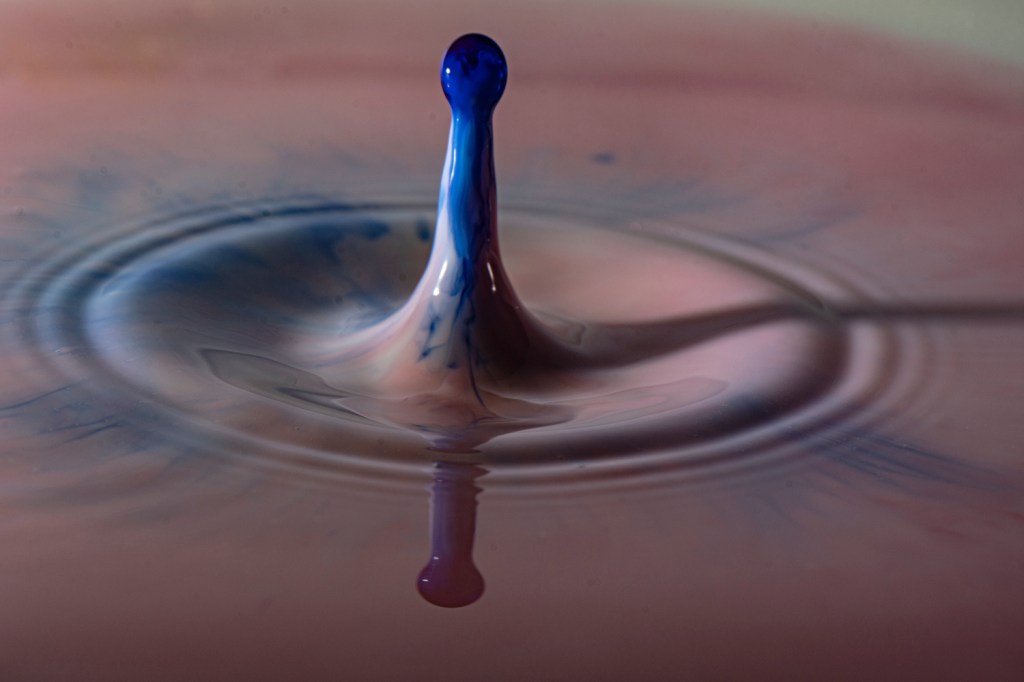
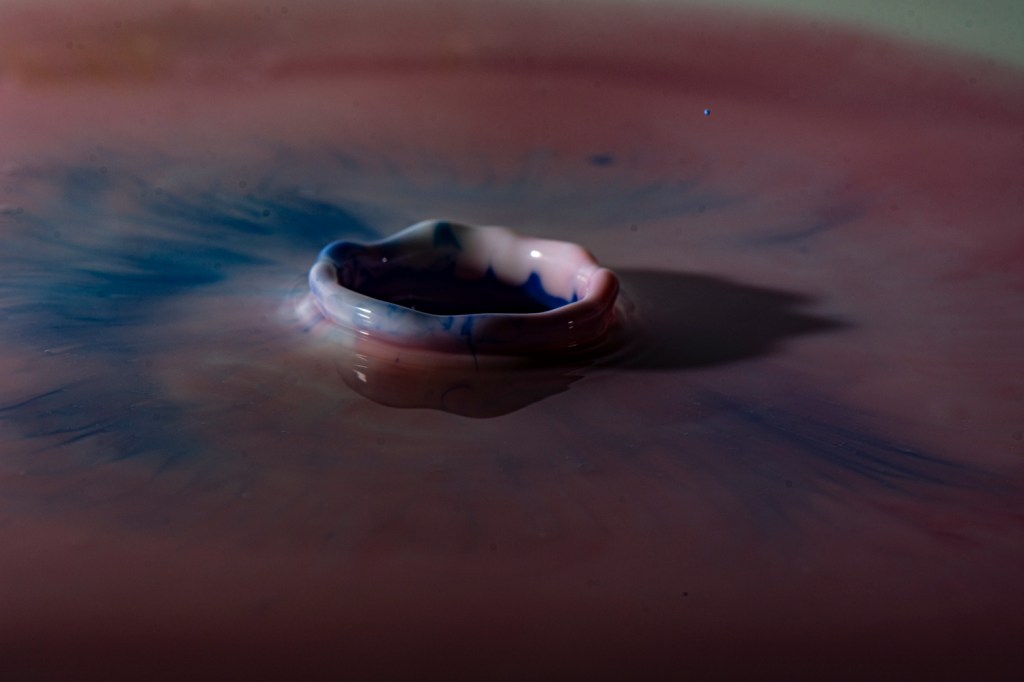
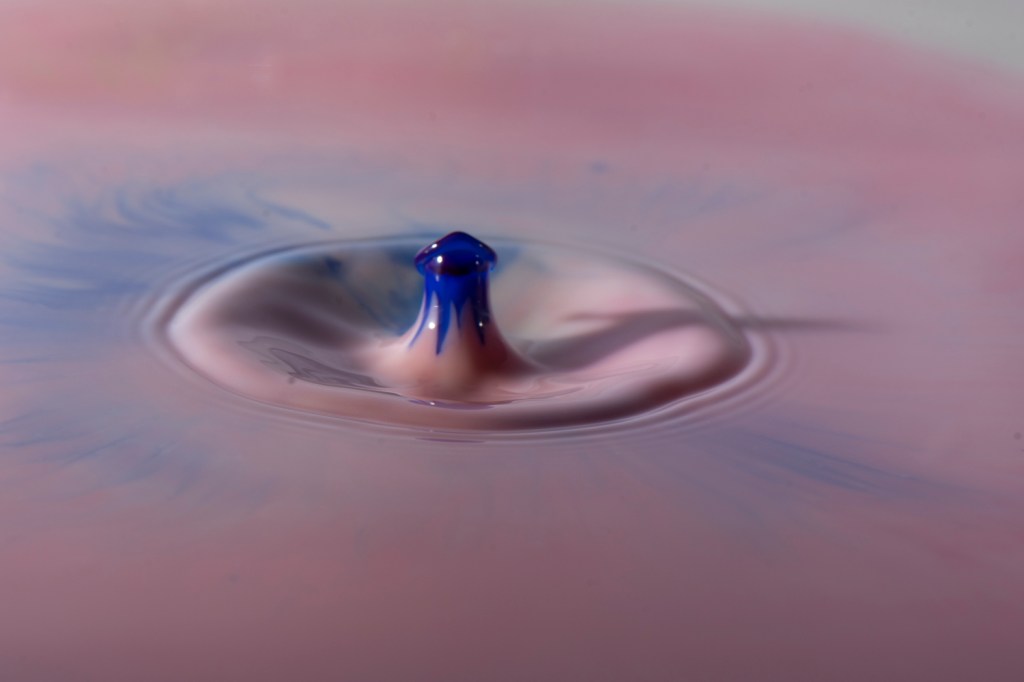
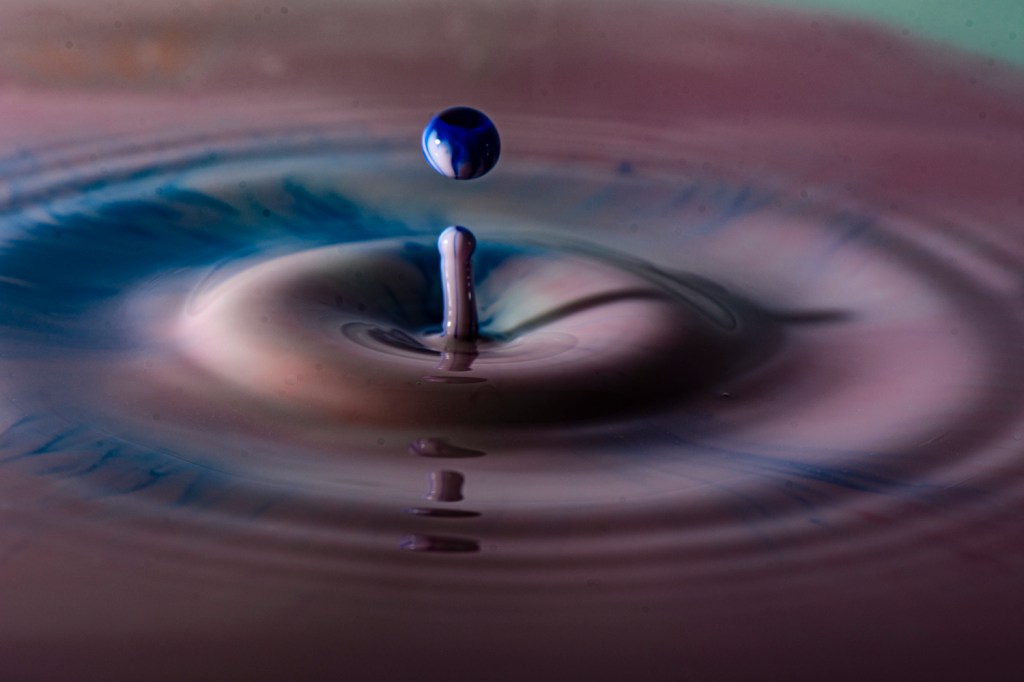
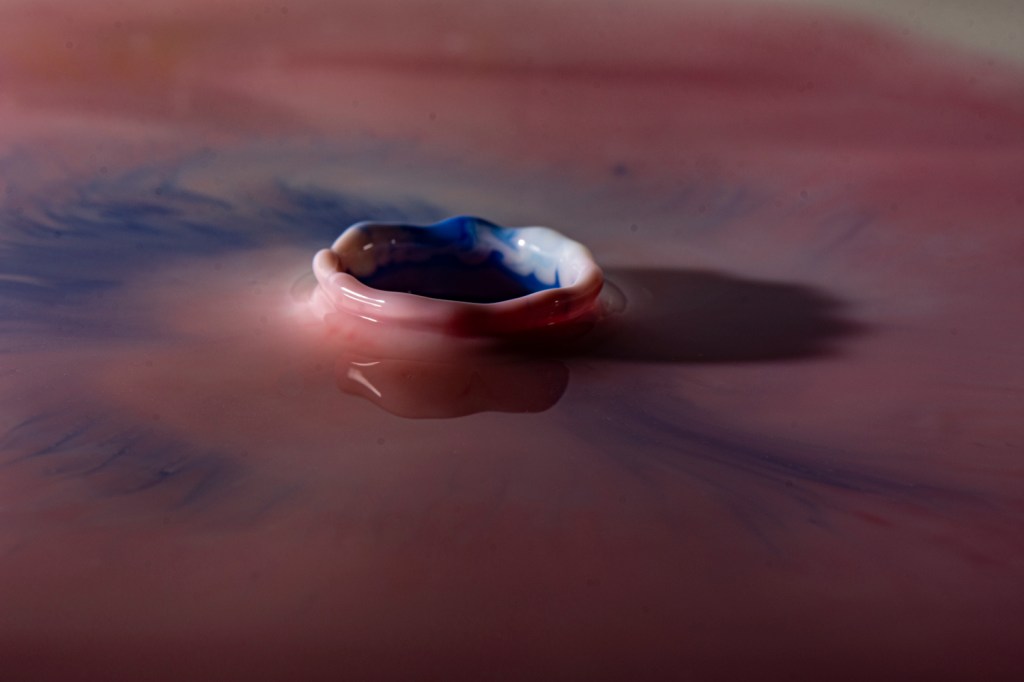
Changing from milk to drops of food colouring produced much better results. Of the 80 photos that made it through weeding out images that were not in focus or did not show any, or very little result of the droplet, the following were the most interesting.
The food colouring was changing from red, to yellow, to blue, throughout the activity.
Images have been adjusted in Lightroom to increase the Dehaze, Clarity and Texture options.
Reflection
This exercise highlighted just how lucky we must be sometimes to capture an image. Some of the greatest images captured were because the photographer was in the right place, at the right time, and in some cases were so experienced and aware of what would make a great image that they stopped there and then to take the photo.
The exercise also highlighted how; some images can be controversial because they appear too good to be true.
For instance, Robert Capa’s image of a Loyalist Soldier in the Spanish Civil War was originally taken for what it was, an example of a photograph being taken at the perfect moment.
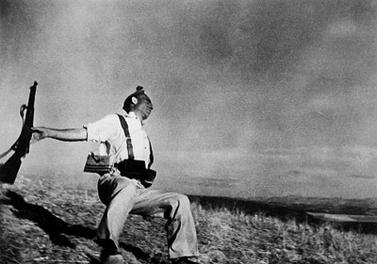
Since 1975, however, there has been discussions about its authenticity. Capa said that the photo was taken at the Battle of Cerro Muriano, but subsequent research has suggested that the photograph was taken 30 miles away at Espejo, far from the battlefront. Part of the doubt about the photograph’s authenticity is due to the restrictions on photographers’ movements. Unlike subsequent wars journalists and photographers were limited in their access to active frontlines.
During the Vietnam War, photographer Eddie Adams, was able to capture the exact moment when Viet Cong prisoner Nguyễn Văn Lém was executed by General Nguyen Ngoc Loan.
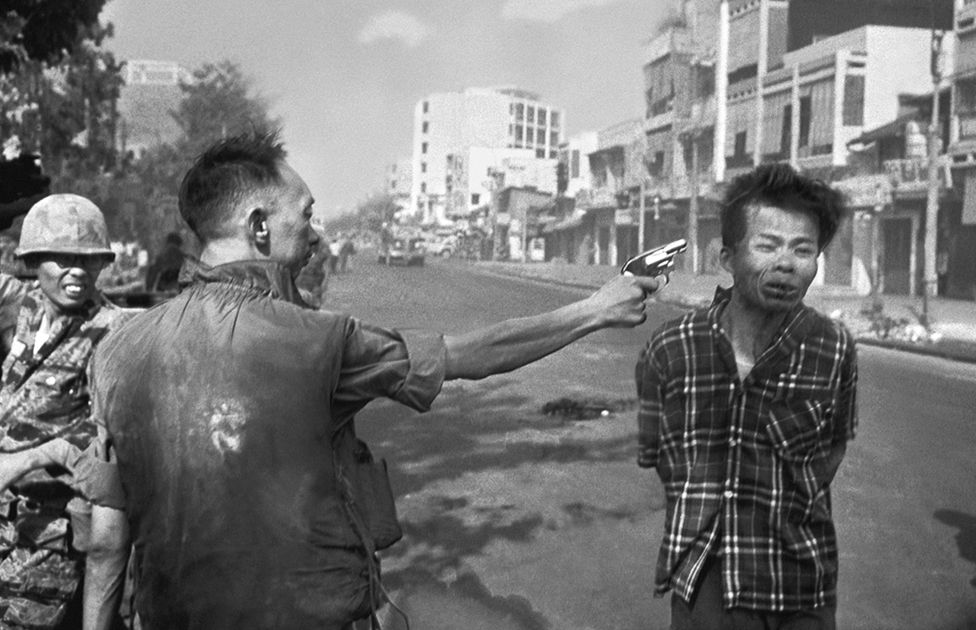
The image was to affect both Adams and the General. An article on the BBC News website describes what happened in the years afterwards.
Nguyen Ngoc Loan left South Vietnam at the end of the war and moved to the United States of America. Settling there he opened a restaurant but after his past was discovered he was forced into retirement because of the impact on his business.
In 1998, Loan died of cancer, following which Eddie Adams wrote:
“Two people died in that photograph. The general killed the Viet Cong; I killed the general with my camera.”
References
- What happened next to create iconic image (2018) In: BBC News 29/01/2018 At: https://www.bbc.com/news/world-us-canada-42864421 (Accessed 27/02/2020).
 Jenna Powell - Expressing Your Vision
Leave a comment