
Assignment Brief
Create a set of between six and ten finished images on the theme of the decisive moment. You may choose to create imagery that supports the tradition of the ‘decisive moment’ or you may choose to question or invert the concept by presenting a series of ‘indecisive’ moments. Your aim isn’t to tell a story, but in order to work naturally as a series there should be a linking theme, whether it’s a location, event or particular period of time.
Include a written introduction to your work of between 500 and 1000 words outlining your initial ideas and subsequent development. You’ll need to contextualise your response with photographers that you’ve looked at, and don’t forget to reference the reading that you’ve done.
Reflection
Initial Ideas
When I started to think about this assignment, my initial idea was to photograph people as they finished my local Parkrun on a Saturday morning.
My reasoning for linking this to the idea of the decisive, or indecisive, moment was that it would show people’s differing reactions to completing a Saturday morning run. For some people this would be a regular thing, for others a first-time event, for some 5K would be easy, for others a huge challenge. I hope to reflect this across the series of photos.
My second idea reflected my state of mind at the time. A series of images based around the idea of suicide. The first image I conceived was an empty bottle of Scotch lying on its side with a pile of anti-depressants scattered next to it. An initial search for any photographers that had undertaken a similar project proved fruitless.
My reasoning behind this idea was that images like this would symbolise what is a very decisive moment in a person’s life. The moment that they decided to end it and act upon it.
The Government instigating a lockdown as a result of the Coronavirus took away the opportunity to go with my first idea. Developing the second idea would be more challenging.
As I was considering how to develop a body of work for the assignment an EVY Meetup on assignment 3 was organised by Robert Bloomfield.
The presentation breaks the Decisive Moment down into 3 constituent parts, two of which I want to cover here because they link with how my ideas developed.
Juxtaposition
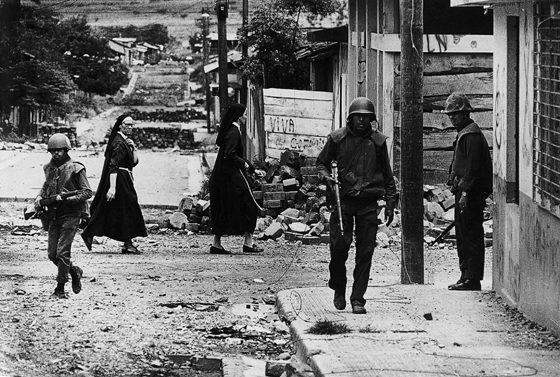
This is where elements of a photograph contrast with each other. For instance, Koen Wessing’s photograph from Nicaragua in 1979, highlights such a case as it captures soldiers and nuns within the same image. Soldiers, who are normally associated with war and fighting. Nuns who are associated with peace and helping others.
Fighting is not the only part of a soldiers role, providing humanitarian relief is another important task and we have become used to seeing images similar to those below of refugees being supplied with food and other necessities by members of the military forces.
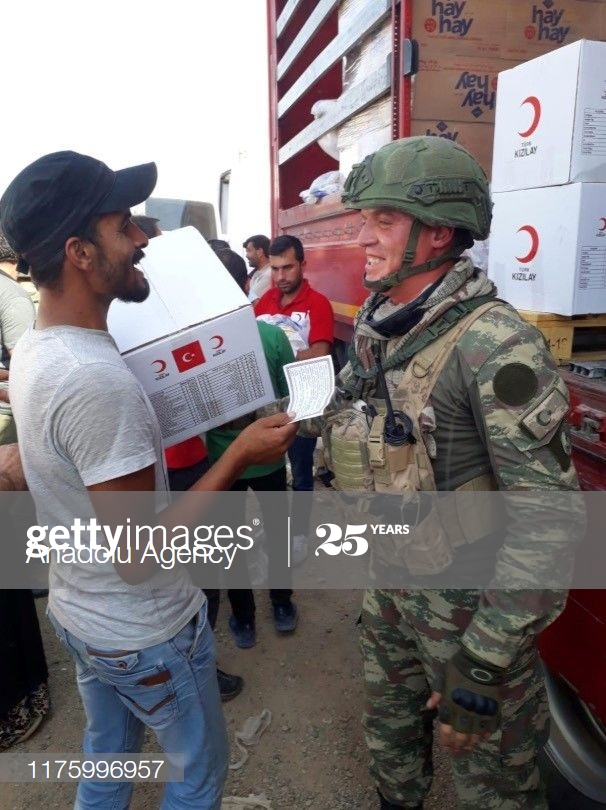
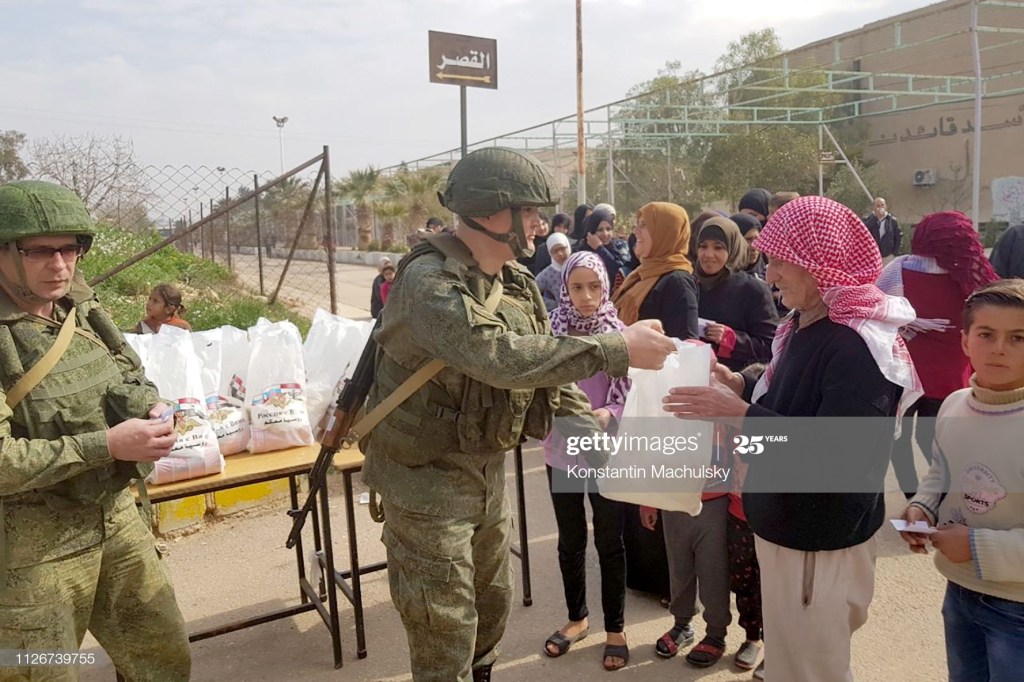
The juxtaposition of war and peace in these images, however, doesn’t have the impact of that in Wessing’s photograph, perhaps because we are more familiar with them, or maybe because we witness events happening in war zones not through the still image but through the moving one today.
Paul Graham used juxtaposition in his work The Present, PAUL GRAHAM: ‘The Present’ – The New York Times (2012), by presenting two or three images side by side where the viewer had to flick between each to see the differences. I was able to explore Graham’s work as part of the Research Point for this part of the course.
Moment
Henri Cartier-Besson’s said:
“There is a creative fraction of a second when you are taking a picture. Your eye must see a composition or an expression that life offers you, and you must know with intuition when to click the camera. That is the moment the photographer is creative.”
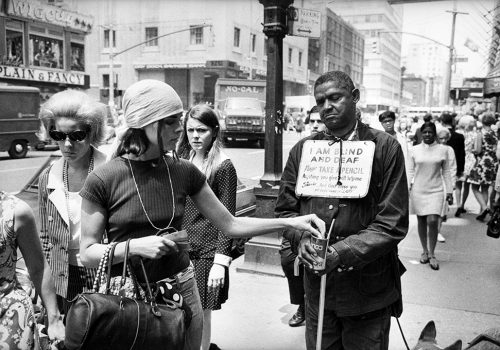
When looking at a lot of images it is possible to see that this is the case. Look at examples of street photography and the photographer has composed their image and then released the shutter at the right moment to capture the image that is in their mind.
There are examples that go counter to this. Harold Edgerton produced many images where the camera shutter needed to be triggered at the right moment. His Milk drop coronet is an example of this. However, this is not a case of intuitively knowing when to take the picture but calculating the moment that the shutter needs to be released in order to capture an image. A fraction of a second either way and you have a different image.
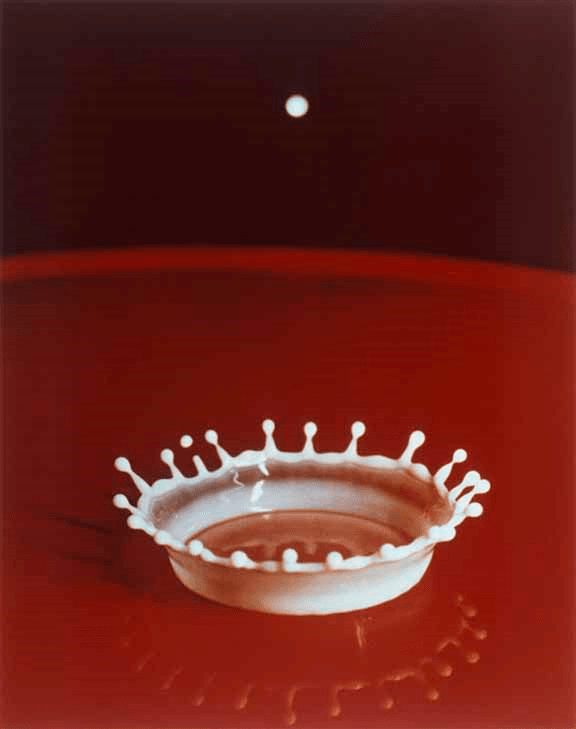
From https://edgerton-digital-collections.org/galleries/iconic
This does not mean that the photographer is not being creative at that point, it’s just that to reach this point requires careful planning rather than intuition.
Development of ideas
Having looked at the slides from the EYV meetup I looked around my home and garden to try and find ways that I could make use of my location to find ways to demonstrate the Decisive Moment, or alternatively Indecisive moments. Several ideas developed as I did so, and these can be found in my Learning Log under the piece called Decisions.
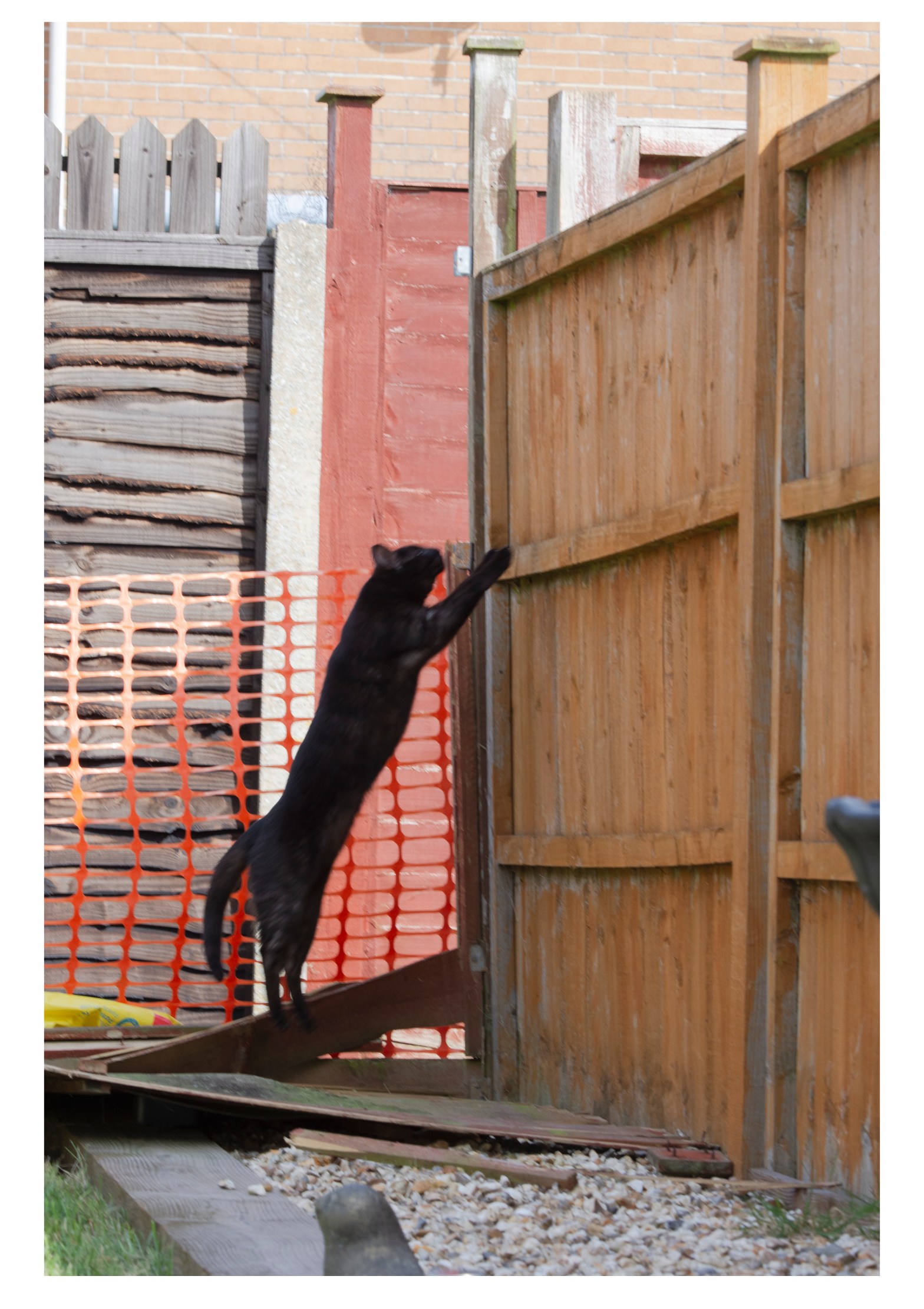
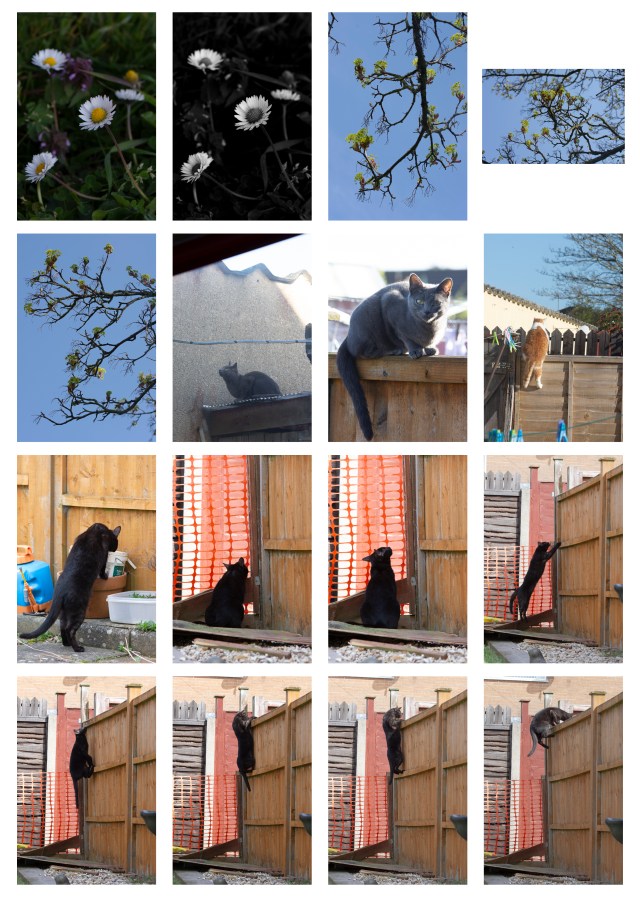
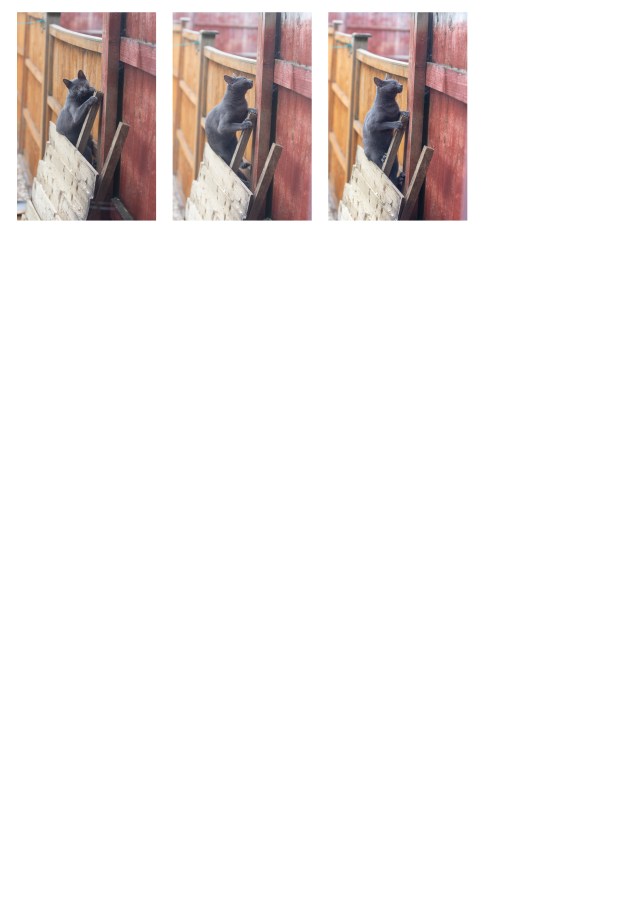
The idea I was going to go with came about when I noticed one of the cats in the garden. Grabbing my camera, I was able to watch as it wandered along the fence before pausing and then leaping up onto and then over it. During that leap there were moments that were key to the cat climbing the fence. The initial leap, catching the fence with its paws, a second leap upwards and then reaching the top. Looking at the series of images I felt that I had captured the essence of the Decisive Moment.
Zouhair Ghazzal when talking about the Decisive Moment, decisive moments (2004), as I discuss in my Research Point for Project 3 ‘What matters is to see’, raises the issue of capturing a series of images which, may show a series of decisive moments but when put together lose those moments. Looking at the series of images I planned to use I could see that could possibly happen, and so I made the decision to continue using the cat theme but to use a selection of photographs of neighbours cats in my garden, caught when they didn’t always know I was watching.
My final selection of images is linked by two themes. The first is the subject matter, cats. The second is location, my garden.
Image submission
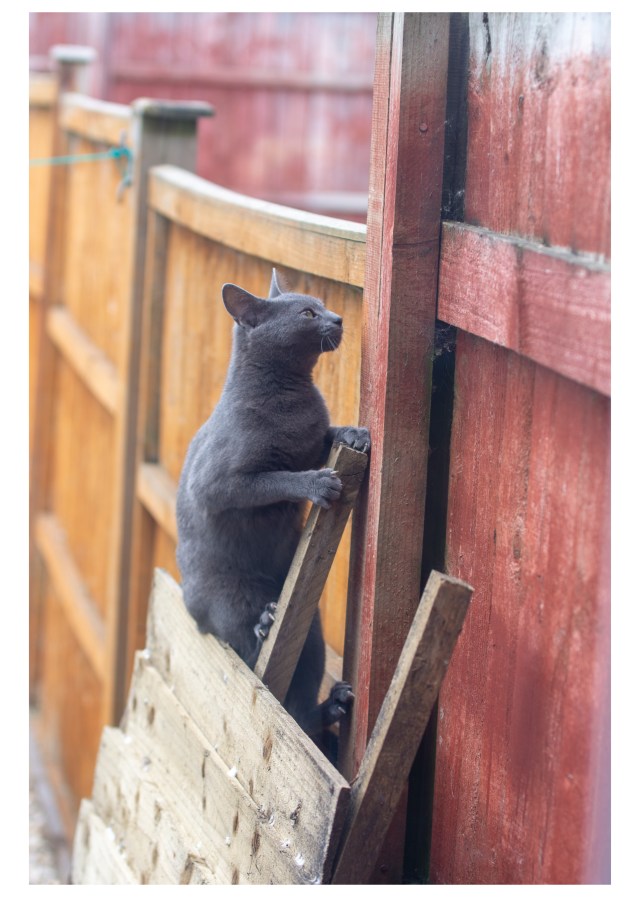
f/3.2, 1/200sec, ISO-100 70mm
Millie had decided that she was going to climb up inside the broken panel leading against the wall.
This is the point where she was readying herself to leap for the top of the fence.
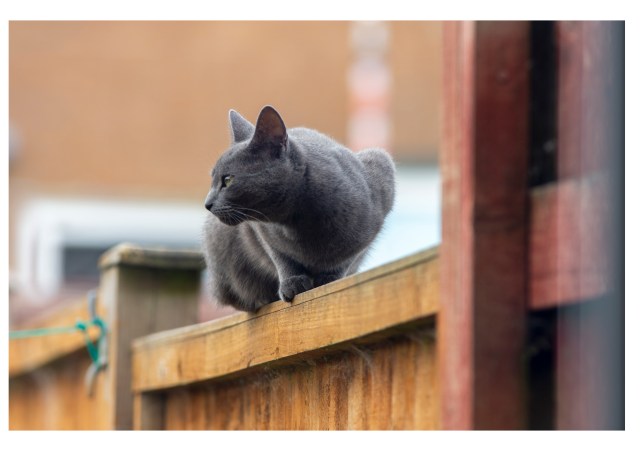
f/3.5 1/200sec, ISO-100, 200mm
When I look out the window I frequently find Millie sitting here on the fence.
Sometimes she’s looking around, other times she’s staring in the window at me.
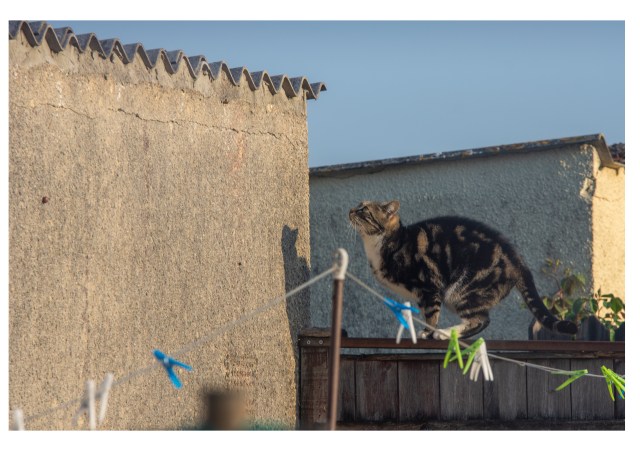
f/5.6, 1/200sec, ISO-100, 200mm
The cats love the corrugated roof of the garages that border my garden.
Charlie decided he was going to go for a wander one morning.
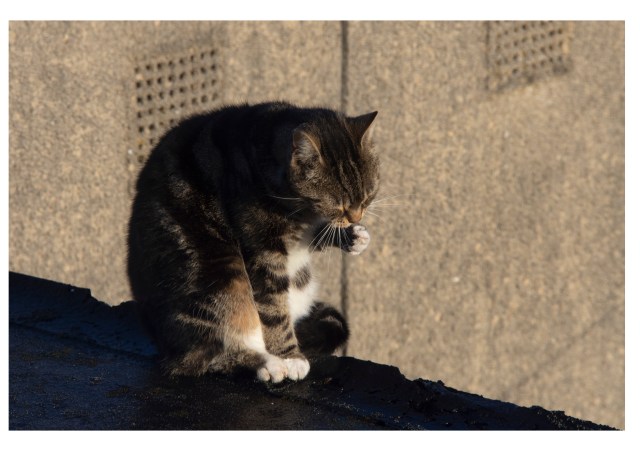
f/10, 1/200sec, ISO-400, 190mm
One damp morning I found Charlie sat on top of our garden shed.
Here he is while cleaning himself.
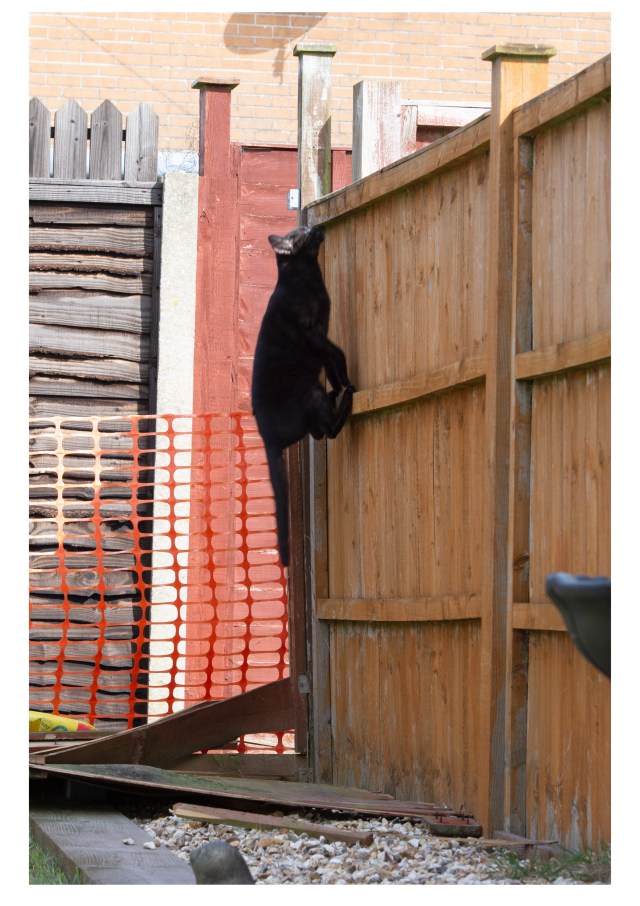
f/9, 1/250sec, ISO-400, 95mm
Jack got bored of wandering around my garden so decided to go home.
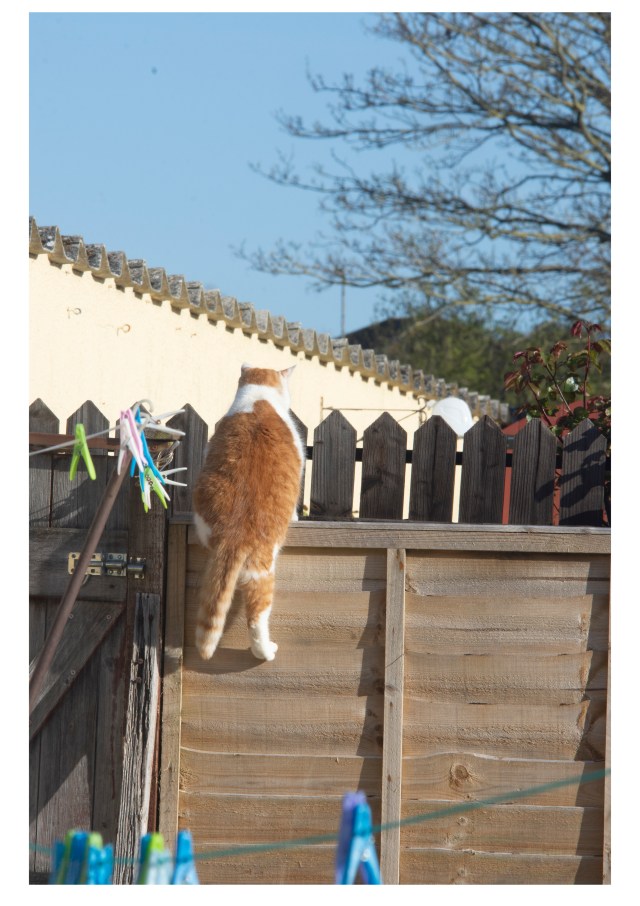
f/16, 1/200sec, ISO-400, 200mm
A rare visit from Billy.
Assessment against criteria
LO1 demonstrate an understanding of photographic techniques and image
making
Throughout this part of the course I have experimented with different techniques.
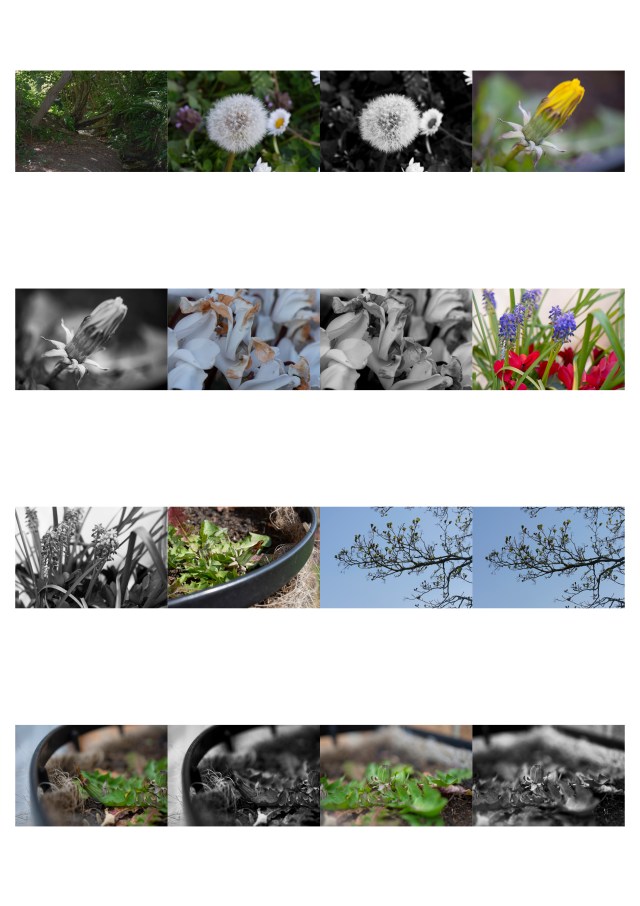
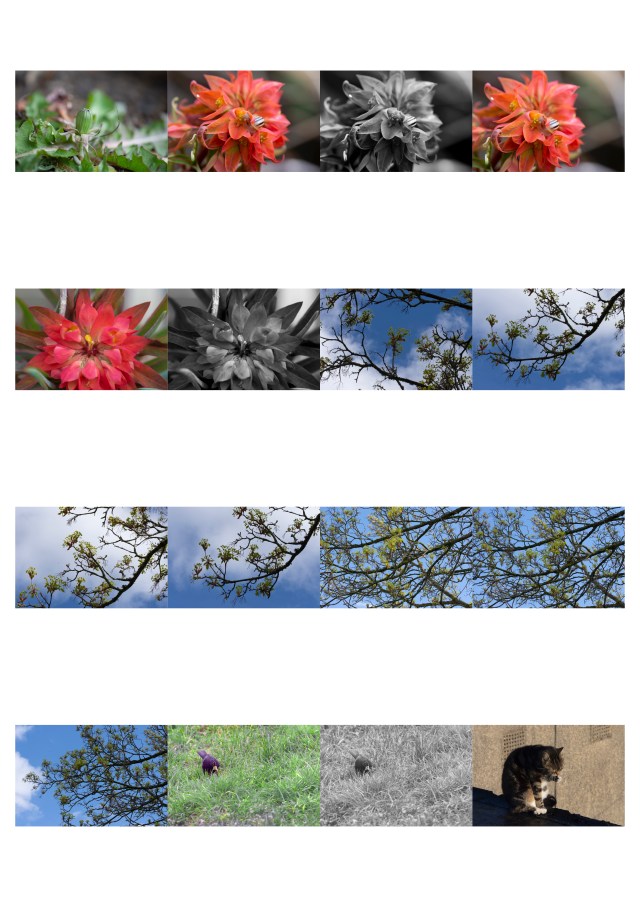
For the assignment images were captured using lenses with a variety of focal lengths. To photograph flowers and animals such as snails a macro lens was used to allow me to get closer to my subject. For some images a flash was used but I found that this overwhelmed the subject and so I fell back on using natural light. Using flash in this way is something I need to practice so that I can improve upon my image making skills.
Other images were captured from a distance and it soon became apparent that with longer lenses a faster shutter speed was required in order to compensate for vibration when the camera was held in the hand.
Exploring the images produced by Harold Edgerton led to exploring water drop photography in more detail, and especially the techniques that are used to captured such images. Depending on your level of interest in this area of photography you can use items that are found around the home or look at purchasing, more expensive, specialist equipment.
Slit Scan photography, as explored in Exercise 3.2 – Trace, provided the opportunity to move away from my DSLR and to explore a new way of using the camera on my phone. Downloading a Slit Scan photography application allowed me the freedom to capture images whenever I wanted to and gave me new ways to capture dance and movement.
LO2 present a selected body of photographic work
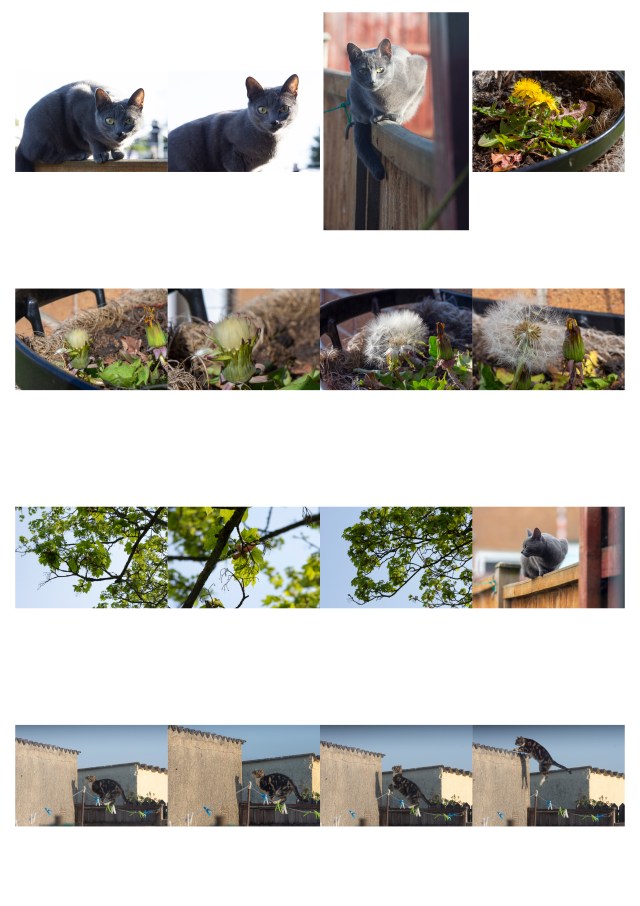
Through the different ideas that I have worked on for this assignment, and which can be seen in the images submitted, the contact sheets below, and the other reflective items in my Learning Log (Decisions, Lockdown Reflections) I think I have demonstrated the process that I have gone through in order to present the above selection of photographic work.
LO3 develop and communicate your ideas as a photographer
I believe that I am getting better in this area. One of the ideas that I rejected for the final submission I made use of text with each image. The text reflecting my thoughts while reviewing the sequence of images I had opted to use.
LO4 demonstrate a critical and contextual understanding of photography and reflect on your own learning
This is still an area that I feel I’ve not quite achieved enough improvement with. I have explored areas as a result of the coursework and assignment for this part of the course. When exploring the Decisive Moment there was a lot of material written by photographers. Delving into more of these writings, pulling out key points and ideas is something I need to become better at doing.
Contact Sheets
References
- decisive moments (2004) At: http://zouhairghazzal.com/photos/aleppo/cartier-bresson.htm (Accessed 18/04/2020).
- PAUL GRAHAM: ‘The Present’ – The New York Times (2012.) At: https://www.nytimes.com/2012/03/09/arts/design/paul-graham-the-present.html (Accessed 18/04/2020).
 Jenna Powell - Expressing Your Vision