
Brief
Make a Google Images search for ‘landscape’, ‘portrait’, or any ordinary subject such as ‘apple’ or ‘sunset’. Add a screengrab of a representative page to your learning log and note down the similarities you find between the images.
Now take a number of your own photographs of the same subject, paying special attention to the ‘Creativity’ criteria at the end of Part One. You might like to make the subject appear as ‘incidental’, for instance by using focus or framing. Or you might begin with the observation of Ernst Haas, or the ‘camera vision’ of Bill Brandt. Or if your feeling bold you might forget your camera completely and think about the tricky question of originality in a different way – http://penelopeumbrico.net/index.php/project/suns/
Add a final image to your learning log, together with a series of preparatory shots. In your notes describe how your photograph or representation differs from your Google Images source images of the same subject.
Research
Chris Steele Perkins
Chris Steele Perkins is a British photographer born on the 28th July of 1947, the same day as my sister but 22 years before her. He is a member of Magnum Photos.
His series of images based around Mount Fuji, which although including it, manage to relegate it to the background of the image. This large, volcanic mountain that towers over the land around in dwindles into the background as the day to day lives of the people who live in its shadow come to prominence.
Unlike most images of Mount Fuji which will have it as their central focus, Perkin’s images show that it is just another part of the landscape. A popular and imposing part but none the less, just another feature of the world that surrounds the people that live near it.
Although Mount Fuji is a well-known and will draw tourists and photographers from around the world, one question that comes to mind is, how many of the people that live near it take photographs of it? Is it something that is taken for granted, do they find themselves thinking, well it is there, and I will get around to visiting it or photographing it at some point?
In my life I have lived in various places. Wales, Portsmouth, Dorset, and Somerset. When I lived in Sherborne in Dorset our home was about a mile from Sherborne Castle and a bit less to the Cathedral. During the years we lived there I always meant to visit both and because they were on the doorstep kept putting it off. To this day I have never set foot in either.
Similarly, when I lived in Portsmouth there were lots of places that I kept meeting to visit. The D Day Museum, Historic Dockyard. It is only in the last 10 years that Ih ave been to the Historic Dockyard, despite having lived in Portsmouth for 5 years and spent a lot of time there as a result of visiting family and for work prior to that.
So many of us take what is around us for granted and it is only when we find ourselves away from it, kick ourselves for missed opportunities.
Ernst Haas
Looking through the Haas’ images at Visura I tried to see them with fresh eyes, I tried to see them like they were the first apple I had ever seen. Of the series of images shown two jumped out at me and wanted me to look for deeply at them. The first was the image of a swimmer, the second of shoes in a shop window.
There is nothing overly special about the shoes in the window and so what makes this different to other images of shoe shop windows. For me what makes this different is the sign in the middle of the image. “Notary Public”. Over the summer we needed to find a Notary Public.
A notary public (or notary or public notary) of the common law is a public officer constituted by law to serve the public in non-contentious matters usually concerned with estates, deeds, powers-of-attorney, and foreign and international business. A notary’s main functions are to administer oaths and affirmations, take affidavits and statutory declarations, witness and authenticate the execution of certain classes of documents, take acknowledgments of deeds and other conveyances, protest notes and bills of exchange, provide notice of foreign drafts, prepare marine or ship’s protests in cases of damage, provide exemplifications and notarial copies, and perform certain other official acts depending on the jurisdiction.[
Wikipedia – https://en.wikipedia.org/wiki/Notary_public
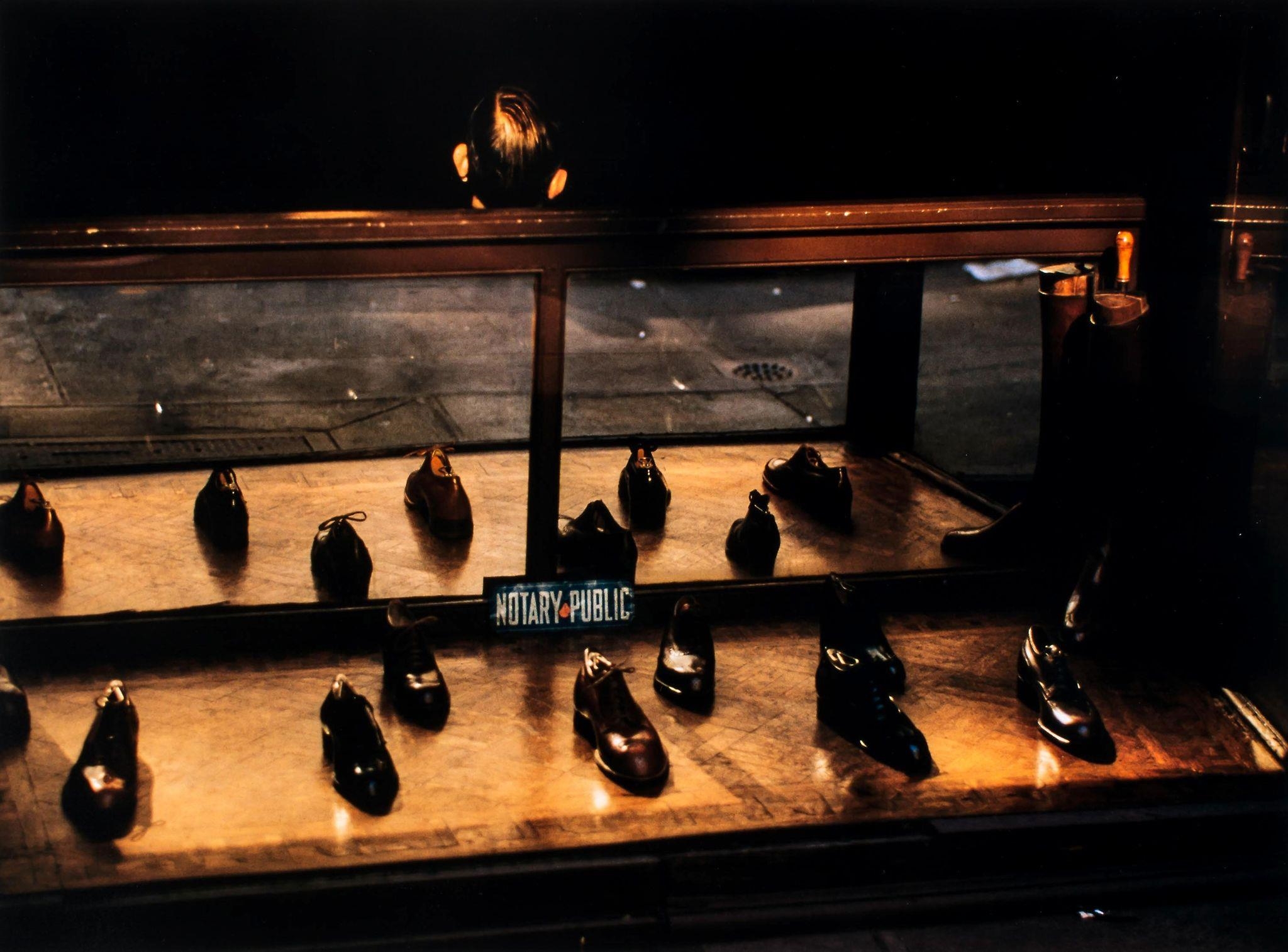
The shoes appear to be very formal. Are these shoes aimed at solicitors and other professionals? Or are they aimed at the gentleman who wants a pair of shoes that make a particular statement about them.
The other thing that that stands out in this image and provides a juxtaposition to the shoes is the head of the man sitting facing away from the window. Shoes go with feet. Shoes are as far from head as you can get in a human.
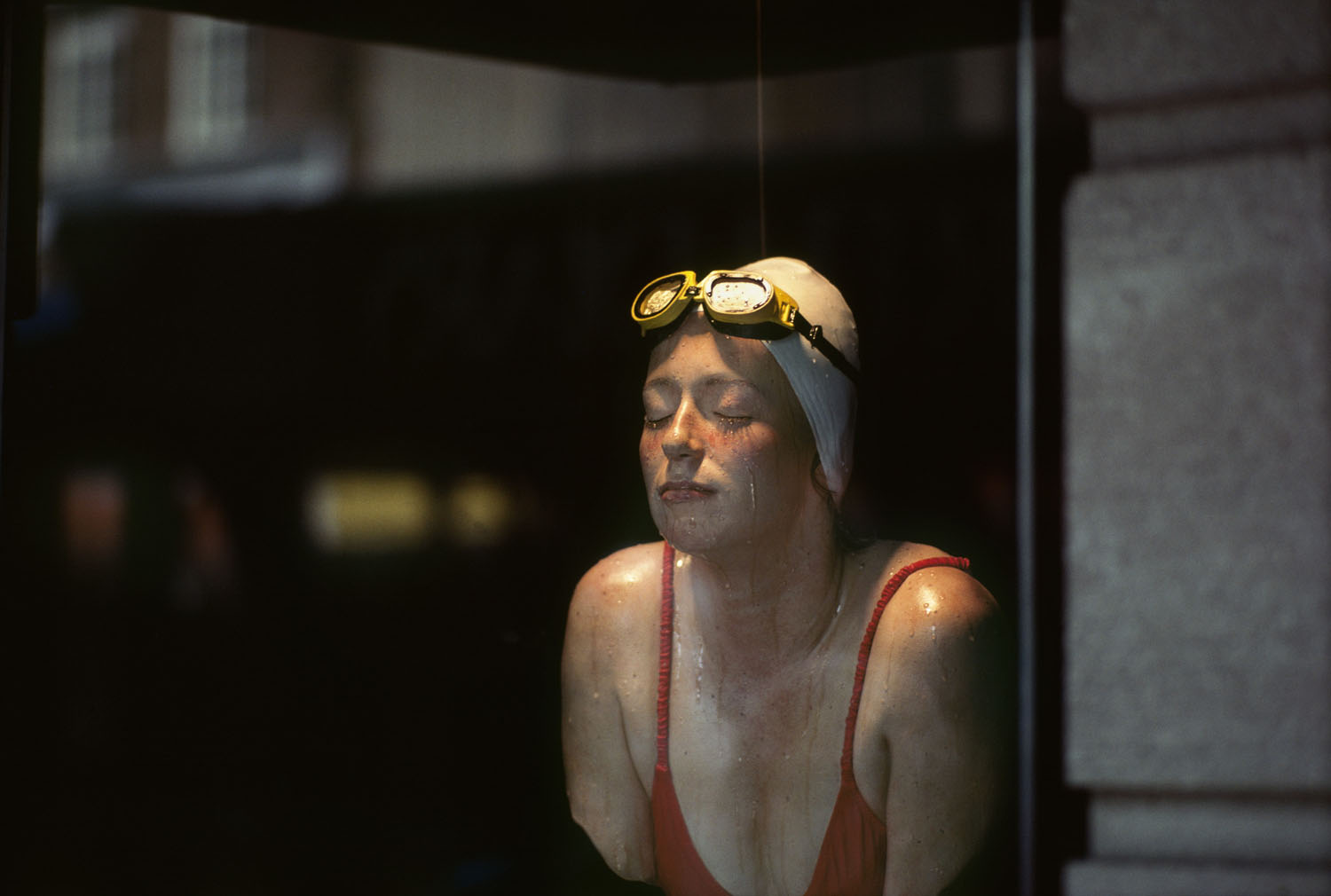
The image of the swimmer above has no context, leaving its interpretation open to the viewer. Ernst Haas has taken someone involved in an activity and captured them in a way that is not how we normally would see them.
Are we looking at a person who is preparing to take part in a swim race and so are mentally preparing for what is ahead? Is this someone who has just finished a race and is showing the emotion that has resulted from a win or a loss. The trail of liquid down her cheek could be water dripping down or it could be tears of sadness of joy. The background does not appear to fit with a normal swimming pool. Is she swimming at home, or has she just come outside a swim venue? In the same way that Haas found himself experiencing what it felt like to see an apple as if for the first time, the more I look at this image, the more I find myself wondering about the person it has captured.

And finally, Haas has captured a scene that a lot of visitors and tourists will have taken of city skyscrapers and done something unique and creative by including these binoculars in the shot but in such a way that they look like faces, each having the feel of a different personality.
Bill Brandt
Instead of photographing what I saw, I photographed what the camera was seeing. I interfered very little, and the lens produced anatomical images and shapes which my eyes had never observed.
Bill Brandt
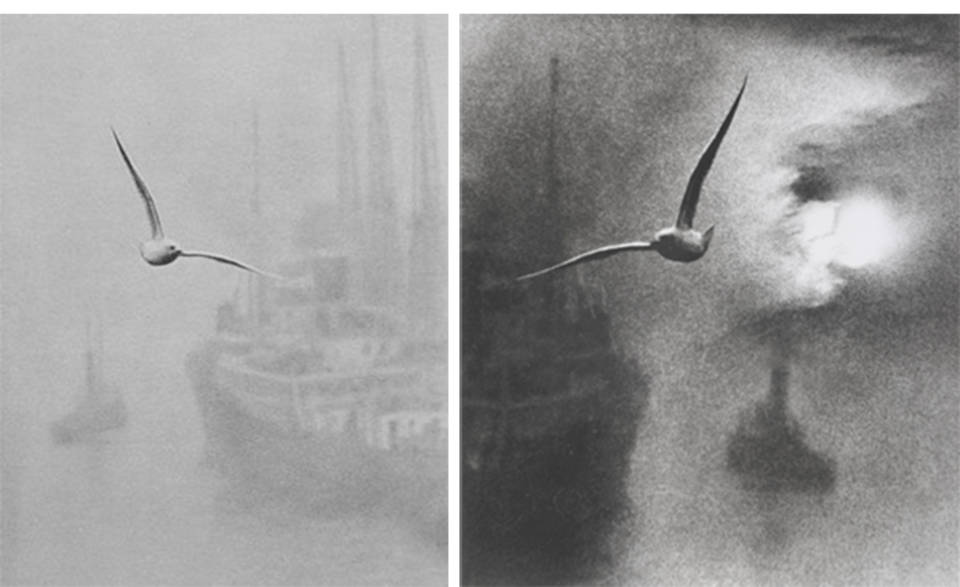
This quote is an interesting one when you put it into the context of some of Brandt’s work where he made use of family and friends to act out roles in his images, or heavily cropped and even added elements to images that were missing from the original.
For instance, in the images below the seagull has been added, and in the photograph on the right the sun has also been added. Not exactly what the camera was seeing.
In the images below, the right-hand photograph is a cropped view of the top left section of the one on the left. This time it might have been what the camera was seeing but Brandt has focussed on just a part of what was seen.
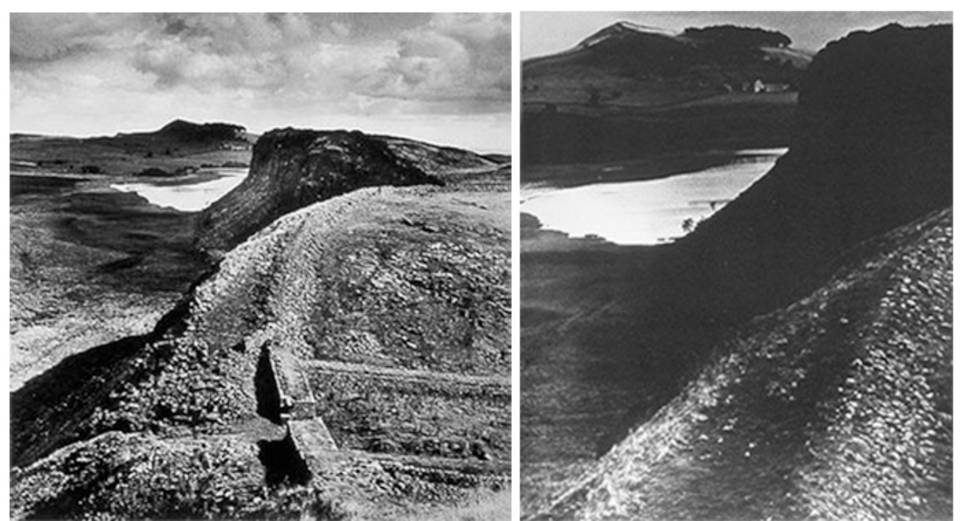
Brandt may have been photographing what the camera saw but he interpreted what was seen, either beforehand by placing people into scenes or during the editing process afterwards.
Maybe by cropping images he was highlighting parts of what the camera had seen, bring out details that might not have been seen clearly by the eye.
Exercise
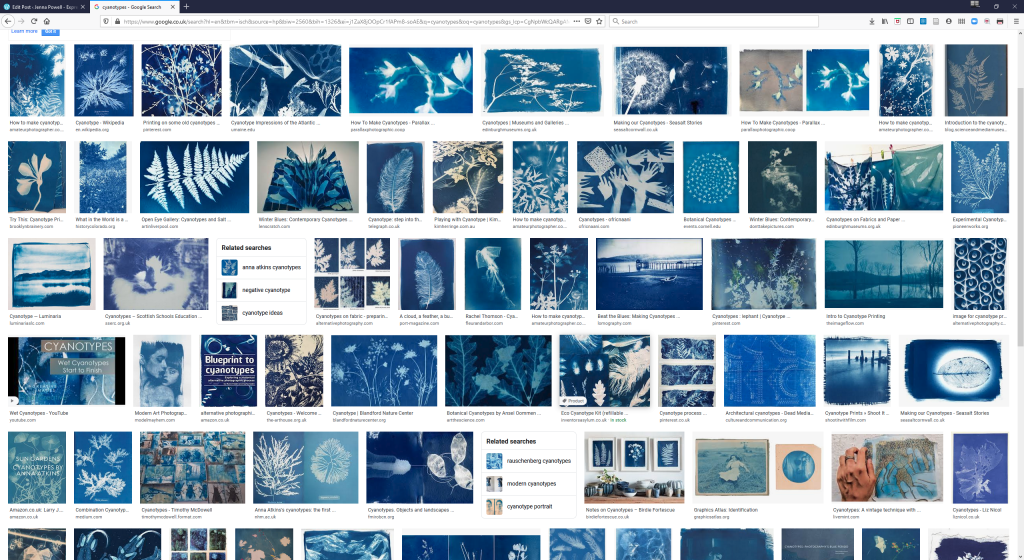
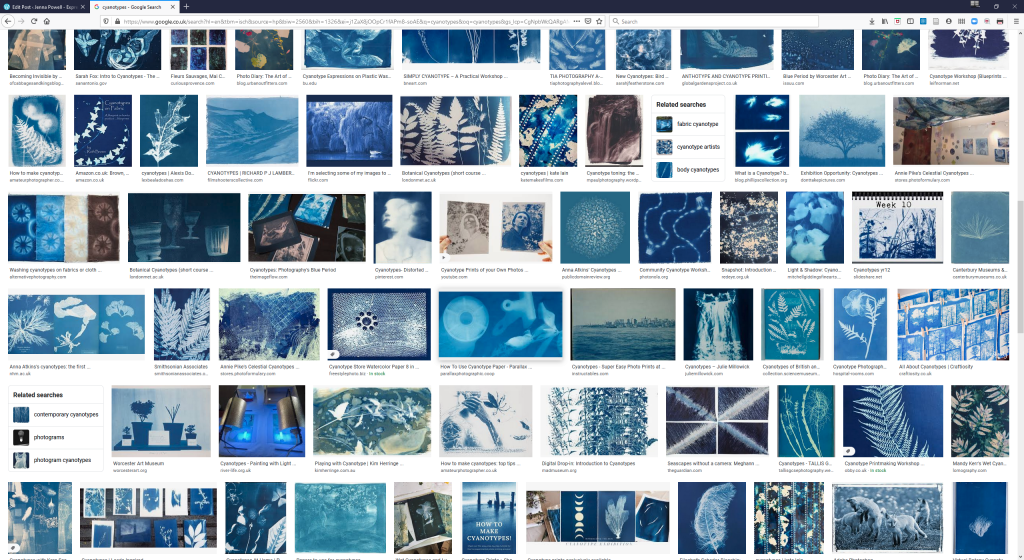
For this exercise I wanted to try something different, something that meant I did not have to use my camera. Photograms, Rayograms, Cyanotypes. Different names for a technique that requires an image of an object to be formed directly onto paper by placing the object on the paper and then exposing it to light.
A Google image search for cyanotypes resulted in the above results.
When you look at the individual images in the screengrabs above, there are lots of cyanotypes that include flowers and leaves. Those that do not feature these common themes therefore stand out. The image of the foxes, people, faces and landscapes. Far less prevalent and so more unusual.
Before I even started to look at the work of Perkins, Haas and Brandt, I looked at Penelope Umbrico at the link provided in the exercise brief. Looking at her other work I found examples where she had made use of other people’s images to form her own artworks. This provided me with the inspiration for this exercise and I decided that I wanted to take some of the images of her work, turn them into digital negatives using Photoshop and then transfer them to cyanotype.
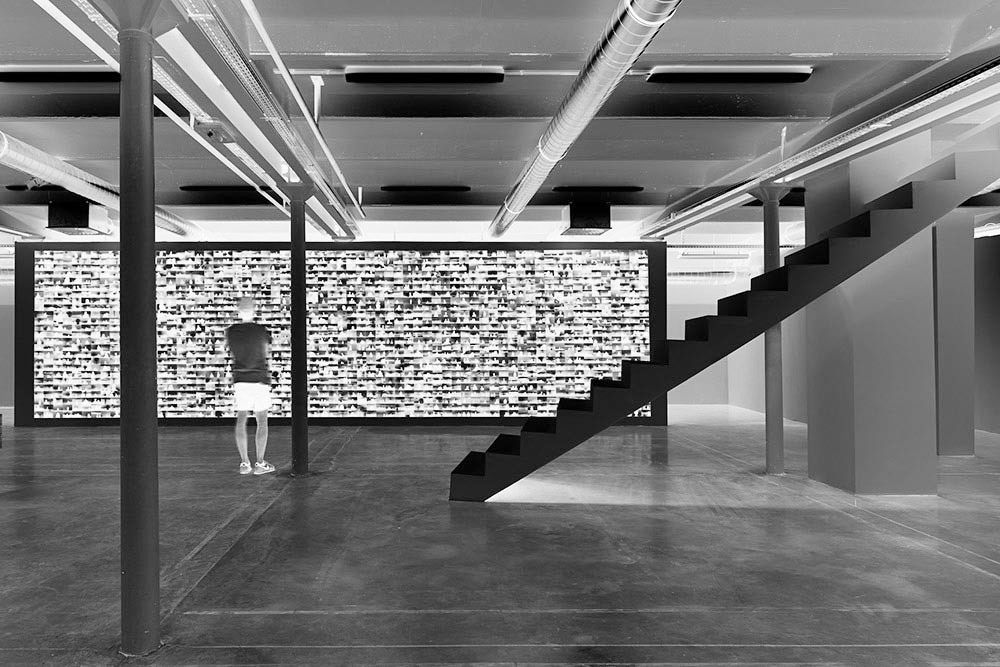
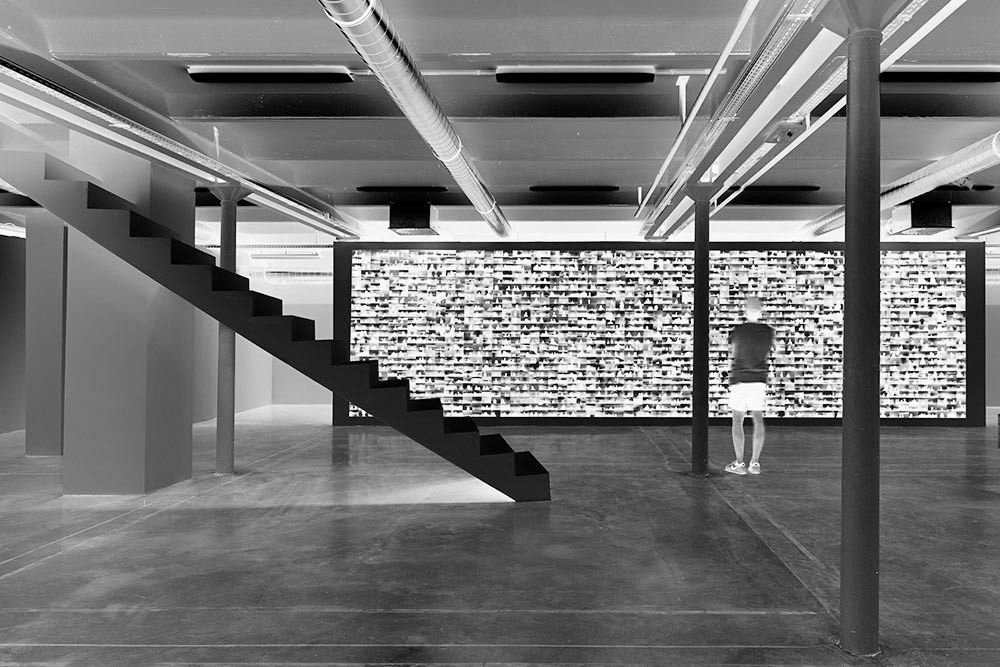
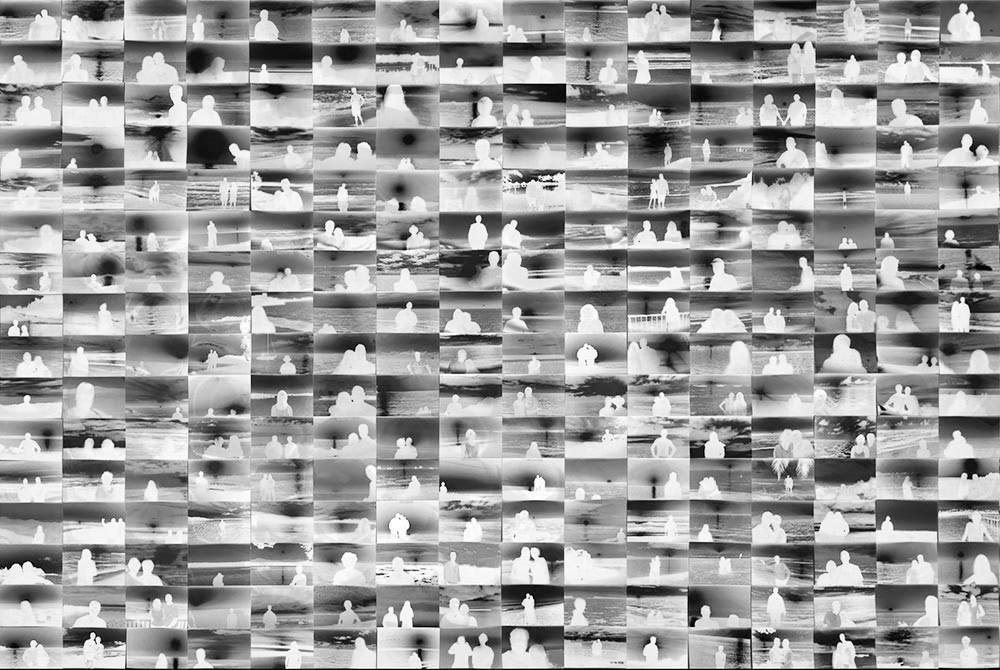
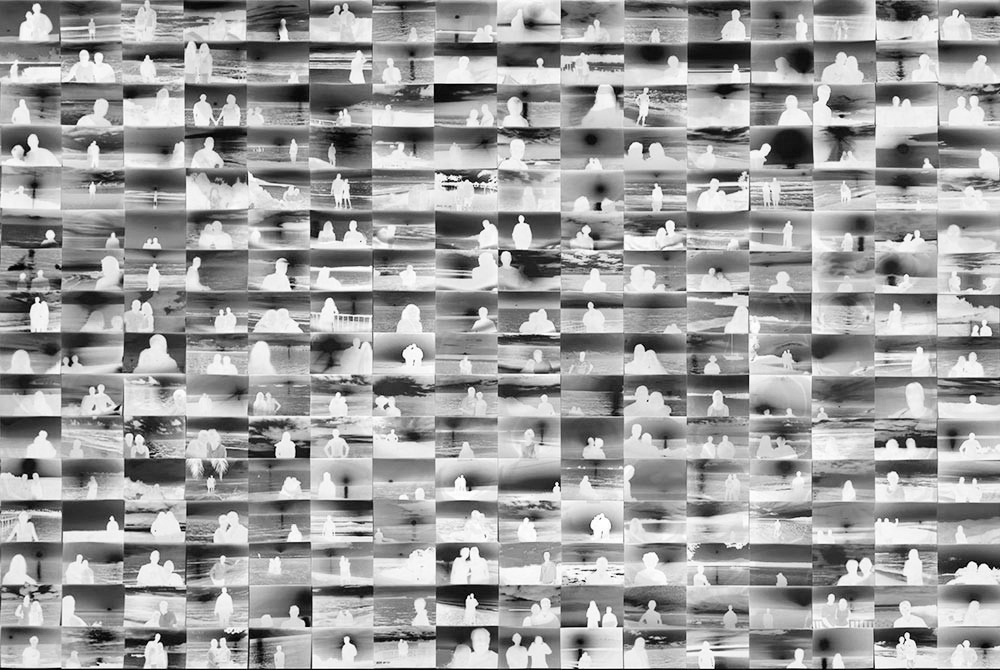
I also decided that I wanted to produce some cyanotypes based on photographs of my nieces that I had taken while working on this part of the course.
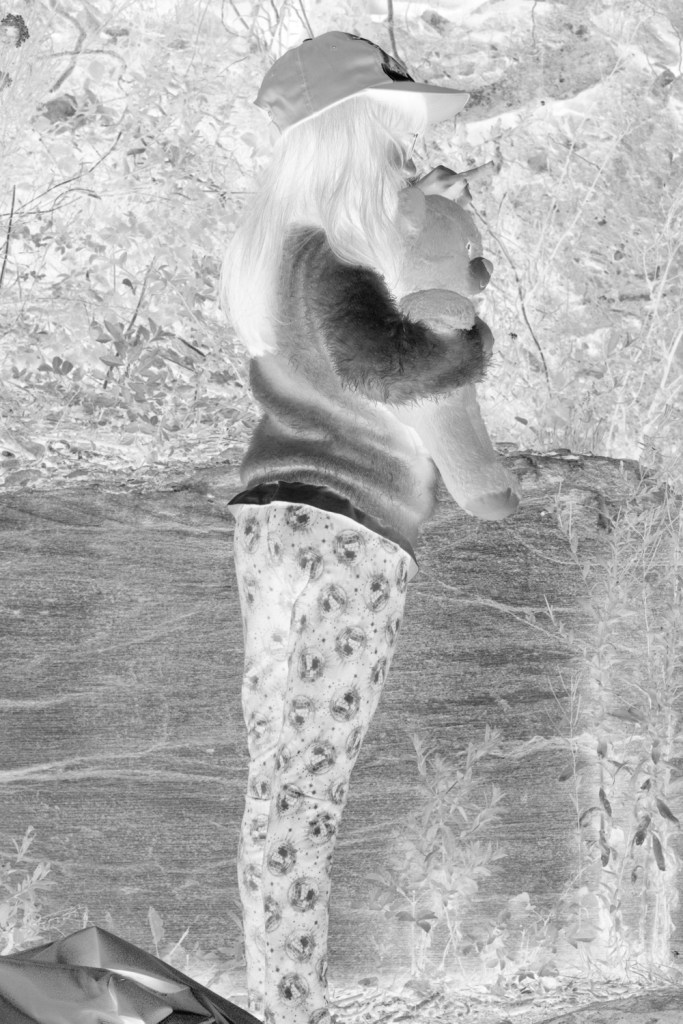
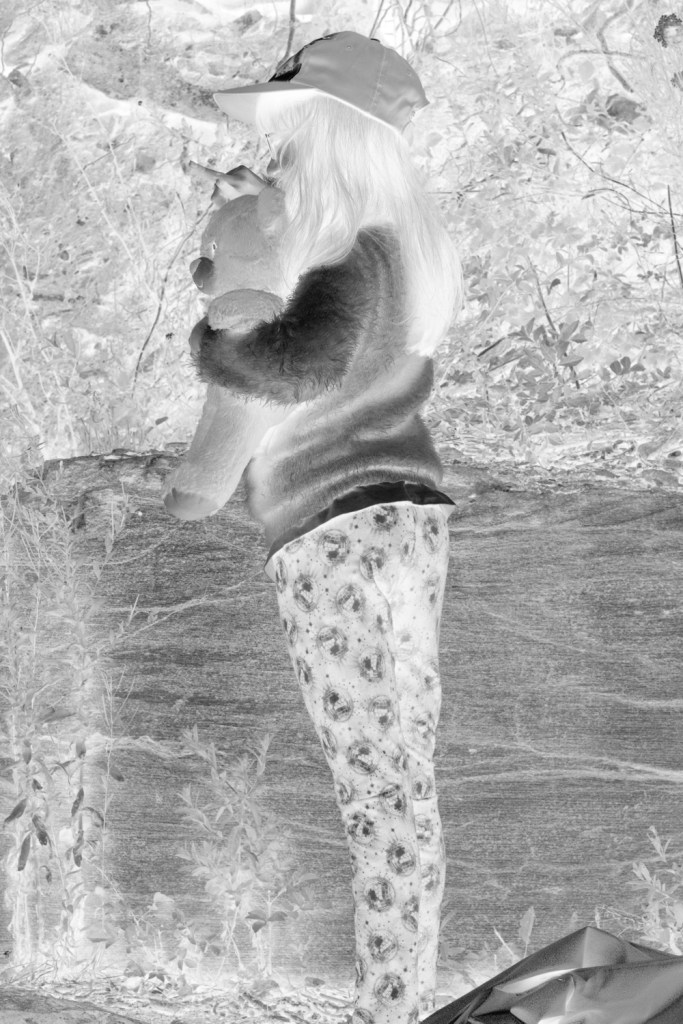
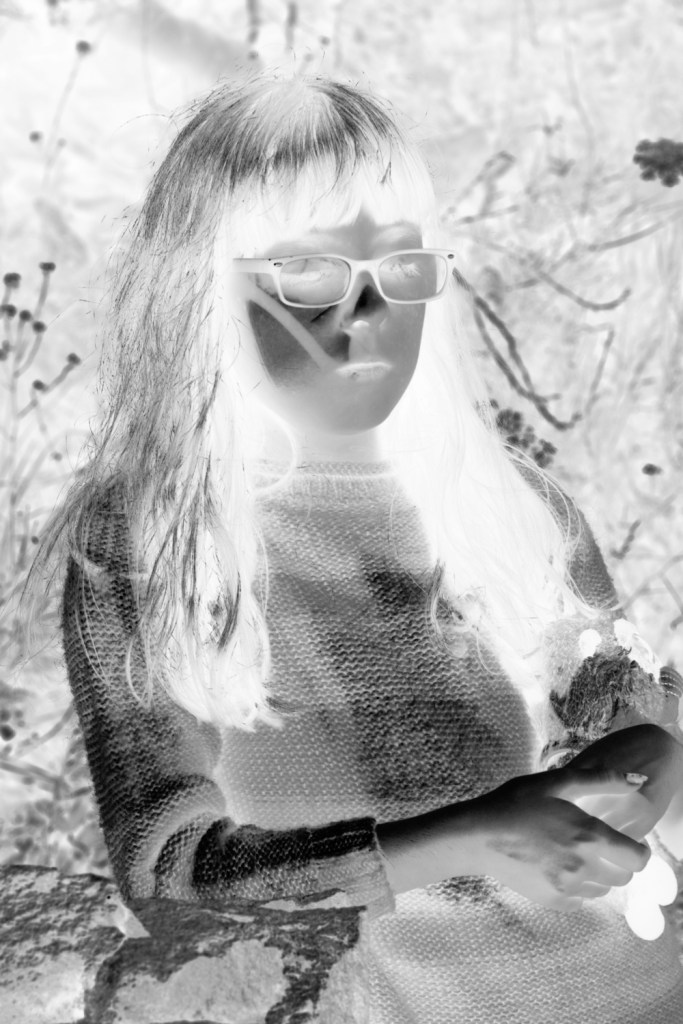
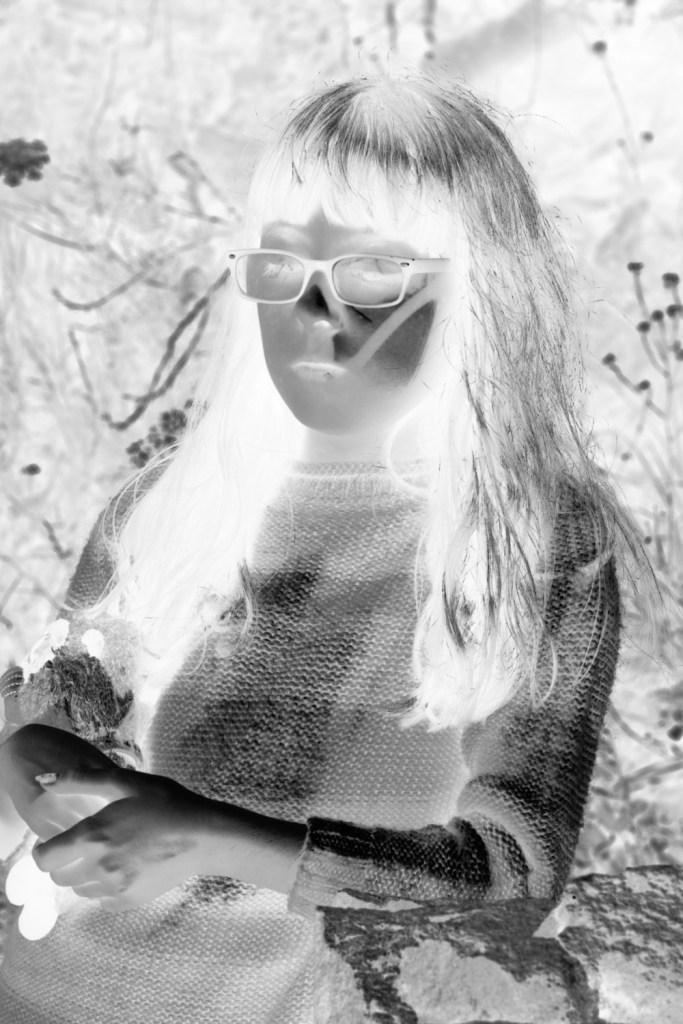
When I set out to produce the cyanotypes, I decided that I would use a simple method and purchased some paper that just required sunlight in order to cause the image to develop. Two types of paper were used for this exercise. The first, blue, paper required a short time in sunlight; between 1 and 5 minutes. The second, brown, paper required a longer time of between 5 to 15 minutes.
As can be seen in the images below the blue paper produced better results.
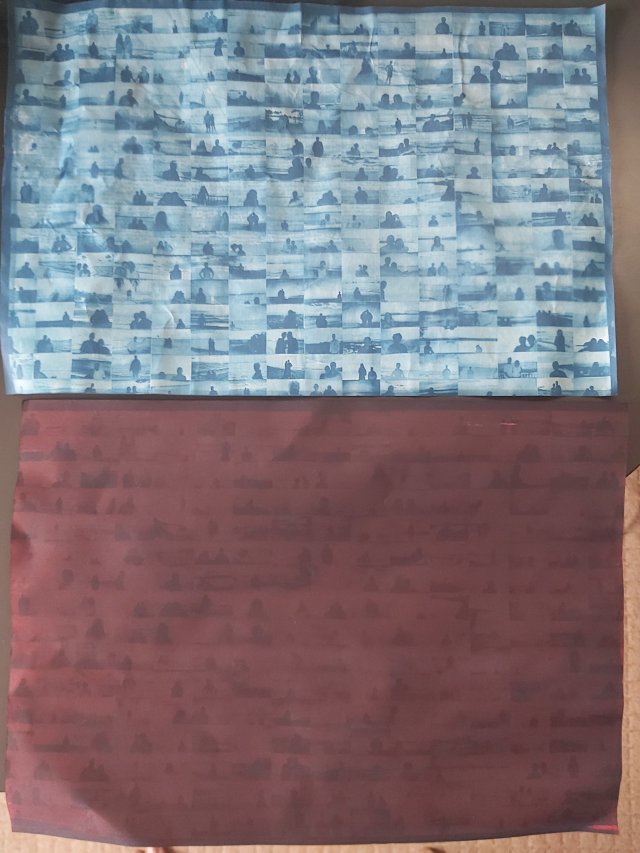
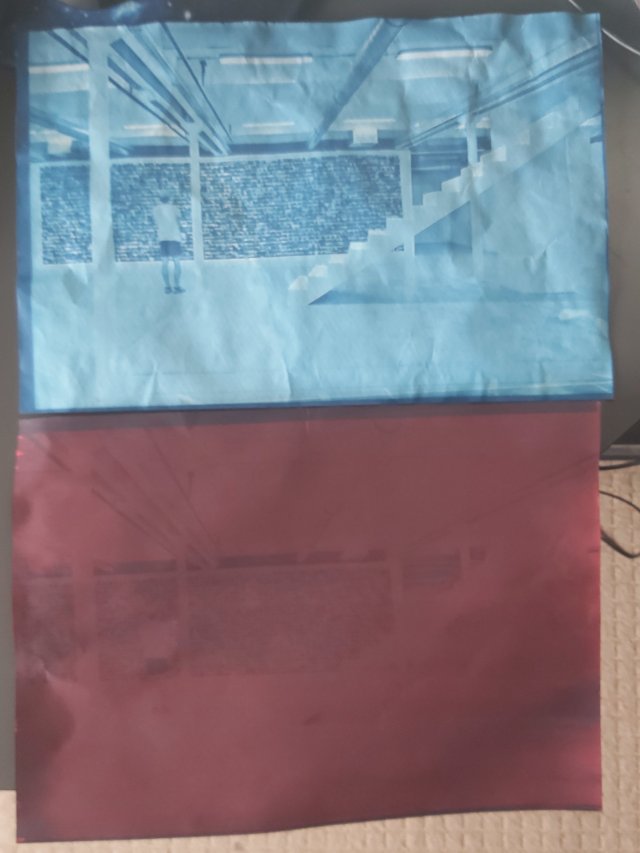
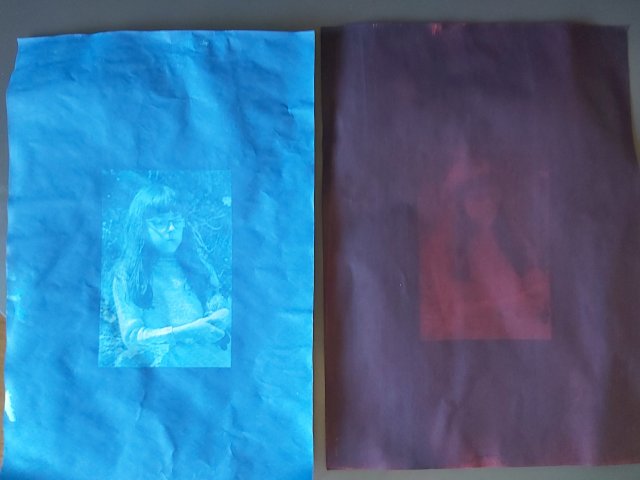
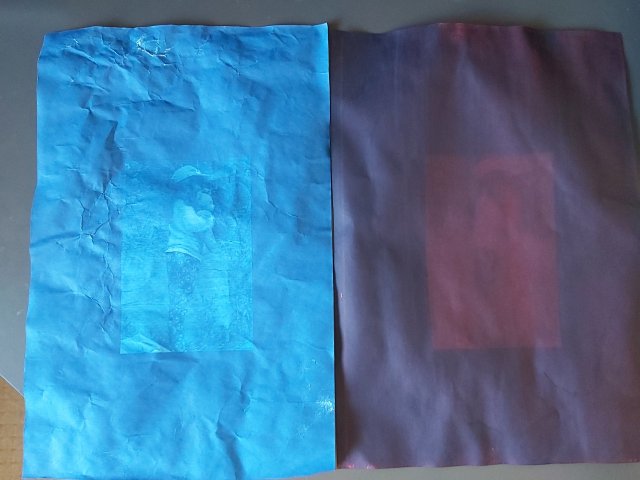
Achieving these cyanotypes was the result of a lot of experimentation with exposure times as well as placing the negatives on the paper the correct way as this is a form of contact printing. Additionally, prior to making the exposures below a step wedge was made using each of the papers to determine the required exposure time.
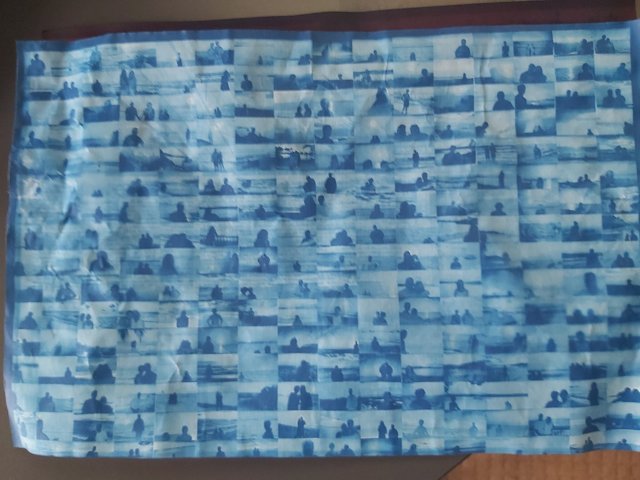
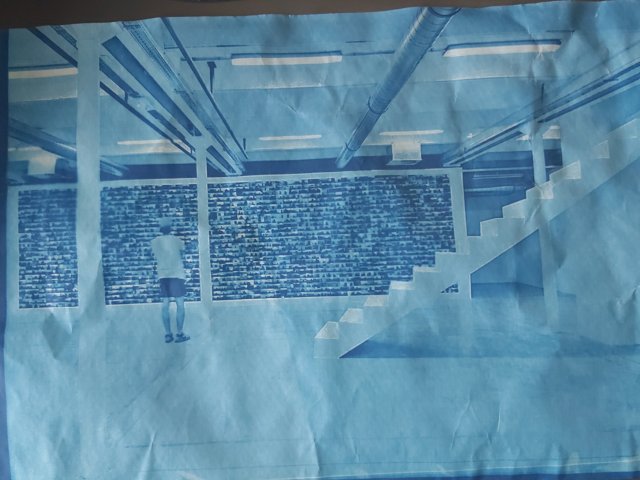
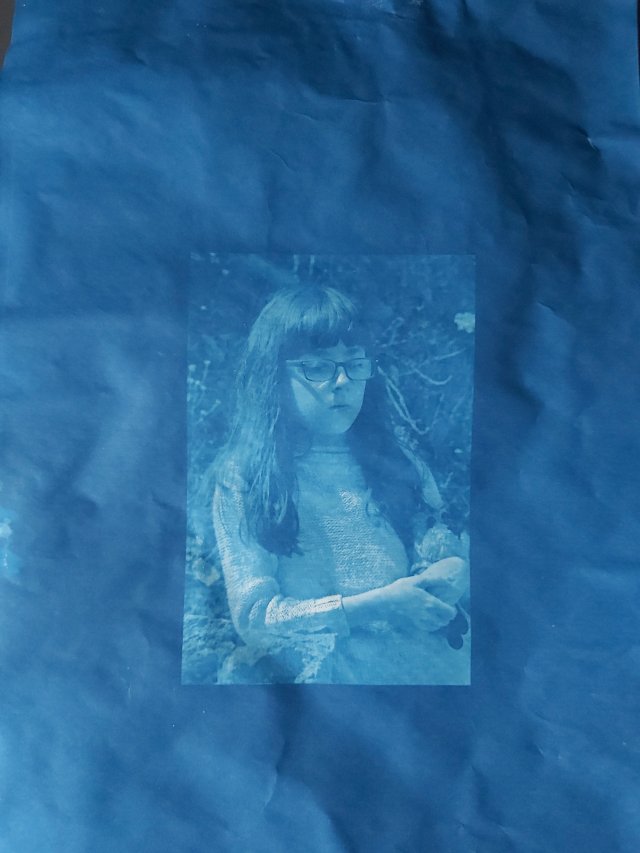
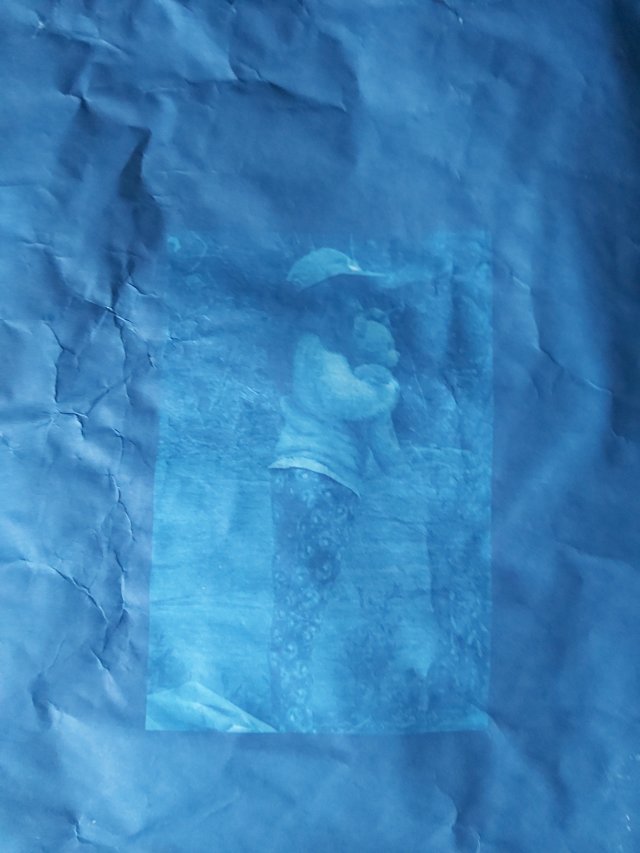
Reflecting on my work, the ways that it is different to the results of the Google Search are that it uses images taken using a camera and a digital negative. Although in the search results there can be seen several images that are similar in using this method, they are in the minority.
The second way that they differ is in the use of the brown paper. When you look at the search results you are looking at primarily blue cyanotypes, and so to be creative and stand out from the crowd you need to do something different like producing different coloured cyanotypes.
The key thing that I learned from producing these cyanotypes is that you need to have a high-quality negative. The cyanotypes produced from Penelope Umbrico’s work were from negatives of 300dpi when printed, those of my nieces were approximate 72dpi when printed at A4 and so to achieve a reasonable dpi, the image had to be smaller.
While producing these I made use of the book Cyanotype – The Blueprint in Contemporary Practice by Christina Anderson, Anderson, C (2019), which provides a guide to the history of the process, suggestions for suitable papers to use, different cyanotype formulas and a guide to artists using this technique in their work.
References
- Anderson, C. (2019) Cyanotype: The Blueprint in Contemporary Practice. London; New York: Routledge.
- Camera-less photography – Photography – GCSE Art and Design Revision (s.d.) At: https://www.bbc.co.uk/bitesize/guides/zgwpnbk/revision/10 (Accessed 10/09/2020).
- Chris Steele-Perkins (2020) In: Wikipedia. At: https://en.wikipedia.org/w/index.php?title=Chris_Steele-Perkins&oldid=977811128 (Accessed 26/09/2020).
- Chris Steele-Perkins (s.d.) At: https://www.prixpictet.com/portfolios/earth-shortlist/chris-steele-perkins/ (Accessed 26/09/2020).
- Chris Steele-Perkins | Magnum Photographer | London (s.d.) At: http://www.chrissteeleperkins.com/ (Accessed 26/09/2020).
- Chris Steele-Perkins – Magnum Photos (s.d.) At: https://www.magnumphotos.com/photographer/chris-steele-perkins/ (Accessed 26/09/2020).
- Ernst Haas (s.d.) At: http://ernst-haas.com/ (Accessed 26/09/2020).
- Make a Photogram: An Art Project for Sunny Days (s.d.) At: https://www.metmuseum.org/blogs/metkids/2016/make-a-photogram (Accessed 10/09/2020).
- Tate (s.d.) Chris Steele-Perkins born 1947. At: https://www.tate.org.uk/art/artists/chris-steele-perkins-10794 (Accessed 26/09/2020).
- V&A · Bill Brandt (s.d.) At: https://www.vam.ac.uk/collections/bill-brandt (Accessed 26/09/2020).
- V&A · Bill Brandt – an introduction (s.d.) At: https://www.vam.ac.uk/articles/bill-brandt-an-introduction (Accessed 26/09/2020).
- V&A · Bill Brandt – setting the scene (s.d.) At: https://www.vam.ac.uk/articles/bill-brandt-setting-the-scene (Accessed 26/09/2020).
- V&A · Bill Brandt: working methods (s.d.) At: https://www.vam.ac.uk/articles/bill-brandt-working-methods (Accessed 26/09/2020).
- Visura Magazine » ERNST HAAS | Color Correction (s.d.) At: http://www.visuramagazine.com/ernst-haas (Accessed 26/09/2020).
 Jenna Powell - Expressing Your Vision
Leave a comment