
Brief
Capture ‘the beauty of artifical light’ in a short sequence of shots (‘beauty’ is of course a subjective term). The correct white balance setting will be important; this can get tricky – but interesting – if there are mixed light sources of different colour temperature in the same shot. You can shoot indoors or outside and the light can be ambient or handheld flash.
Add the sequence to your learning log. In your notes try to describe the difference in the quality of light from the daylight shots in Exercise 4.1
Exampler:
Claire Daley: https://myocafotosnstuff.wordpress.com/2017/03/06/eyv-assignment-4-languages-of-light-images/
Research
Sato Shintaro
Night Lights, Sato Shintaro Photo Gallery (s.d.), is a series of images that were taken between 1997 and 1999 in Tokyo and Osaka.
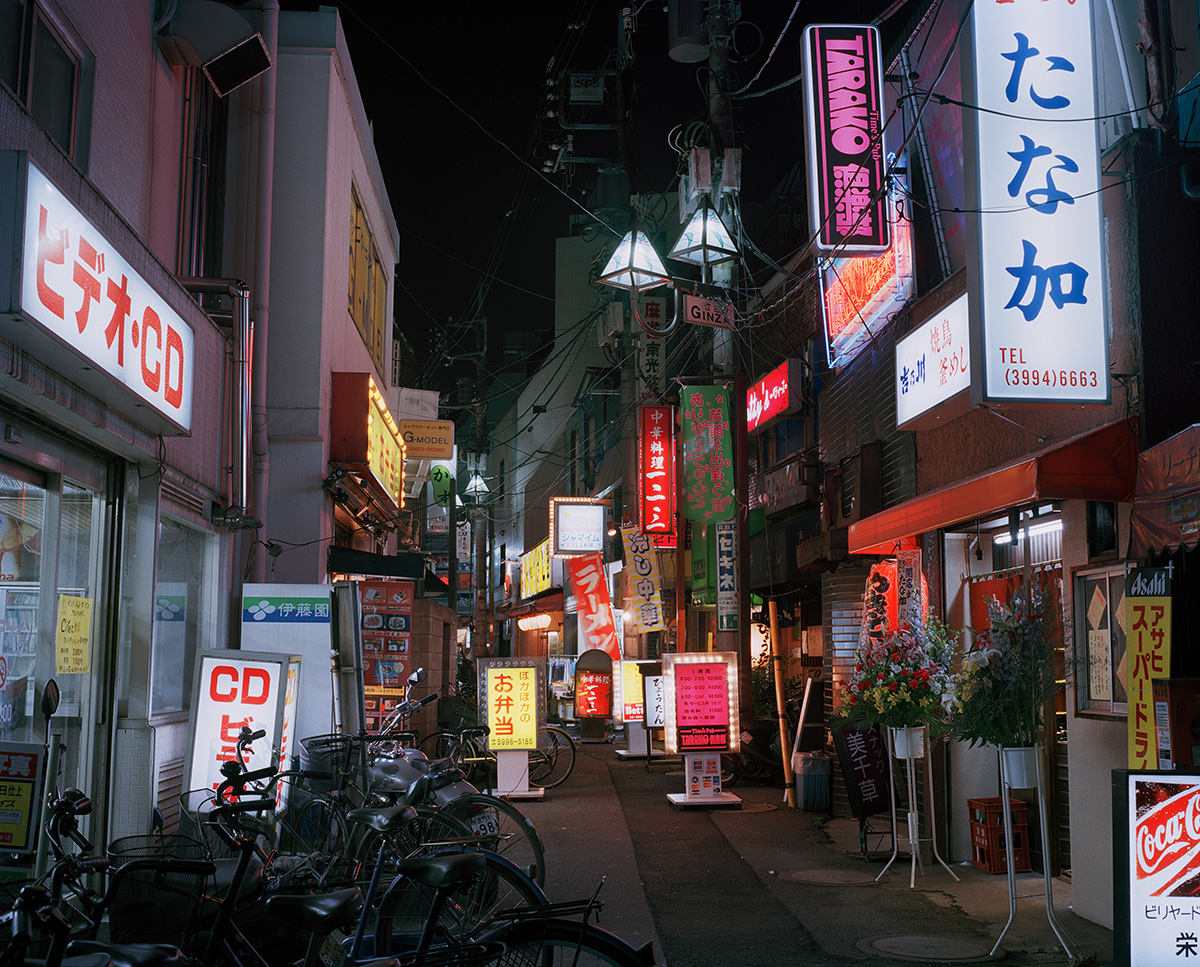
Brightly lit streets. Brightly lit street signs. Shops and businesses. No people!
Looking at the colours in this series there is colour everywhere. What’s missing in these very busy images is the people. The streets should be thronged with people, at the very least there should be one or two people but there aren’t any.
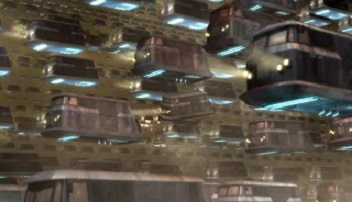
Reflecting on these images I was struck by how much they reminded me of a Doctor Who episode called Gridlock and it’s view of a future world populated by humanity. A world where until the Doctor arrives and figures out what it happening only has a few humans living above ground in a city made to house millions. Below ground, on the freeway, live the rest of the human population, survivors of a plague that shut sealed the exits to the outside.
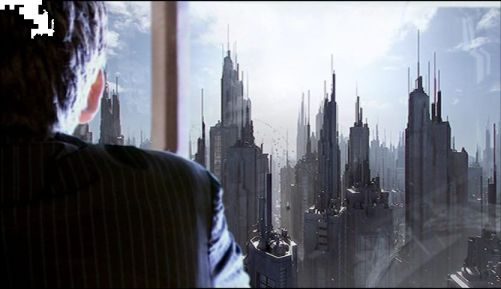
More importantly, the images are a reminder of the movie Bladerunner and the world inhabited by its people. With heavy Chinese and Japanese overtones, and constant bombardment from flying advertising screens, there is a similar feel to both the movie and Shintaro’s images.
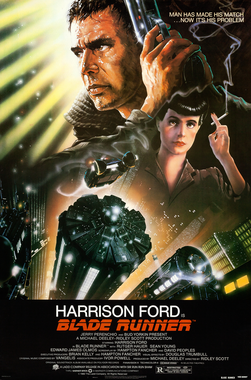
Bladerunner, however, was released 15 years before Sato Shintaro, started his project. Is this a case of art influencing real life? I don’t think so, but a lot of science fiction portrays worlds have Chinese and Japanese influences. Joss Weedon’s Firefly is an example of this, where Mandarin Chinese is used whenever the characters wish to verbally express emotion, i.e. use profanity. Some of the phrases used have interesting, and sometimes funny, translations.
In the artist’s statement Shintaro states that if you take a bustling street and remove the people, the purpose of the lighting is lost and only the glow remains.
I don’t think that is quite true, it’s certainly an aim but there are still signs of people. Bicycles, stairways, other signs of people intrude. For instance at first viewing I found that in 01 Night Lights the stairway, just above the 2F 1F sign drew my attention. The more I look at this image, the more the background bleeds through and distracts from the glowing signs, even the Pharmacy one that take up the whole of the right side of the image.
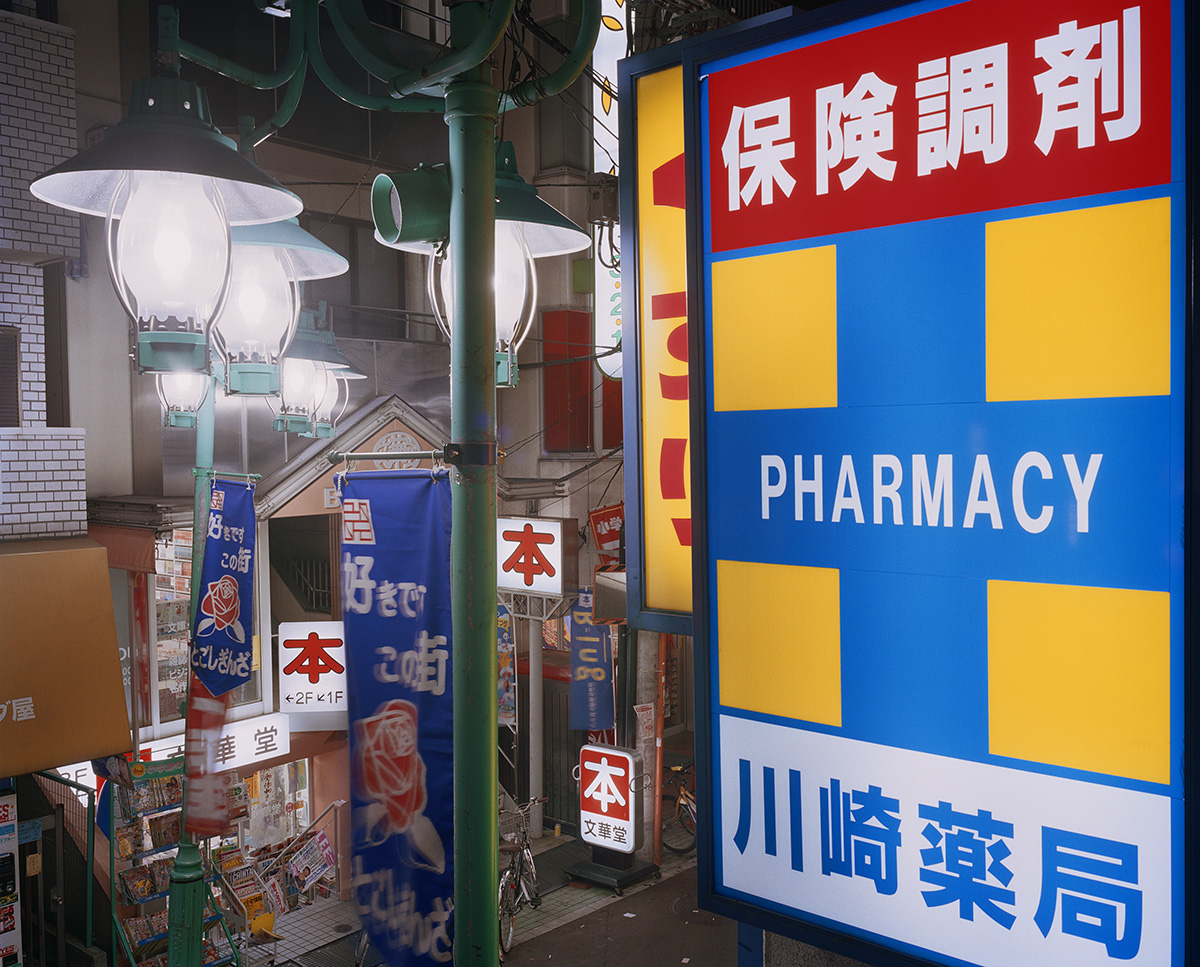
In some of the pictures in Night Lights, the background doesn’t distract and even the signs seem to fade, especially if you enlarge the image.

Despite the brightness of the images, there is an apocalyptic feel to images. As if something caused all the people to abandon areas that they frequent, very suddenly, without the time to take their things with them, or to shut up shops and premises and switch off the lights. Not something that’s likely to happen in reality, if experience is anything to go by.
Rut Blees Luxenburg
Rut Lees Luxenburg is a German photographer born in 1967. Her photographs are mainly taken at night.
When I first saw her work I was immediately drawn to the colour of the images. The sodium glow gives everything a warm golden glow.
In Viewing the Open, I love the way that the pools of water are like portals to other worlds. Some dark and foreboding, like oily sludge, others bright and inviting, full of light. In the description for this image at Rut Blees Luxemburg born 1967 | Tate (s.d.), there is mention of the traffic cone on the embankment by one of the slopes. It is barely visible. What is more visible for me is the eye at the right hand side of the image. At least that is what the light reflecting in the pool of water there looks like.
What would have been ordinary during the day time, takes on a magical quality at night.

The Libertine Sofa takes on a rich, golden quality when photographed at night. There is a certain decadence to it that would not have been out of place at the court of Louis XVI in the 18th century.

In Tyson / Bombardier, the light makes the sign stand out, everything else fades into the background, a metaphor for what happens when high profile boxing matches, worth millions to the participants and promoters take place.

Ivan Radman
Petrichor – the smell of rain. The scent you get when rain falls on dry soil.
Looking at Ivan Radman’s images it is obvious that his inspiration came from Rut Blees Luxenburg.
For me, as I look at them, petrichor comes to mind, as well as the smell of rain.
Brassai
Unconsciously I did something like Toulouse-Lautrec or Degas or perhaps Van Gogh. It was not voluntarily but because we have a culture in painting. It would not happen to a young American perhaps, who had never seen paintings and who did something with his or her sight absolutely fresh.
Tony Ray-Jones Interviews Brassai” Pt. I (1970)
The above quote from Brassai’s interview with Tony Ray-Jones leapt out at me. It was so full of unconscious bias. Europe has a rich history of art and painting. Just because the USA is a relatively new country compared to Europe, Asia and other countries, it doesn’t mean that it doesn’t have it’s own art culture nor that American’s won’t have seen paintings and been influenced by them. Especially in a world where travel to other countries was possible. Why shouldn’t a young American photographer be influenced by paintings?
If education and intelligence are important as Brassai states, then what we learn and understand is influenced by the sources that we use to gain the information that underpins our education. We are all the culmination of our experiences and the things that we are exposed to.
Claire Daley
What I like about Claire’s images is that it has shades of Sato Shintaro’s work as well as Rut Blees Luxenburg’s. The brightly lit objects stand out from the surroundings. No sign of people to distract from the objects.
It’s more than that though. I love the way that she has managed to get objects to line up within each photograph in order that they lead the eye through the image. I particulary like image 4 where the upright on the telephone kiosk leads the eye to a lampost and then onwards to the lights in the alleyway opposite and deeper into the a scene.
Exercise
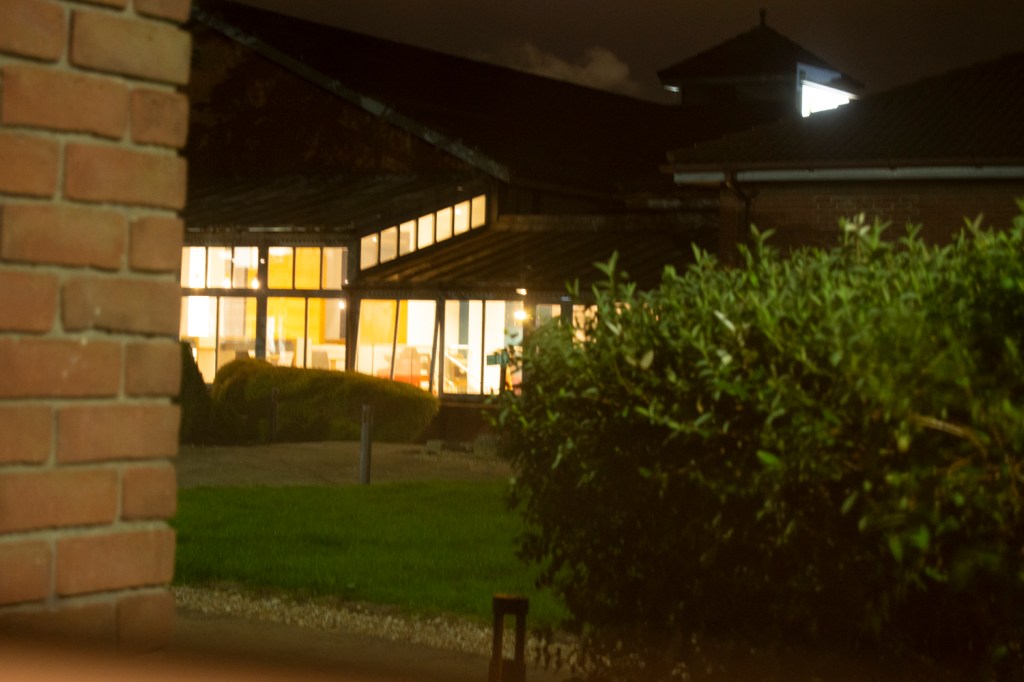
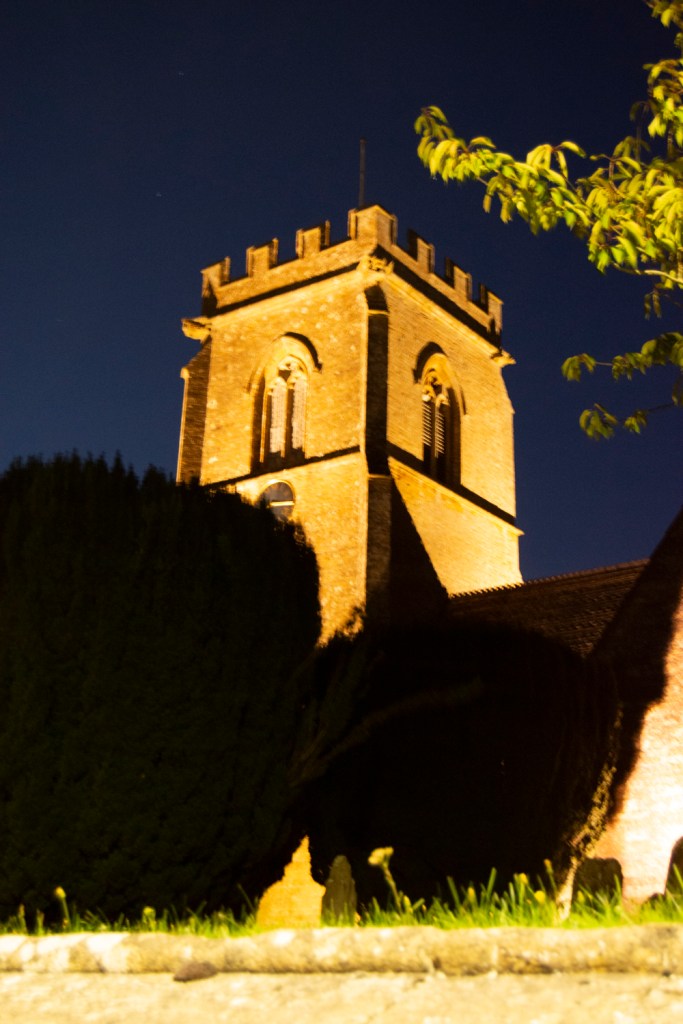
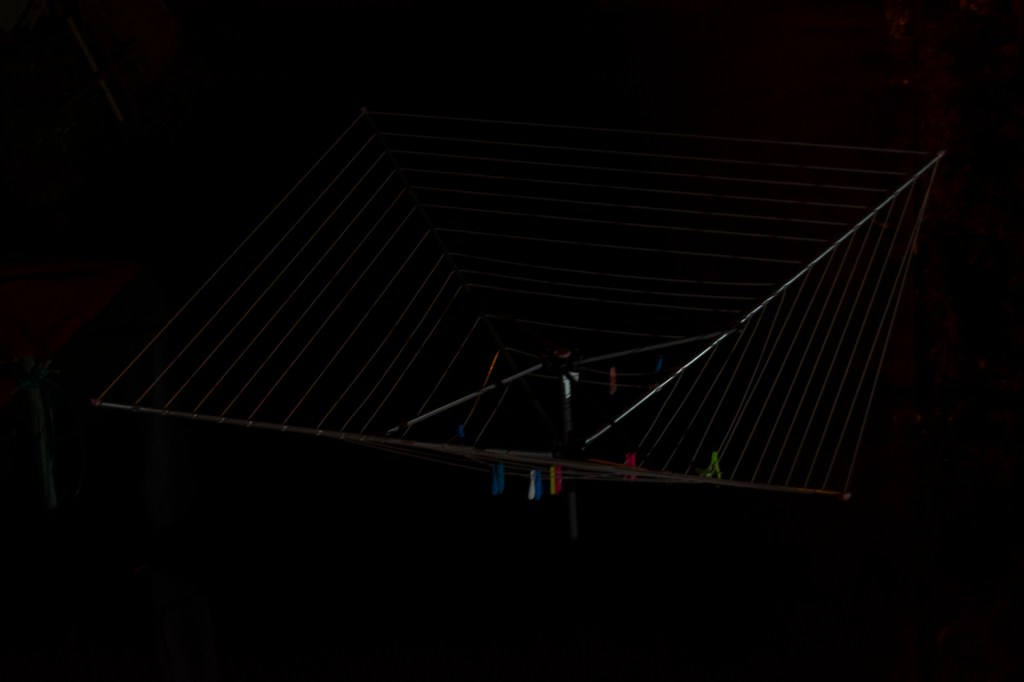
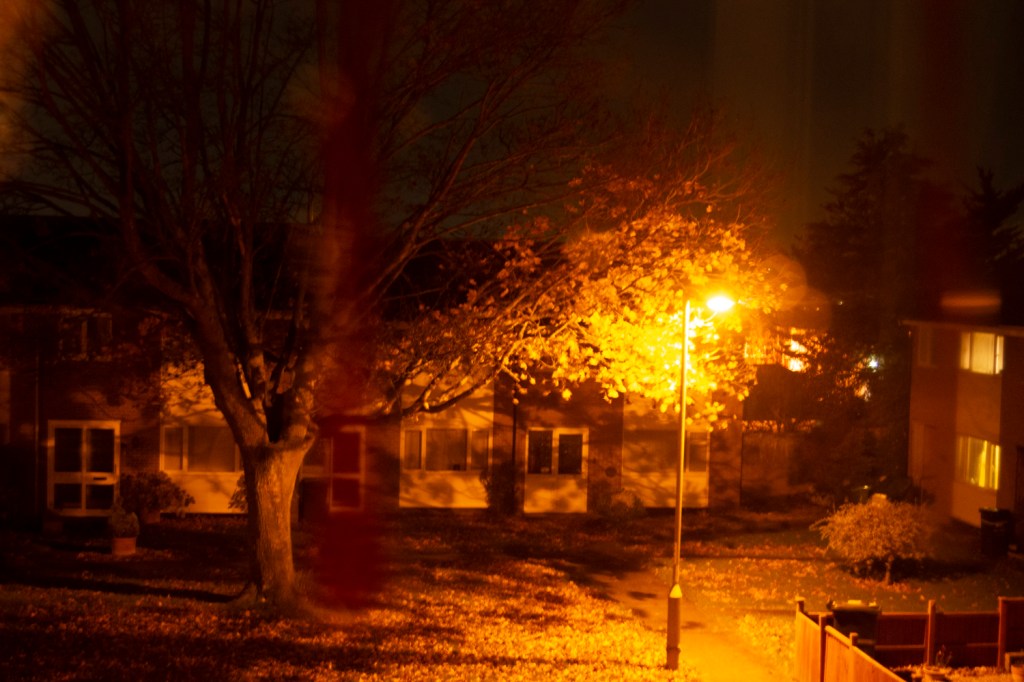
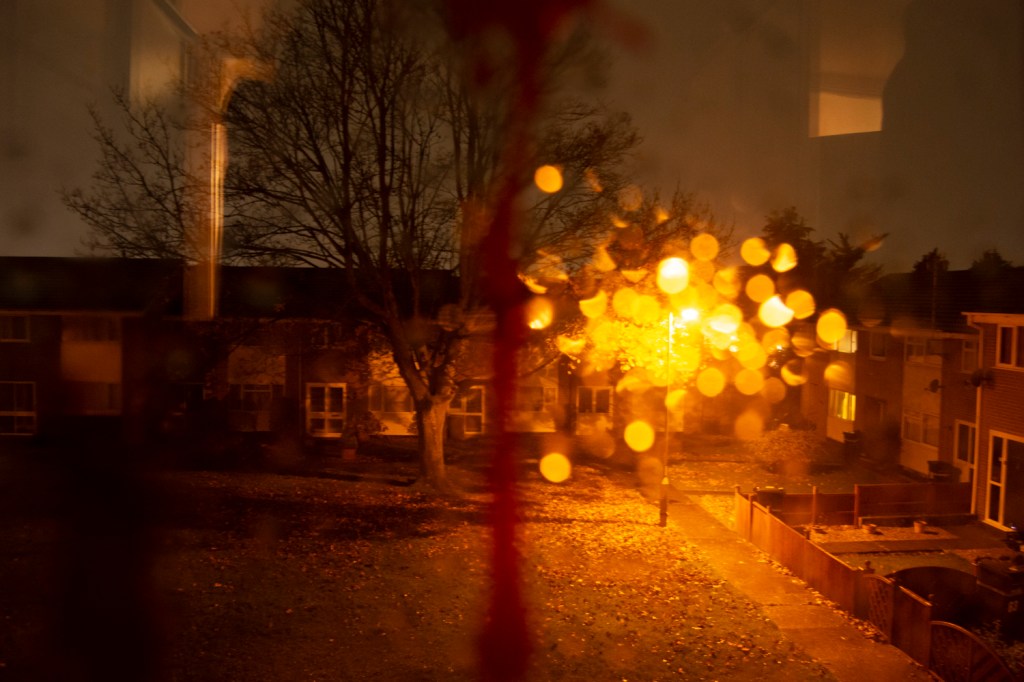
The images above were taken over a period of time and at different locations. The top left image was taken from a hotel room in Portsmouth, looking across to the restuarant. The bright lights illuminating the courtyard.
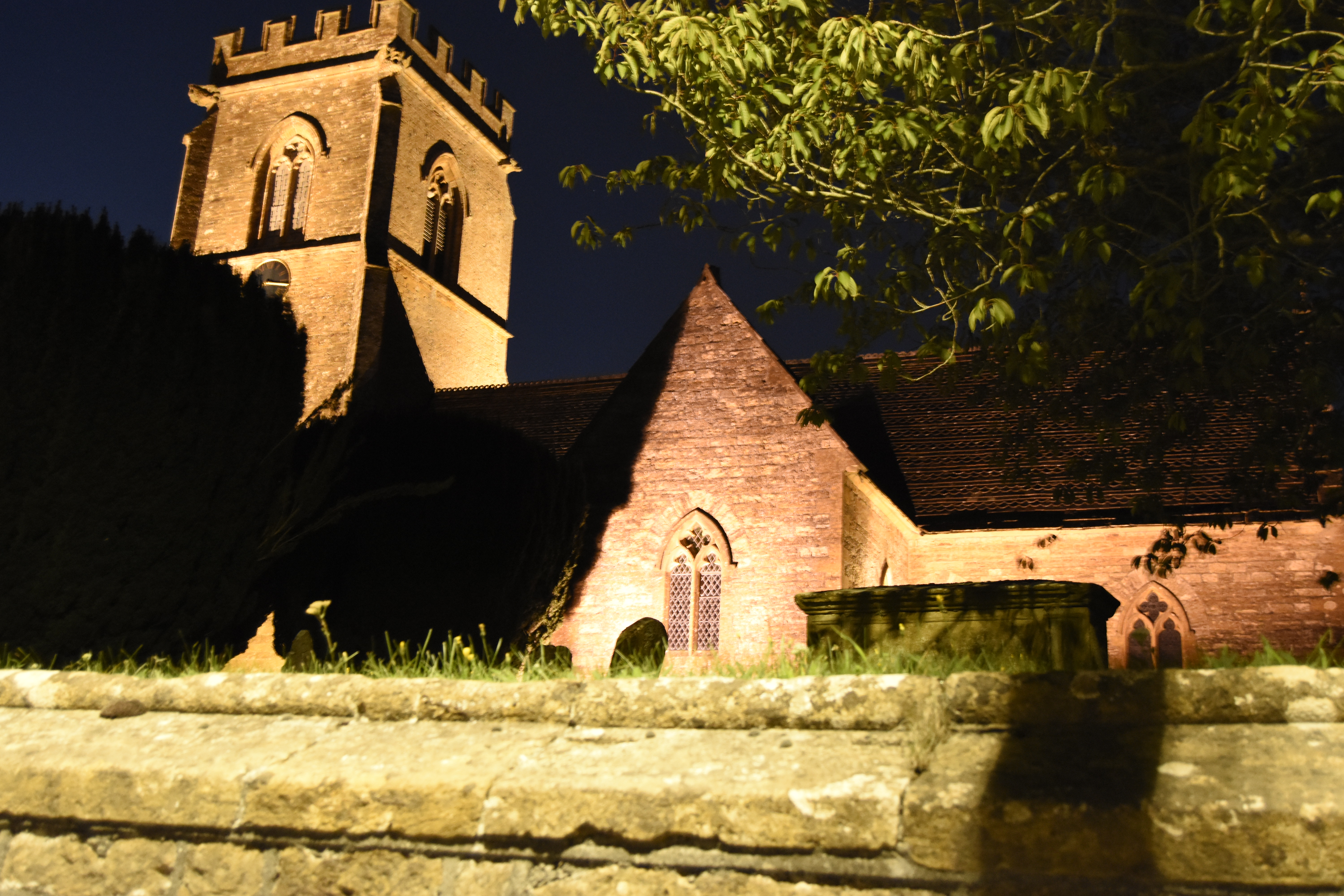
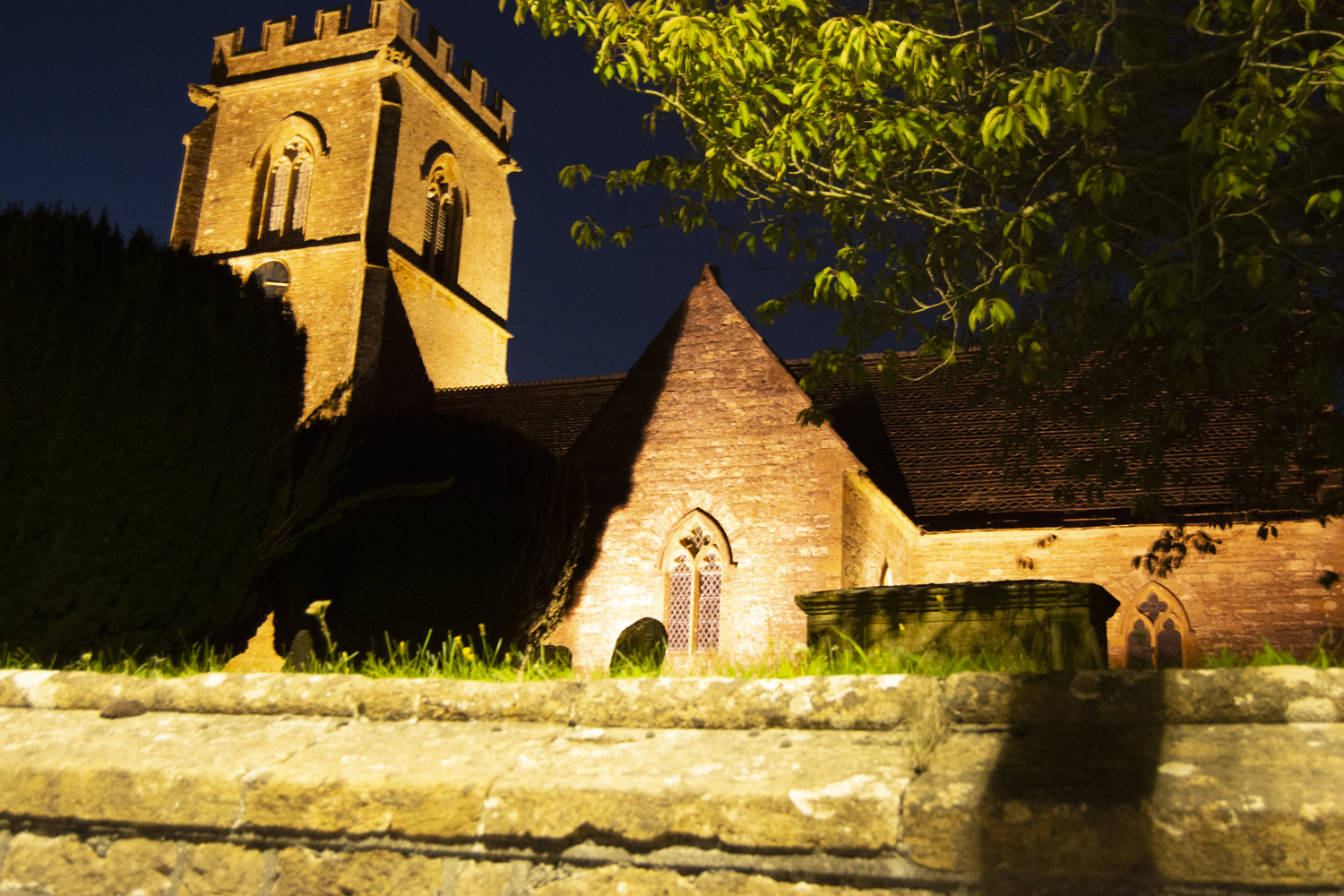
The top middle image was taken one evening and is of a church close to where I live. The church is illuminated by street lights and some flood lights.
The top right image was taken looking out of the bedroom window overlooking my garden and is of a rotary clothes dryer. The light illuminating this comes from my neighbour’s security light.
The bottom two images were taken from a bedroom at the front of my house and are of the tree on the grass area in front of the houses, with the street light illuminating the scene. In the second image it has just started to rain and the water droplets on the window make it look like a swarm of fireflies surrounding the street light.
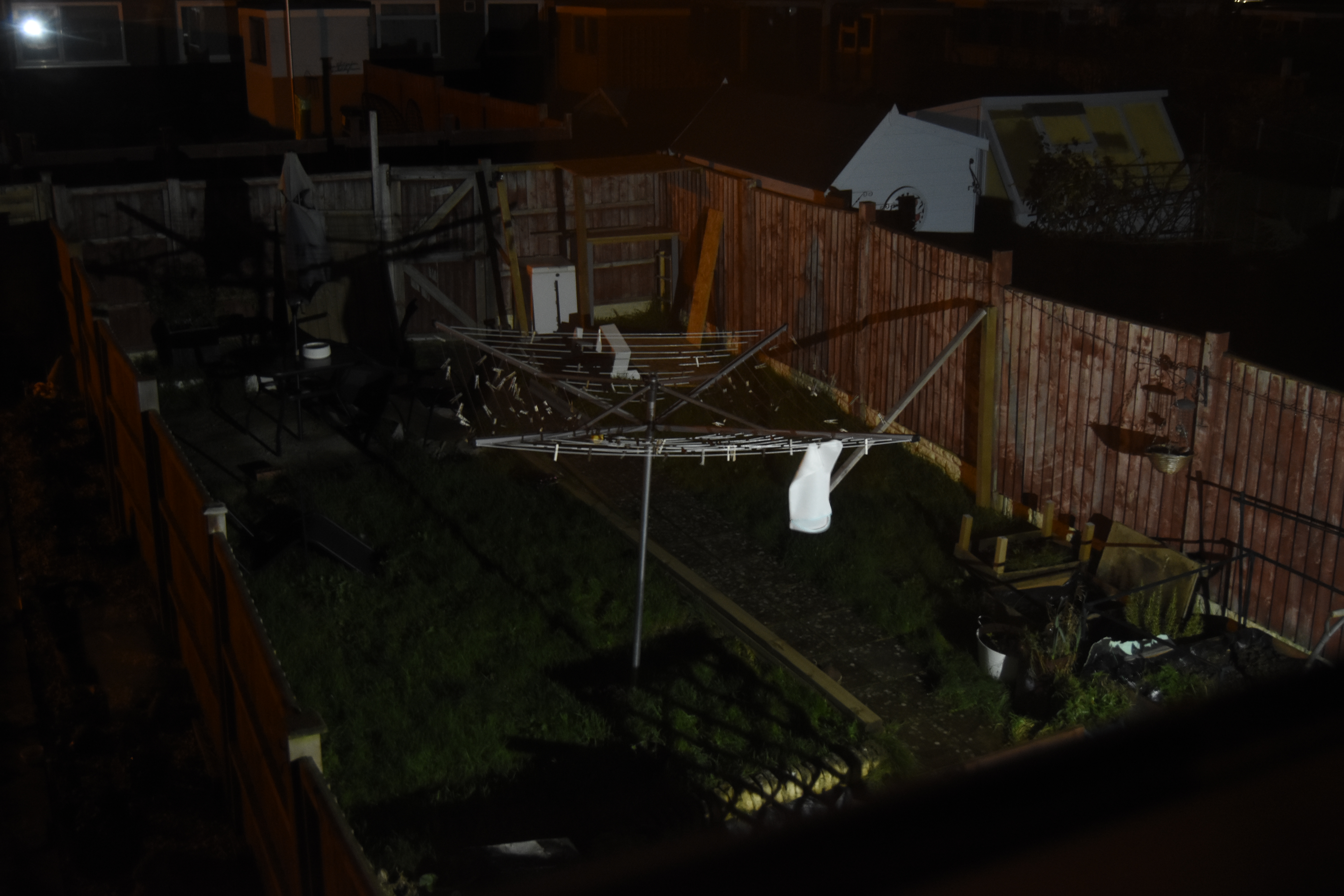
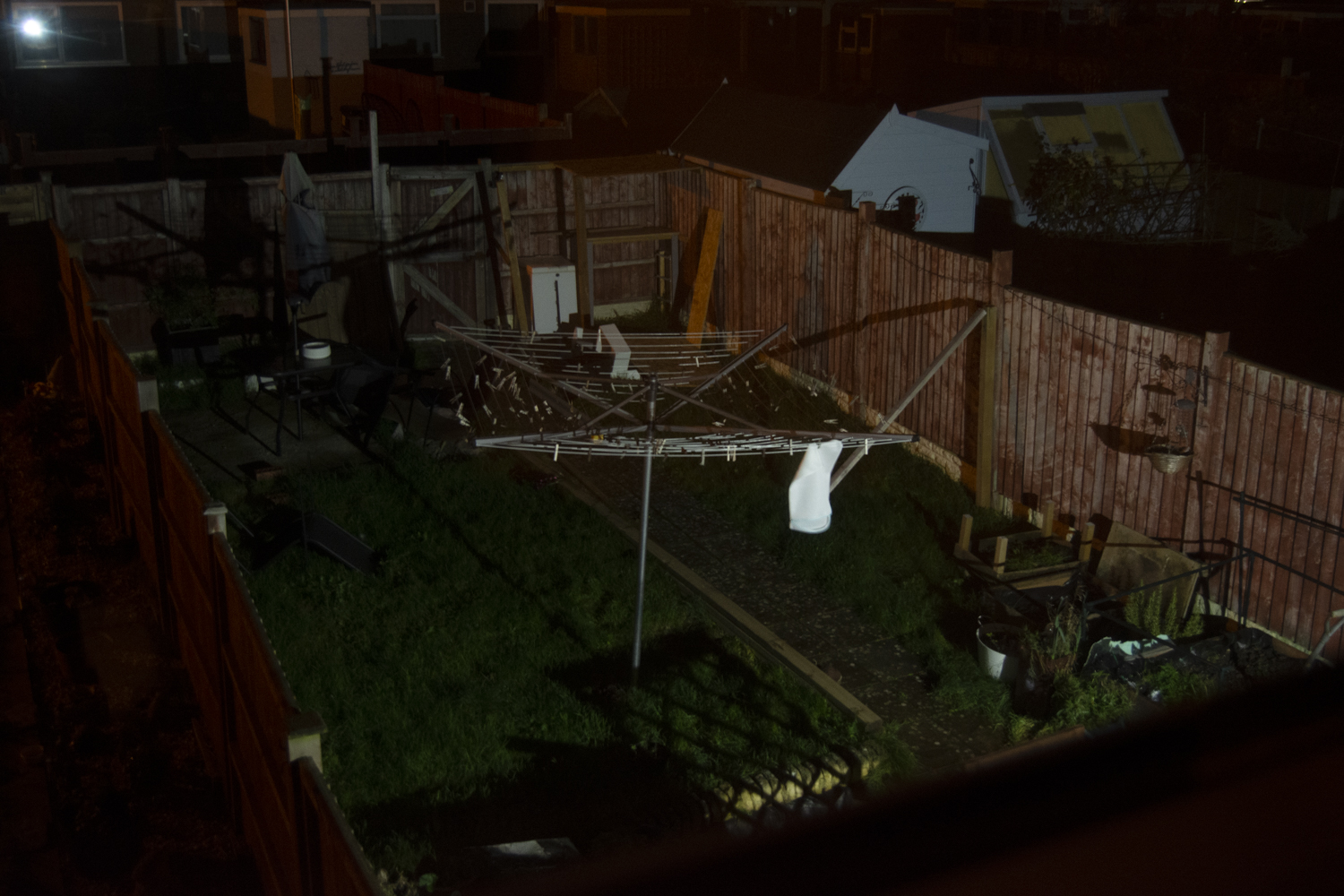
My camera is set up to take images and store them as both JPEG and NEF format. When I downloaded the image above and the one below I noticed when I viewed them in Windows photos that the NEF files had more detail compared to the JPEGs produced by the camera. I know that the NEF format store a lot more detail than the JPEG format, which allows for the level of detail to be adjusted when processing in an application like Lightroom or Photoshop but having taken these images in low light conditions with artifical light the difference was visible for the first time.
In the image above the increased level of detail is particularly visible in the shadows in the top left corner of the photo.
In both cases, here, the image visible when the slider is to the far right is the JPEG, and when to the far left, the NEF, without any processing and exported from Lightroom as a JPEG.
References
- ASX, E. @ (2011) Tony Ray-Jones Interviews Brassai” Pt. I (1970). At: https://americansuburbx.com/2011/08/interview-brassai-with-tony-ray-jones.html (Accessed 03/08/2020).
- claira47 (2017) EYV Assignment 4 Languages of light – Images. At: https://myocafotosnstuff.wordpress.com/2017/03/06/eyv-assignment-4-languages-of-light-images/ (Accessed 03/08/2020).
- ivanradman (2015) 4.3. At: https://ivanradman.wordpress.com/2015/12/14/4-3/ (Accessed 03/08/2020).
- Rut Blees Luxemburg born 1967 | Tate (s.d.) At: https://www.tate.org.uk/art/artists/rut-blees-luxemburg-3652 (Accessed 03/08/2020).
- Sato Shintaro Photo Gallery (s.d.) At: http://sato-shintaro.com/work/night_lights/index.html (Accessed 03/08/2020).
- Gridlock (Doctor Who) (2020) In: Wikipedia. At: https://en.wikipedia.org/w/index.php?title=Gridlock_(Doctor_Who)&oldid=970108656 (Accessed 08/08/2020).
- Rut Blees Luxemburg (2020) In: Wikipedia. At: https://en.wikipedia.org/w/index.php?title=Rut_Blees_Luxemburg&oldid=964163356 (Accessed 08/08/2020).
 Jenna Powell - Expressing Your Vision