
Brief
Take a series of 10 photographs of any subject exploring the theme ‘Photography is Simple’. Each photograph should be a unique view; in other words, it should contain some new information, rather than repeat the information of the previous image.
Notes
This assignment took me back to my youth, before the days of digitial cameras. Although I have, occasionally, used film cameras in recent years, the time that I was doing that most regularly was when I was doing an evening class in black and white photography. The advantage to using film during that course was that I was developing my own film and so could work out which images I wanted to print.
During this assignment I didn’t have access to a darkroom and so when it came time to send off the film for processing I didn’t know what I was going to get back, if I was going to get anything back at all. Of the 38 photographs I took, 33 of them came out with something that the company I sent them to were able to print out.
Of those 33 images, a number of them I was able to rule out using because they were uninteresting or too blurred to be worthwhile using. Still, opening the envelope with the developed film and prints was exciting because I didn’t know just how many photographs would be in there.
Using a basic camera for this activity meant that I didn’t have to worry about the settings I was using. The film speed was defined by the 35mm black and white film I had available. All I had to worry about was finding things to photograph.
So how well do I think I fulfilled the brief.
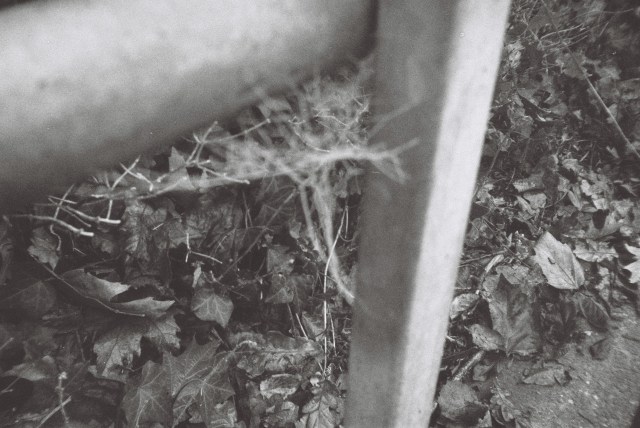
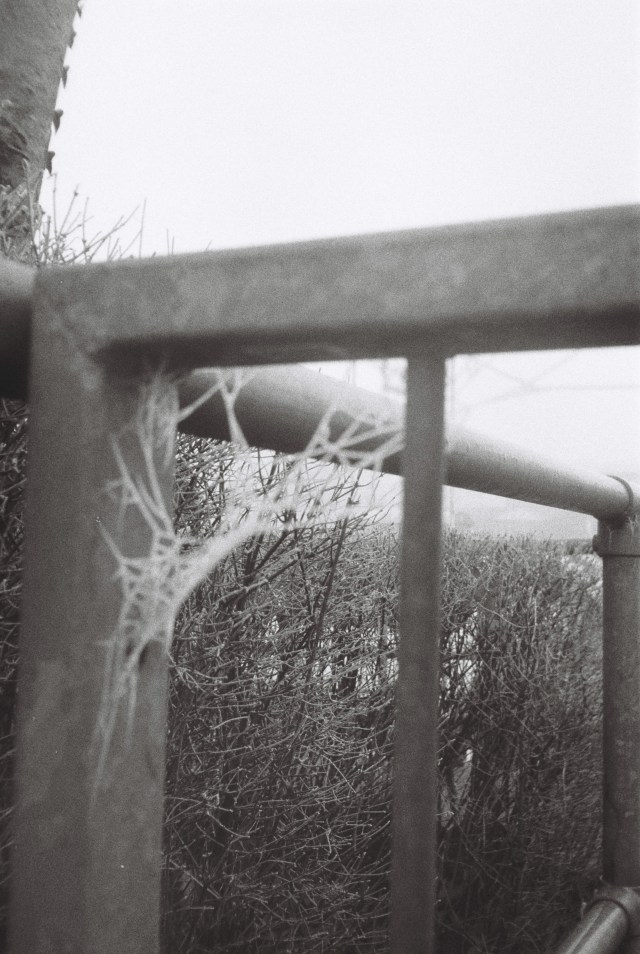
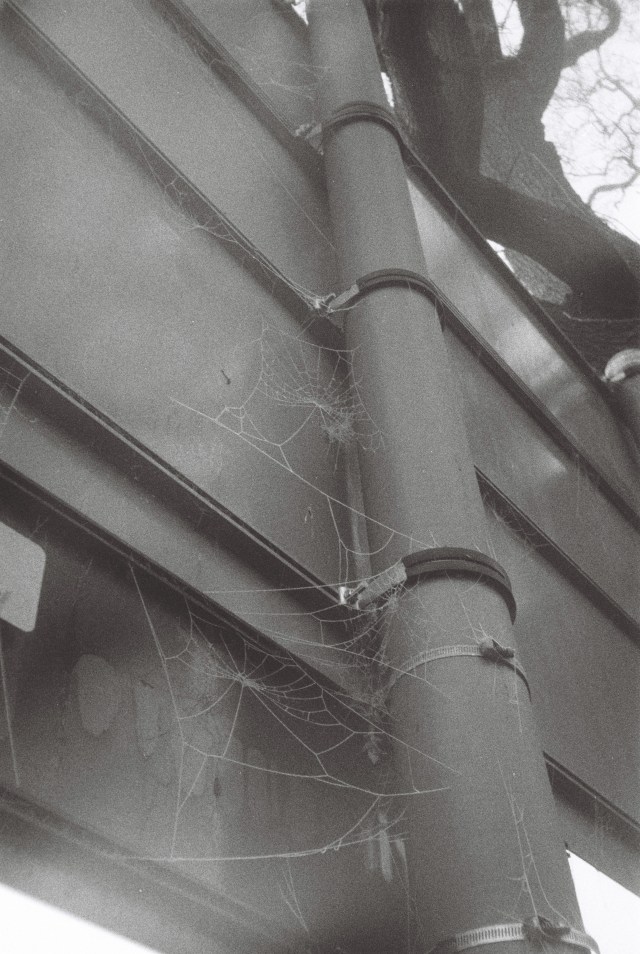
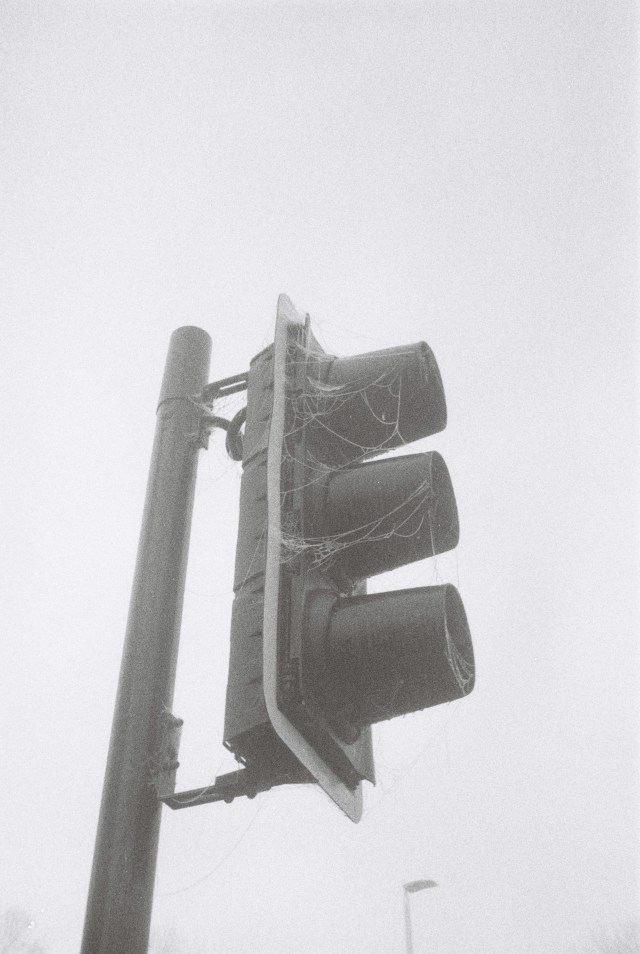
The first set of four images have a theme running through them, spider webs. Why I feel that these fit the brief is because they do build on each other. In image 1, there is vegetation but it is not clear at what of time of year the photograph was taken. In image 2 you get more information because you can see that bushes in the background don’t have leaves, which implies it is autumn or winter. In image 3 you begin to see that spiders will spin webs whereever they can, including the back of road signs. How many times do we look at the back of road signs? As drivers, not very often, and certainly not close up like this. Only when you are on foot can you get this close. The same with image 4, spiders get everywhere.
The reason I took these photographs is because I spotted spider webs on one of the other traffic lights on the roundabout where image 4 was taken. Having noticed them they would be a good subject for photographing. It was only when I got there that I found all the other places where there were webs. If it hadn’t been winter and the cold was making them stand out I wouldn’t have even noticed them.
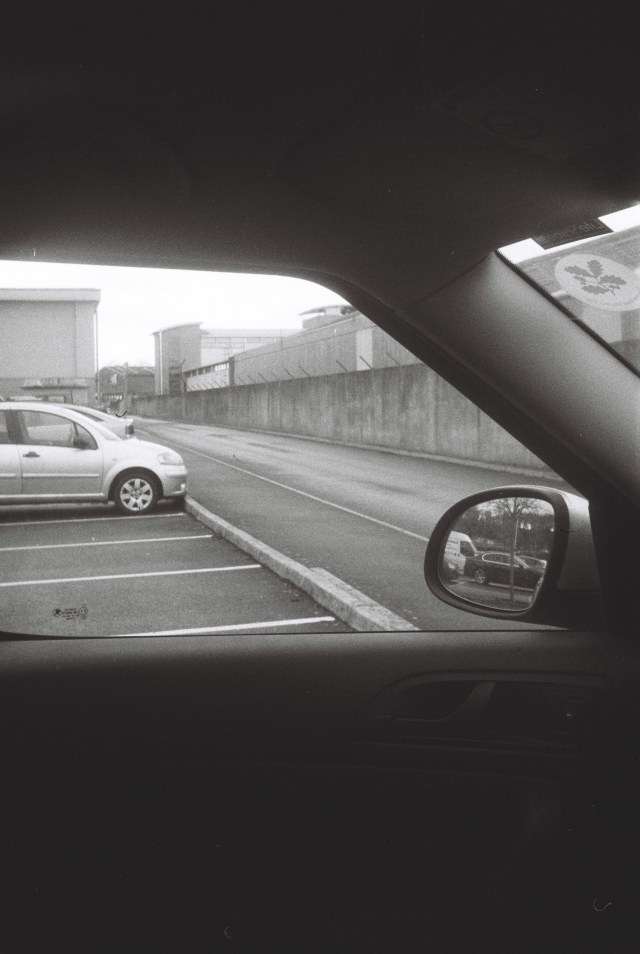
In image 5 I was waiting for my partner to finish work, and bored I got out my camera and took some photographs of the exit road from her workplace. I wasn’t expecting anything exciting from this photograph but when I saw it I noticed that I’d caught the cars behind me in the wing mirror. Unintentional but something that adds another element to the photo and draws the eye.
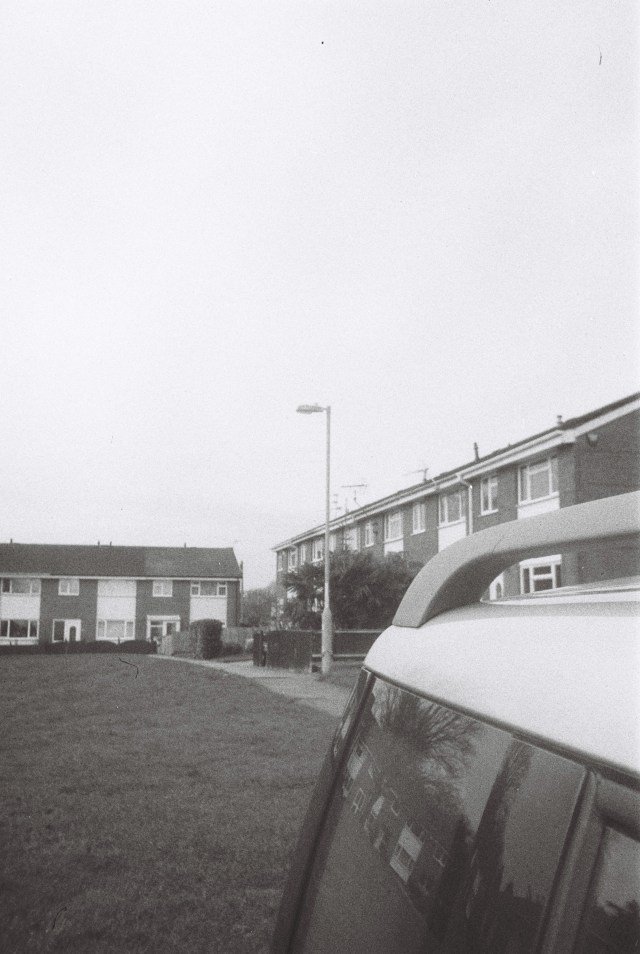
In image 6 I was taking a photograph towards my house. Seeing the photo I noticed that I’d caught the reflection of the houses in the side window. Again, this was unintentional, but I think gives an added dimension to the image because what was out of the shot, has been drawn into the image.
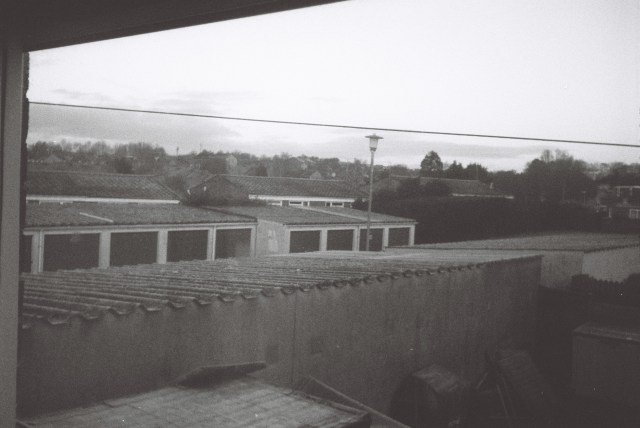
Image 7 was a simple shot out of a bedroom window. What drew me to this is that it has elements that are clearly in the foreground, mid and background, and so has depth. It shows that you don’t have to go very far to find a view that will highlight the different depths that can be within an image.
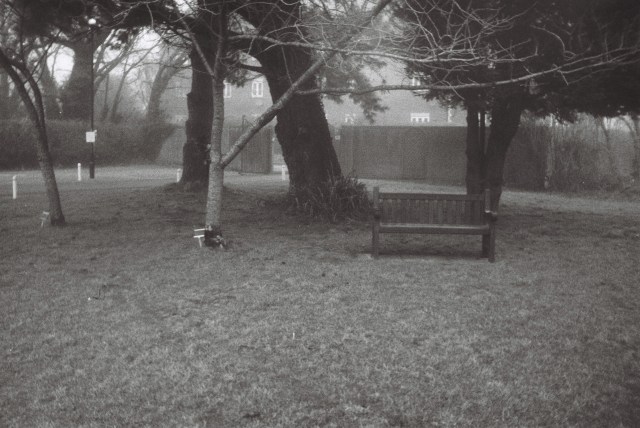
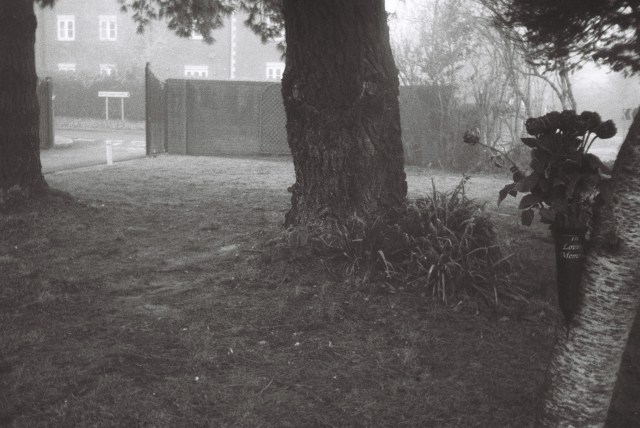
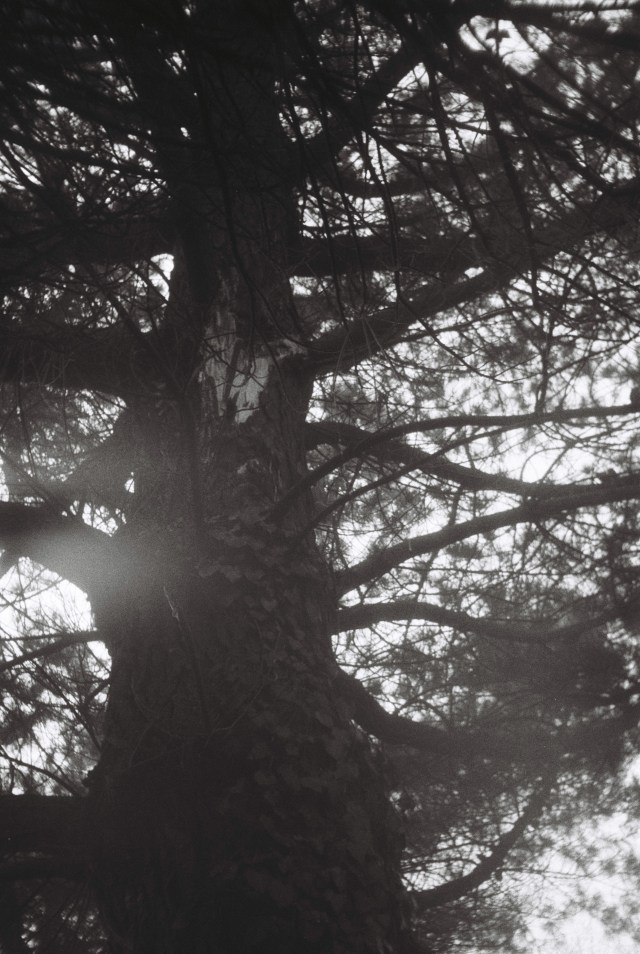
In the last 3 images I was at the crematorium when a squirrel appeared. I took a number of photographs trying to capture it but it always moved out of the way just at the moment I released the shutter. Even though it is the same tree I think each of the photographs adds new information. In image 8, you could be anywhere, even a park. In image 9, you see the In Loving Memory pot on the tree and it can no longer be a park because you don’t normally see pots like that attached to trees. The final image is a close up of the tree, and you can seee the bark on it and get an idea of the texture of the bark. If you look really hard you can just about make out the squirrel in the branches.
Going back to basics was refreshing. It showed me that it doesn’t take the latest gear to take a photograph. You don’t need to go looking for the perfect vista, or spend ages posing someone or arranging something. Photograph is simple. All you need is a pair of eyes, the willingness to use them and to pay attention to your surroundings because there is always something to photograph.
One of the things that I wanted to do with this assignment was not to go out with an idea of what I wanted to photograph. I didn’t want to go out with the plan of capturing a series of images that would build on each other but could still be linked by a theme, for instance going for a walk in the countryside. I delbierately set out with the idea of carrying my camera with me everywhere and taking a snap whenever I saw something that drew my attention. I think with the photographs that I took I achieved that.
There were somethings that I tried to take photographs of, which didn’t work out because of the limitations imposed by the camera. If I’d had a lens that would have allowed me to get closer shots of some objects then I would have had more variety when it came to what I had to chose from.
Also I would have liked to have had more time to take a larger number of photographs, because again it would have given me more variety to chose from.
The other reason that I believe I’ve fulfilled the brief is because by chosing to use film rather than digital, and then finding myself in lockdown because of the pandemic, I wasn’t able to make use of places like Boots, camera shops or supermarkets, in order to get my film processed. Instead I had to find somewhere online where I could send my film to be developed. In the same way as when Kodak first introduced their cameras for people to take photographs with and used the slogan “You Press the Button, We Do the Rest”, I found myself in the same position as those early photographers, taking pictures of their families and travels and then sending of their precious images to someone else to make decisions about how they should be developed and printed.
 Jenna Powell - Expressing Your Vision