
Brief
Taking the photography of Mann, Atget or Schmidt or a photographer of your own choosing as your starting point, shoot a number of photographs exploring the quality of natural light. The exercise should be done in manual mode and the important thing is to observe the light, not just photograph it. In your learning log, and using the descriptions above as your starting point, try to describe the qulaity of the light in your photographs in your own words.
Research
Sally Mann
Mann’s work is a masterclass in how to use natural light for outdoor photography. The exhibition catalog Sally Mann: A Thousand Crossing (2018) contains over one hundred images taken in and around Mann’s home in Virginia, USA.
In the image ‘Sensible Hole’ we see a water-side scene. The foreground of the image is the surface of the water with a few trees, pale and ghostly, reflected in its surface.
The background is the trees, their leave and branches lit by the light, but not reflected in the surface of the water. It’s like you are looking at the living world and the underworld, the realm of Hades, home of the dead.
In the middle of the image an area of ground stands out from everything else, bare of vegetation, this lit area draws the attention.
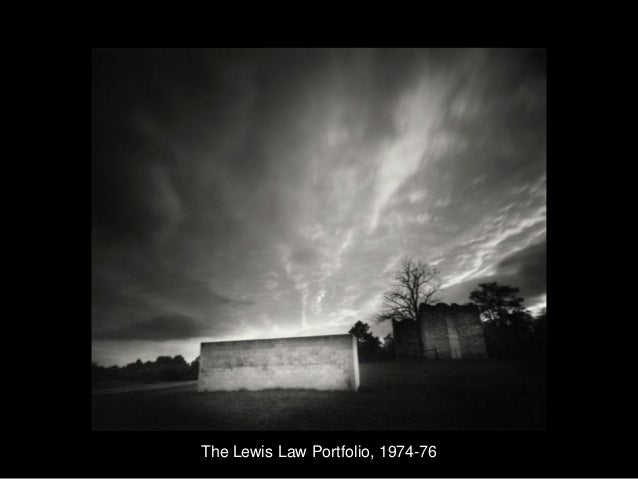
In ‘Untiltled, Lewis Law’ Mann made use of a long exposure time at night, combined with modifications to her camera lens using a toilet roll to block the light. This resulted in an image, where what should have been a dark wall, seems lit up from within.
Mann’s use of light in her photographs allows her to focus the viewers attention. In the image ‘The Ditch’, the majority of the image is dark, however, a single bright area brings the viewers attention to the young boy lying in the ditch, dug out of the riverbank.

In ‘Jessie at Six’ the reverse is true. The majority of the image is bright. Details in the background are out of focus or completely obliterated by the light. This leaves the darker, more defined figure of Jessie and the tree she leans against as the focus of the image.
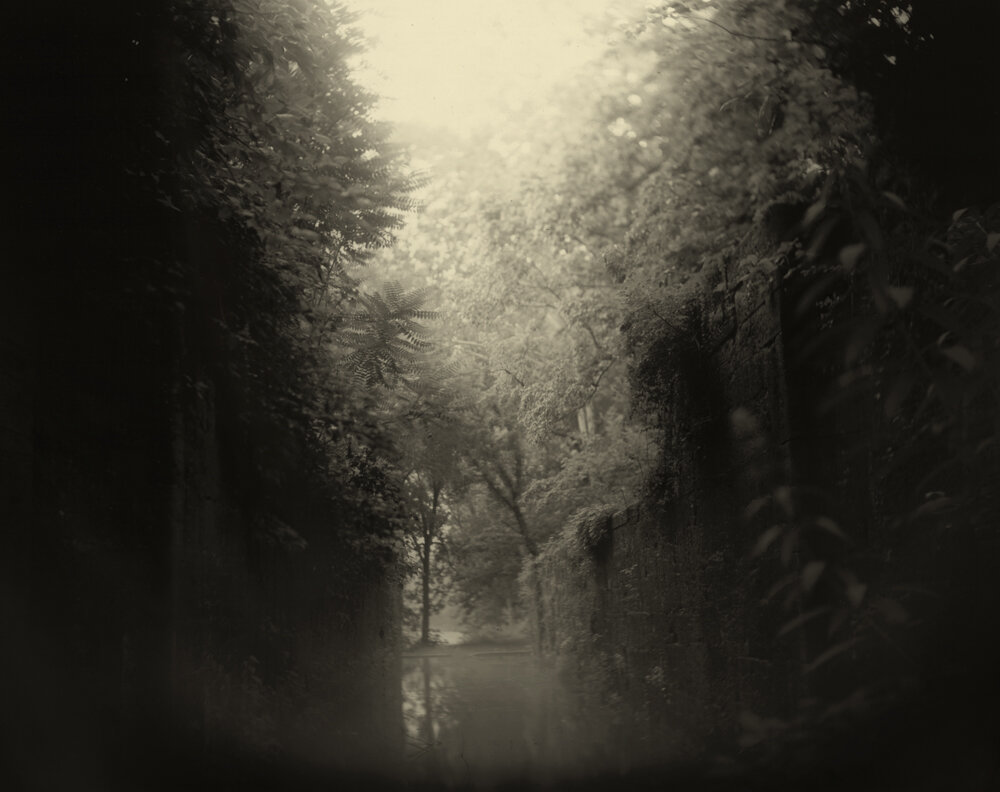
In Southern Landscape (s.d.) we see a series of landscape images from Virginia, Georgia and other parts of the American Deep South. Each of the images has a dreamlike quality to it because of the way that the landscape is lit. The way that parts of the images are in focus while other parts are just out of focus adds to this dreamlike impression. It’s like when you wake up from a dream and during those first few moments try to cling to it but all you get are fleeting images that stand out clearly as the rest of the dream fades away. It’s not always the obvious that is in focus, in the image of a canal below, the fern in the middle left of the image stands out more than closer items, drawing attention to it.
The vinagretting effect in a number of the images can also bee seen in this image, and because of the composition of the image there is the faint continuation of this effect in the centre of the image where the eye and the brain want to add a circular effect using the canal walls and the vegetation. Almost like your are being drawn in to the image the more you look at it.
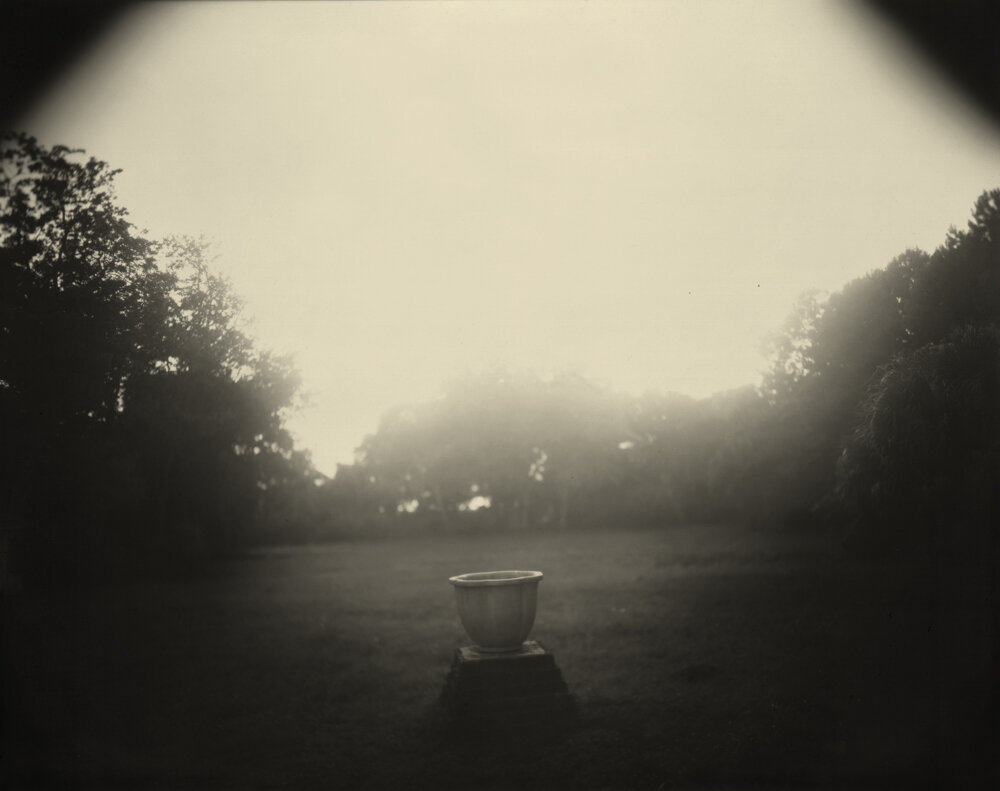
There is also something heavenly about several of the images. The way that the light seems to pour down from above onto objects, for instance, the photograph with the large urn in the Virginia series. There is an almost religious quality to the image that is reminiscent of religious painting where a light shines down from above lighting up Jesus, a saint or some other religious figure.
The Deep South image ‘Swamp Bones’ as a much scarier feel to it. The tree limbs looking like some alien creatures emerging through the mist.
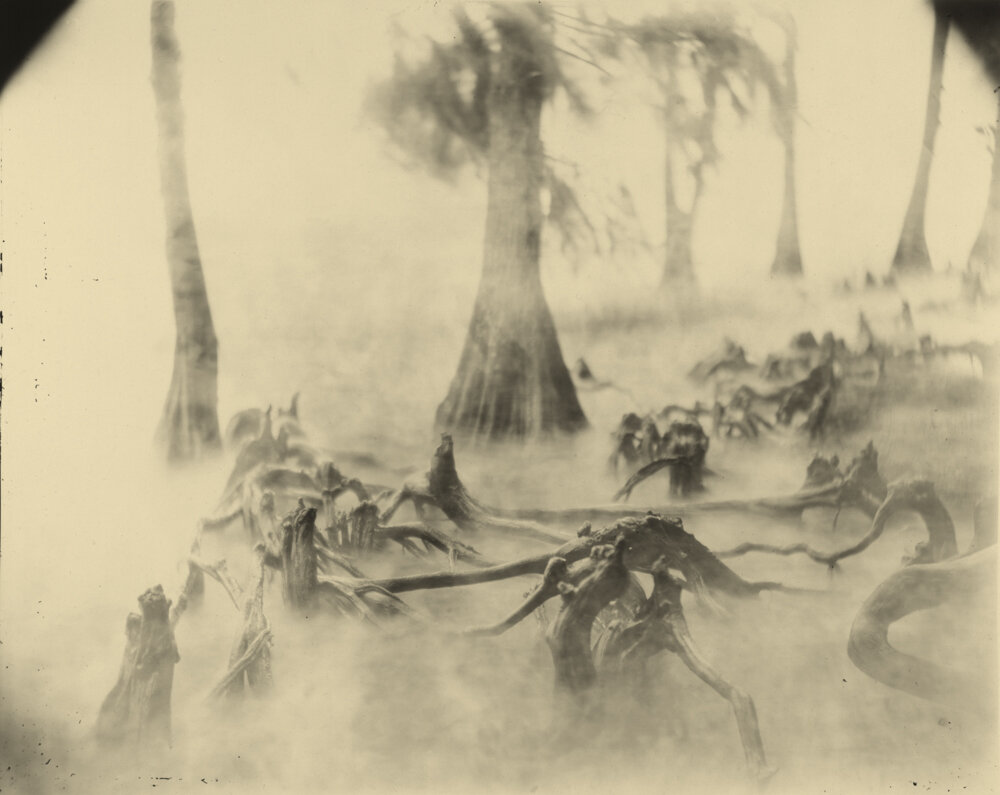
As a child of the 70s and 80s and a science fiction fan the more I look at the image I find myself linking it to the Doctor Who episode The Ark in Space and the Wirrn.

In an interview with Jiang Rong for American Suburb X Mann talks about light in the following way:
Why do you think that is?
An Exclusive Interview with Sally Mann – ‘The Touch of an Angel’ (2010) – ASX, E. @ (2013)
I guess it’s because of the temperature. Also, the light in the South is so different from the North, where you have this crisp and clear light. There is no mystery in that light. Everything is revealed in the Northern light. You have to live in the South to understand the difference. In summer, the quality of the air and light are so layered, complex, and mysterious, especially in the late afternoon. I was able to catch the quality of that light in a lot of the photos.
Light is light. How can the light in one part of the world be different to the light in another part of the world. Of course there are different types of light. The light from a cloudless, blue sky is different at noon, compared to what it would be a few hours either side of noon. The light at dusk and dawn are different because the sun is lower in the sky. Light on an overcast day is a defused by the clouds and so not as bright and sharp.
To understand what Mann means we need to look at this from three viewpoints.
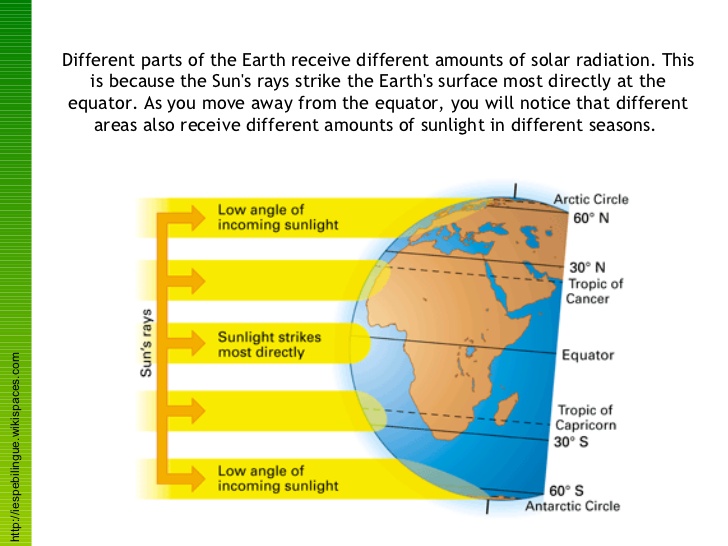
Mann is talking about a location that is closer to the equator that Northern parts of the USA. Weather conditions are therefore going to be a lot warmer for most of the year and so there would be a sense that the light is somehow warmer as a result.
Secondly, there is the emotional attachment that Mann has to the area. In the quote below, Mann states that she can get information across by appealing to viewer’s emotions. To do this though you have to understand the emotions that you are trying to bring out, and the only way to do that is to understand them yourself. Mann’s fondness for the area she has spent her career photographing, will have coloured her perceptions to some degree, which I believe will affect how she sees the quality of light.
Finally, there is the fact that we live on a globe that is orbiting our Sun. Our world is tilted at an angle and so different parts of it receive different amounts of the sun’s rays, and because of the way that sunlight hits the Earth, at the equator the Sun’s rays are more concentrated than they are at other parts of the globe where they are spread out over a larger area. From the physical viewpoint, the light in the Southern USA is actually warmer than that further north.
And you referred to it as the “translucence and fragility of light”.
An Exclusive Interview with Sally Mann – ‘The Touch of an Angel’ (2010) – ASX, E. @ (2013)
Yes, and also the refulgence or the reflection when light and water interact. There is no coating on the lens of my old camera, which permits a much softer and more luminous light. I am less interested in the facts of a picture than in the feelings. The facts don’t have to be absolutely sharp. I can get information across by appealing to viewer’s emotions.
Eugene Atget

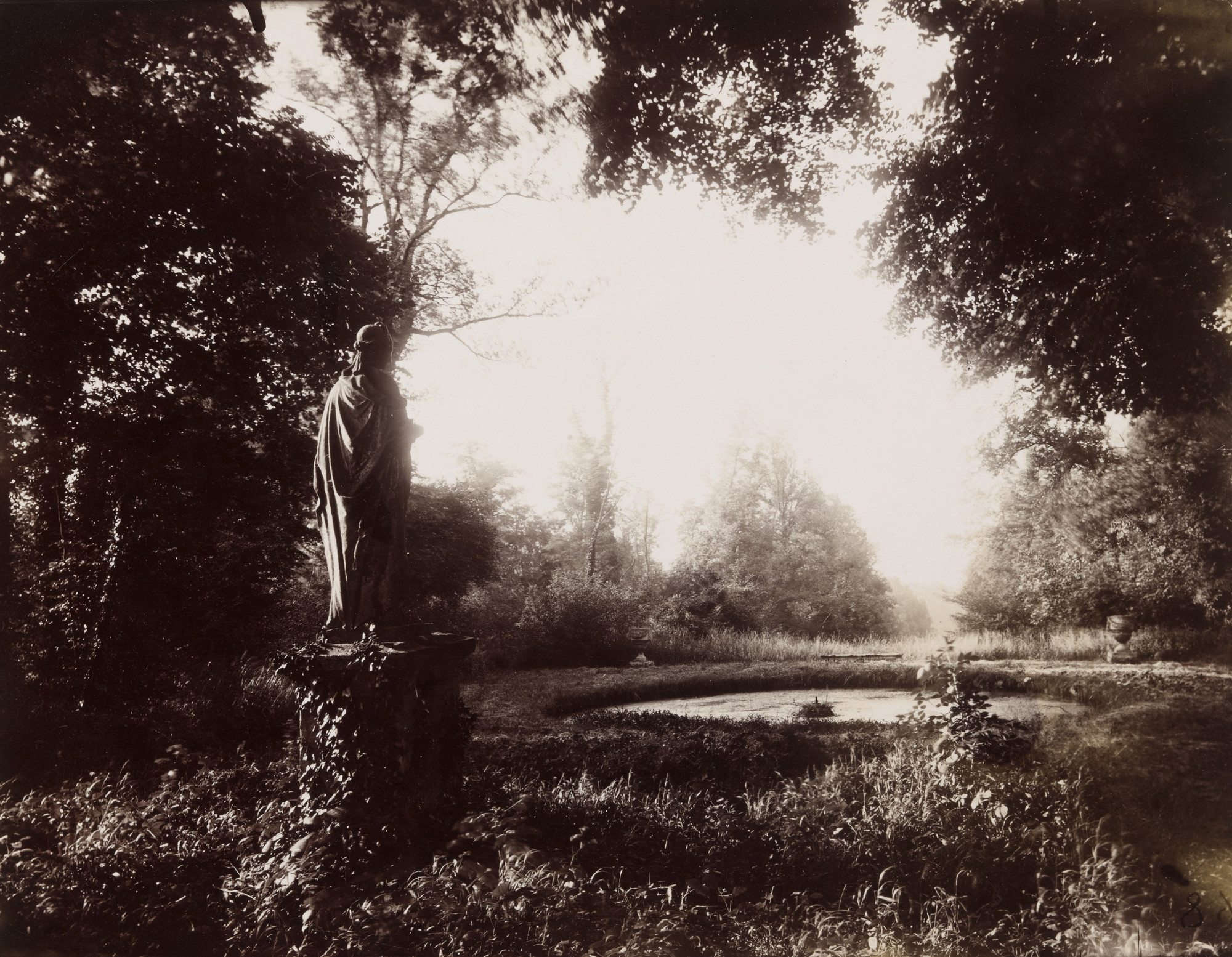
Eugene Atget spent his career photographing Paris, not just any part of the city but those that would eventually disappear. His photographs document a Paris that no longer exists, or which has changed since the turn of the 20th century.
Atget’s early photographs use light in ways that obliterate shadows, revealing as much detail as possible. Over the course of his career his photographic style and his use of light change. The above images, taken almost three decades apart, show this change. However, Atget’s use of light and shadow can be seen in images taken throughout his career.
In his book, Gautrand (2016) gathers together over 500 photographs of Paris taken by Eugene Atget. These document a Paris that, for the most part, no longer exists. All of the images are black and white and so the need to balance light and shadow to allow details to stand out is important.
The technology available to Atget allowed for photographs to be taken with shutter speeds that allowed for movement to be observed, unlike in the period before where people and animals moving would not register, only people who were stationary.


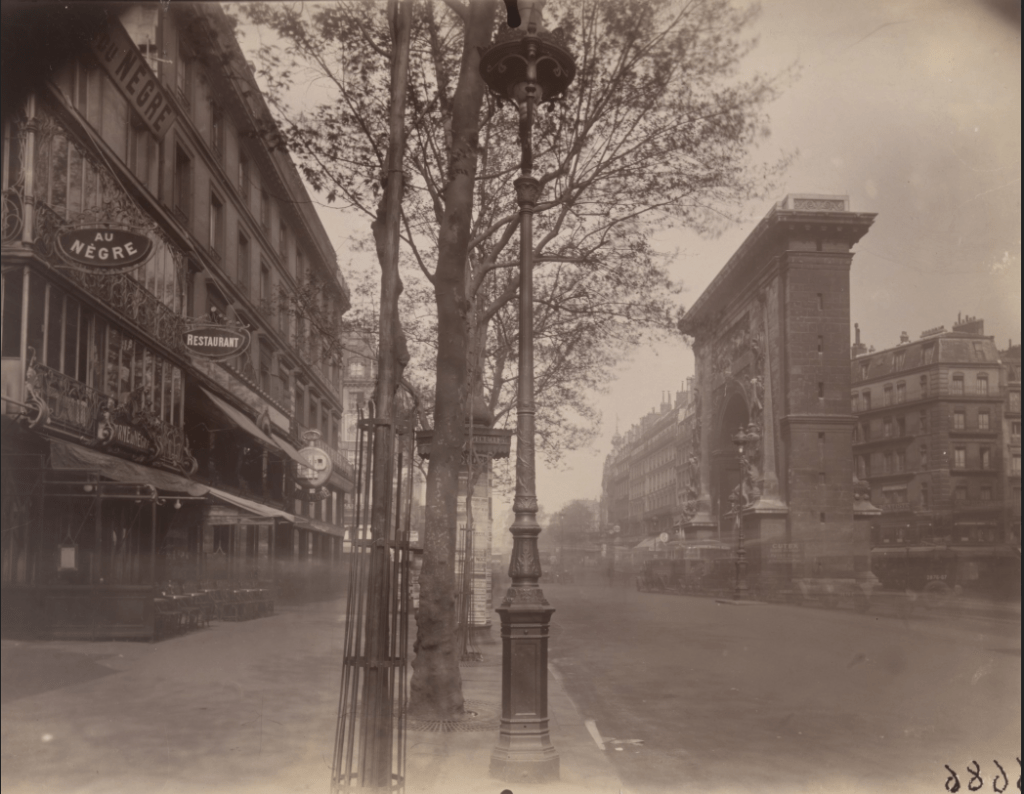
The photo of Old House, Passage de Choiseul and Boulevard Saint-Denis, above, all show the ghostly effects that resulted from improvements in camera technology by the early 20th century. People and vehicles that were in motion could be faintly caught when taking an image.
In Passage de Choiseul, Atget has made use of the glass roof, which allows enough light into the area that he is photographing. The way that the light is striking the buildings on the right of the image has turned them into impromptu reflectors, allowing the building and figures that would otherwise have been in shadow to be seen. This is another example of Atget’s use of light to ensure that the maximum amount of detail is avaialble to the viewer.
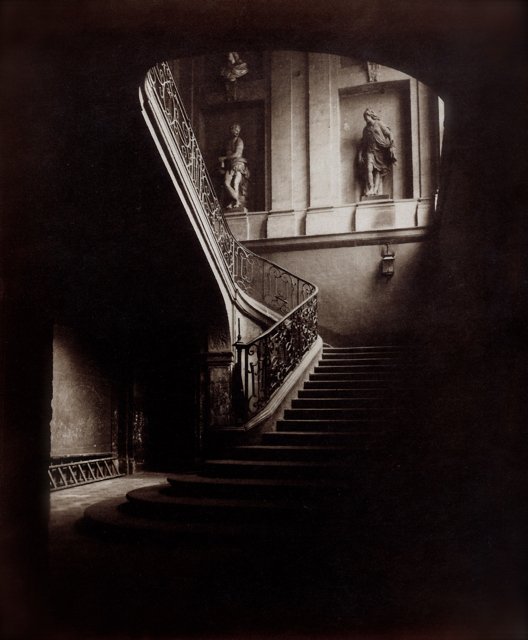
In Staircase of the Hotel de Tallard, Atget has shown how areas that are lit can be used to draw the eye to parts of a photograph. In this photograph the splendour of the staircase can be contrasted with the ladder lying, propped against the wall, beneath the staircase. The way that the dark parts of the image, follow the sweep of the staircase, also serves to draw the eye away from the statues in their alcoves on the wall and down towards the area under the stairs.
It would have been easy enough for Atget to mask this part of the image but he hasn’t. It is as if he is drawing aside a curtain and helping us to see what goes on behind it.
Atget’s use of light and dark in the image allows us to see the ordinary that goes with the magnificence. Taken in 1901, this photograph, and those of the Hotel du marquis de Legrange and rue Sainte-Croix-de-la-Bretonnerie below, show the direction that his work would eventually take.
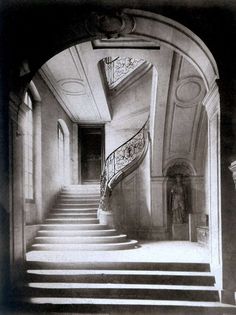
In the Hotel du marquis de Legrange, above, we see the interplay of light and shadow. In the same way that there are individual steps leading upwards there are also groups of steps that are linked by whether there is a window or wall alongside them. Where there is a wall the steps have areas of shadow, where they are alongside a window, those same areas of shadow are obliterated by the light shining through the window.
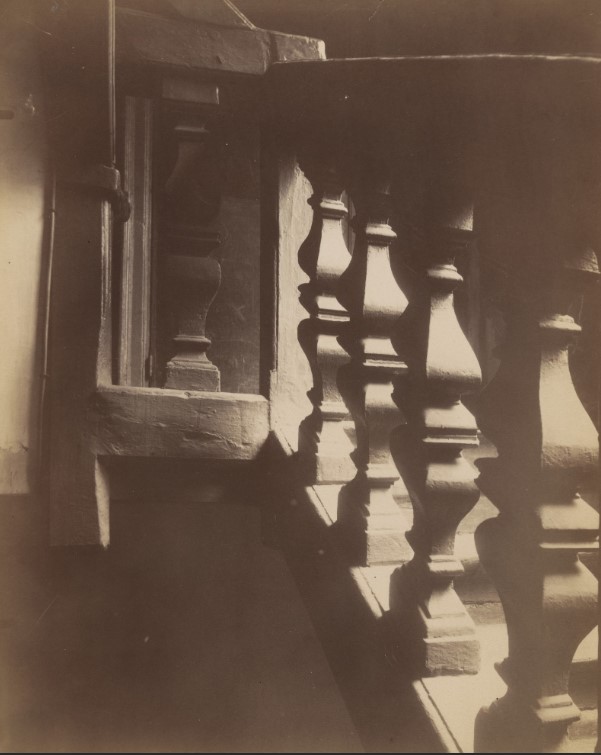
Atget’s use of light and shadow in 13 rue Sainte-Croix-de-la-Bretonnerie, above, makes the uprights on the bannister of this look like the Moai from Easter Island. Just by working with the light you have and how it strikes an object allows you to take the ordinary, although these are anything but ordinary in themselves, and turn them into something extraordinary.

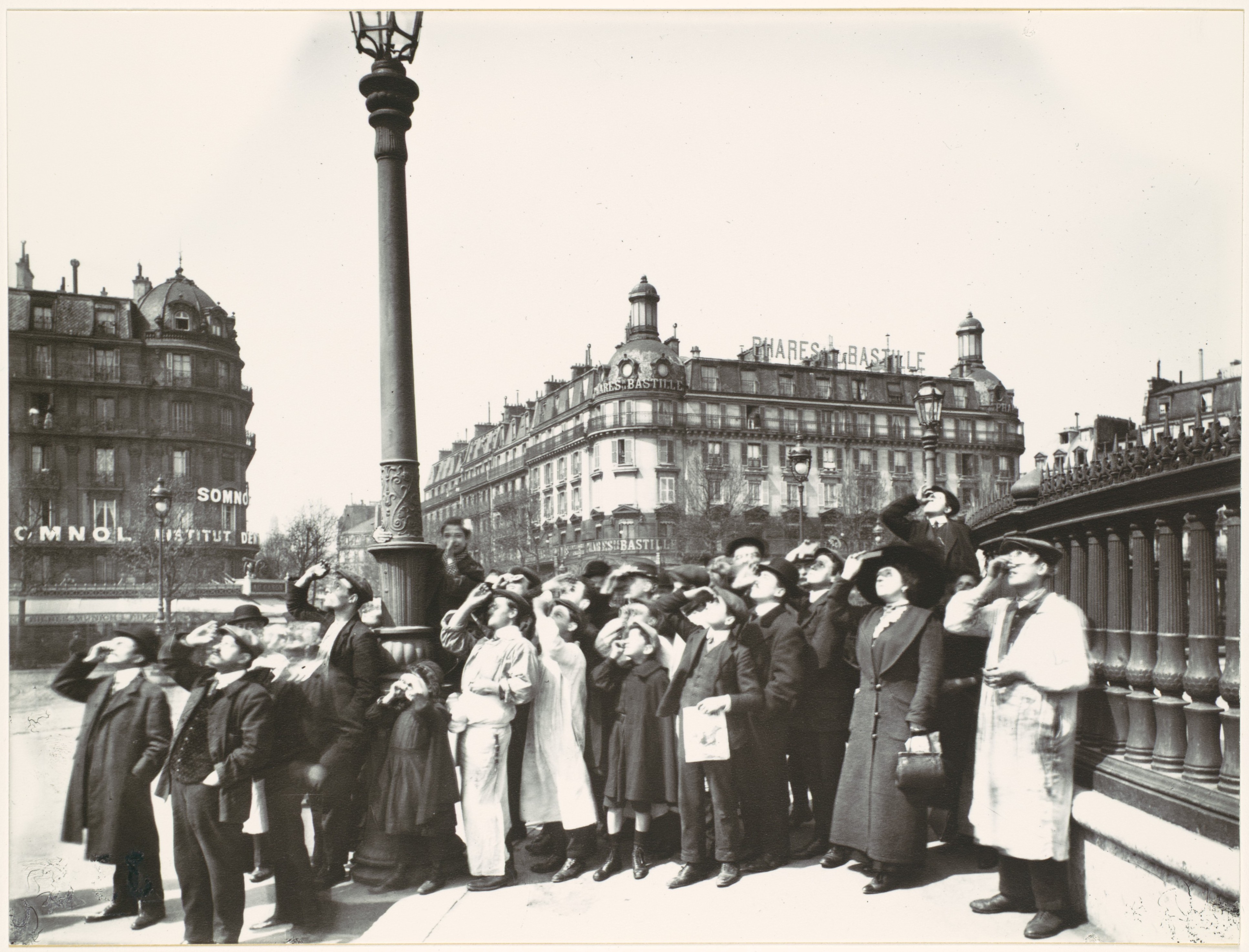
How do you get a large group of people to stand still long enough for you to photograph them? Do it when they are distracted.
Where the majority of people would have been fascinated by the eclipse taking place, Atget has turned his camera away from such as momentous event and pointed it at the onlookers. Most photographers would find themselves when faced with an event such as an eclipse, pointing their camera towards the sun in order to record the event. By positioning his camera not to record what was happening in the sky but what was happening on the ground, Atget has stayed true to his vision of recording a Paris that would disappear, by recording it’s citizens doing something that may never have been recorded again.
Atget’s image shows us that no matter who we are, or what part of society we may be seen to be part of, there will always be some spectacle that will transcend societies bounds and bring us together.
Eugene Atget’s work demonstrates how, even when we set limits on ourselves, it is possible to capture images that will be viewed for decades to come. We just need to be aware of our surroundings and their importance to future generations. Additionally, his photographs show how our relationship with light can evolve over the years as we take photographs.
Michael Schmidt
Schmidt’s approach to as described in ASX, E. @ (2010) is very similar to Atget’s early images. Both photographers document the things they see and both use light in ways that minimise or eradicate shadows. Presenting the viewer with an image containing as much information as possible.
Where Eugene Atget was documenting a Paris that people knew, there would always be an emotional response for some people who would recognise the areas and people that he was capturing, especially where the area had been demolished, or the person was no longer around.
Michael Schmidt, however, aims to remove emotional distraction from his images, allowing the viewer to formulate a more objective, rather than subjective, view of what they are seeing.
In his review of Waffenruhe, Badger, G. (1987) reflects on the way that straight photography was out of favour because of people’s desire for more artistic photographs. In the thirty years since then straight photography has seen a resurrgence with the prevalence of mobile phones, and particularly those that have built-in cameras. People are able to document everything, photographically, with ease. The use of photos and videos recorded using phones is something that we see regularly on news programmes.

The swastika, Schmidt reminds us in one grim image, merely lies dormant, retaining remnants of potency despite surface decay. Nazism flourishes under different guises.
Gerry Badger >> Another Brick in the Wall – Michael Schmidt’s Waffenruhe
These lines from Badger’s article strike me as being very telling. Written in 1987, they are as relevant now, as they were thirty years ago. Switch on the television, access social media via your computer or smartphone, and it is possible to see examples of where beliefs in racial purity still exist, where treating people who are different, can be seen by the removal of the protections granted to those who society deem to be acceptable.
Somewhere out there are erstwhile Michael Schmidt’s documenting events and making their own versions of Waffenruhe. One day we may be looking at those as a reminder of how things were at the start of the third decade of the 21st century.
Tacita Dean
Unlike the golden hour, the blue hour, civil twilight, nautical twilight, astronomical twilight or any of the other periods that produce different types of light for photographers, the green ray is a moment of time where a “rare green flash” can be seen as the sun sinks below the horizon, The Green Ray (2020).
Watching Tacita Dean’s video, green ray by tacita dean (s.d.), I was not sure what I was looking for. On the first viewing I thought there was green tinge to parts of the sky as the sun was setting. On the second viewing I was not as sure. I definitely didn’t see a green flash. As Dean says in the voiceover for the video, observing the green ray is not an easy thing to do and requires patience.
Unlike other types of light, the green ray is not something that you could easily use, in fact it would be more the subject of any photographs that you were to take.
Exercise
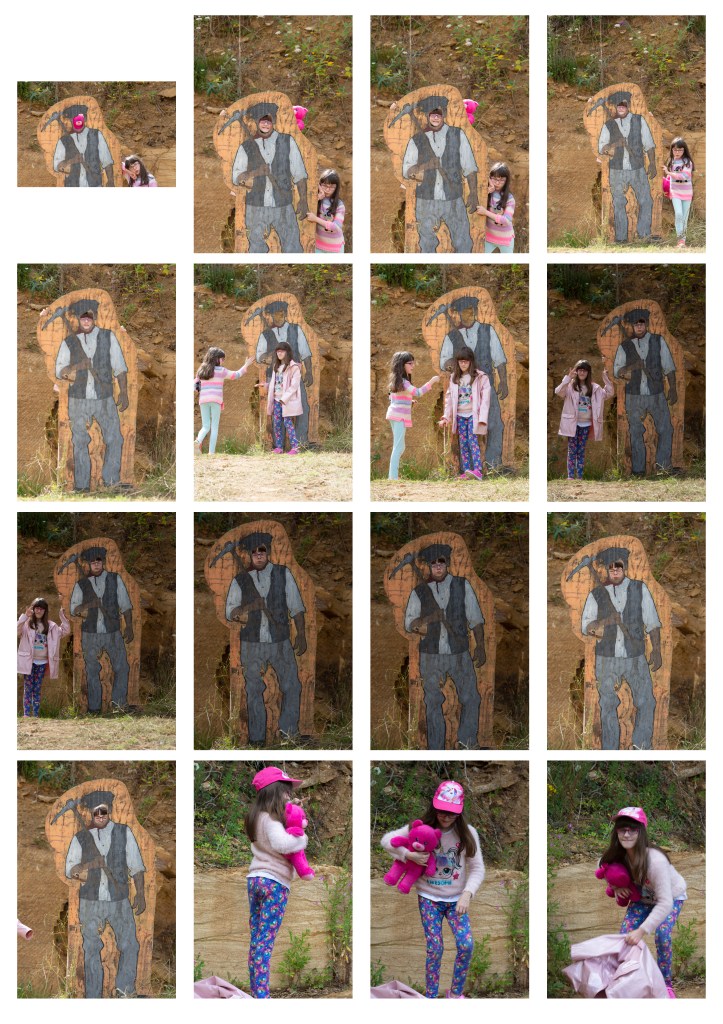
I used Sally Mann as my inspiration, particularly her use of her family as the subject for her photographs. The two sets of images below were taken a couple of days apart.
The first set up photos were taken mid-afternoon. The sky was patchy cloud and so the light was changing from diffuse because clouds were blocking the sun, to full sunlight.
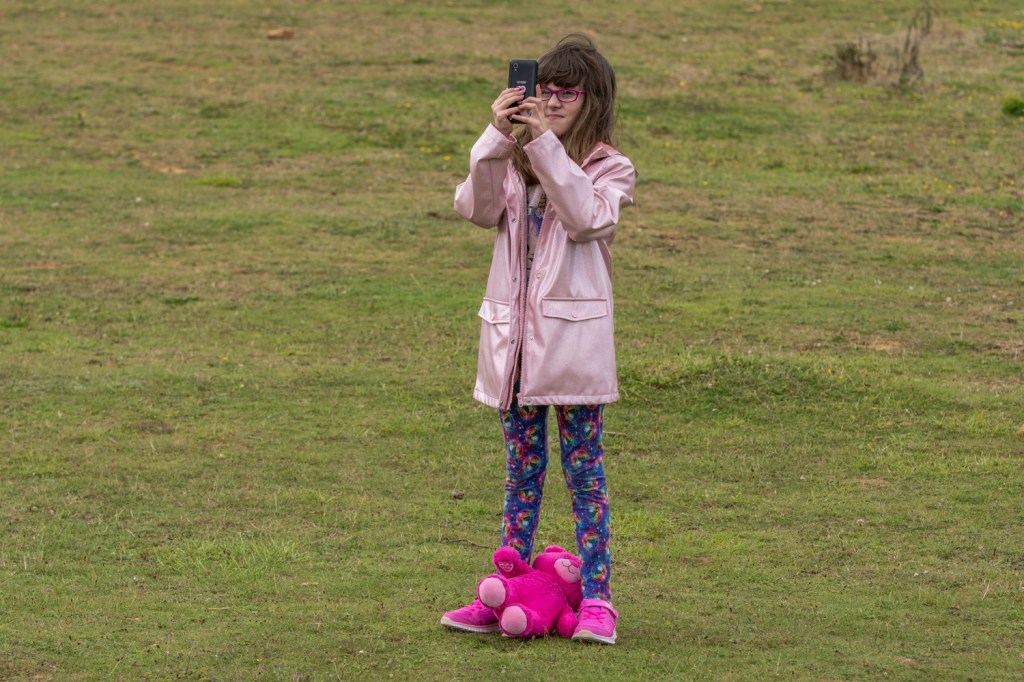
The light in the image about is soft, diffused through the passing clouds. The lack of bright light gives it a darker appearance. It also means that it was easier to capture my niece as the sun was not in her eyes. At the point I took the photograph the sun would have been behind her but wasn’t been reflected by the phone screen into her eyes, which might have made her squint.
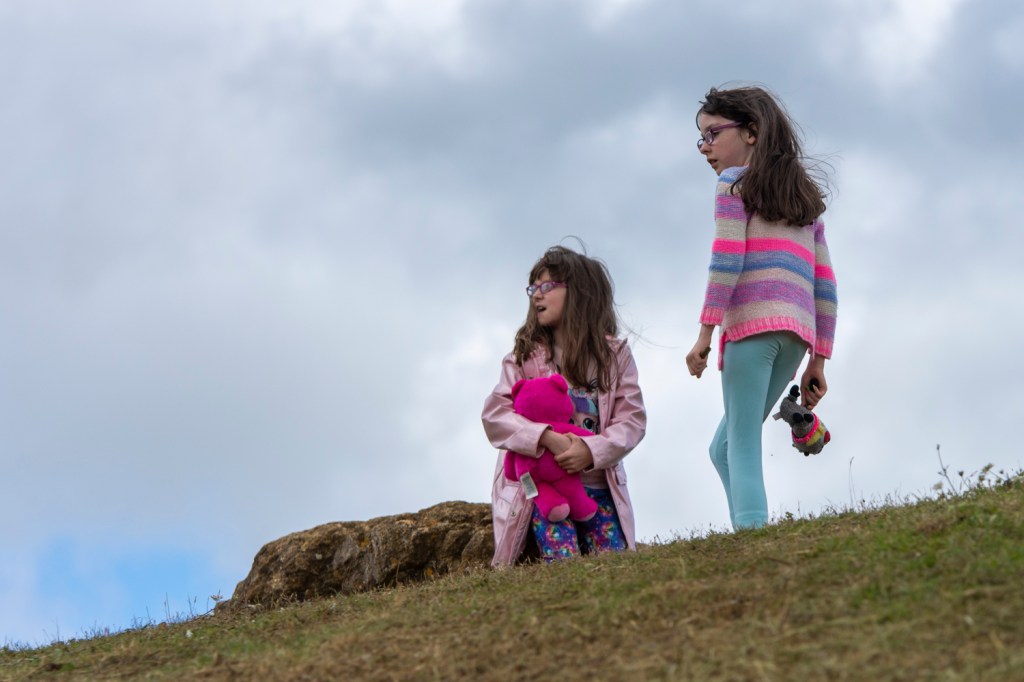
In the image above the clouds act as a background as well as diffusing the light. The clouds as a background also avoids what would have been a very harsh blue background. The result is that the girls stand out.
The photograph was taken from a low level using a 200mm lens and has been cropped from the original.
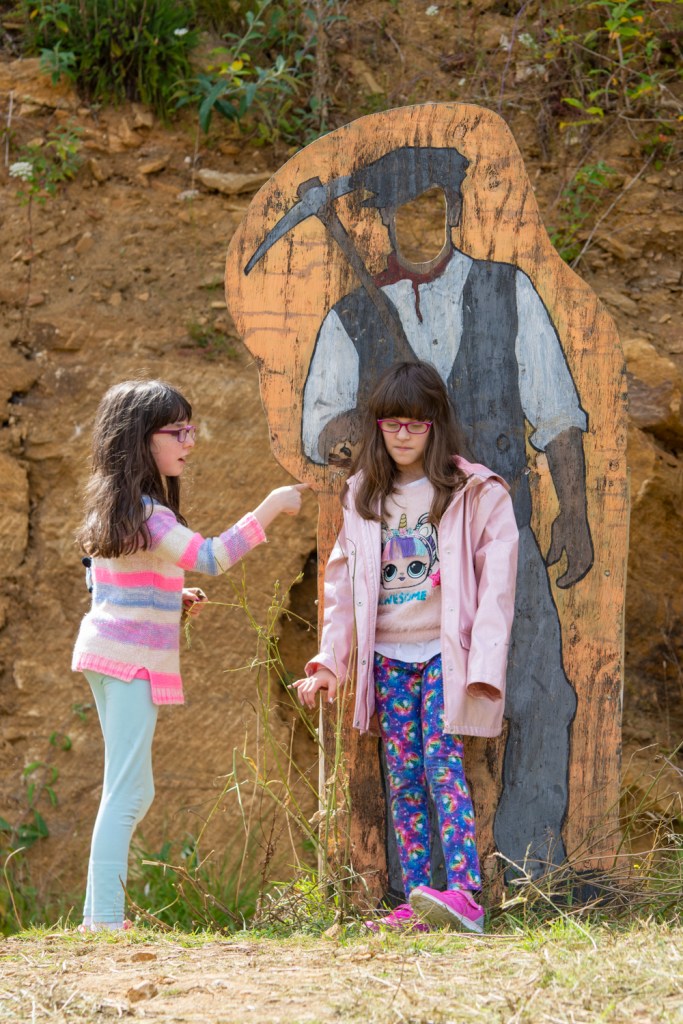
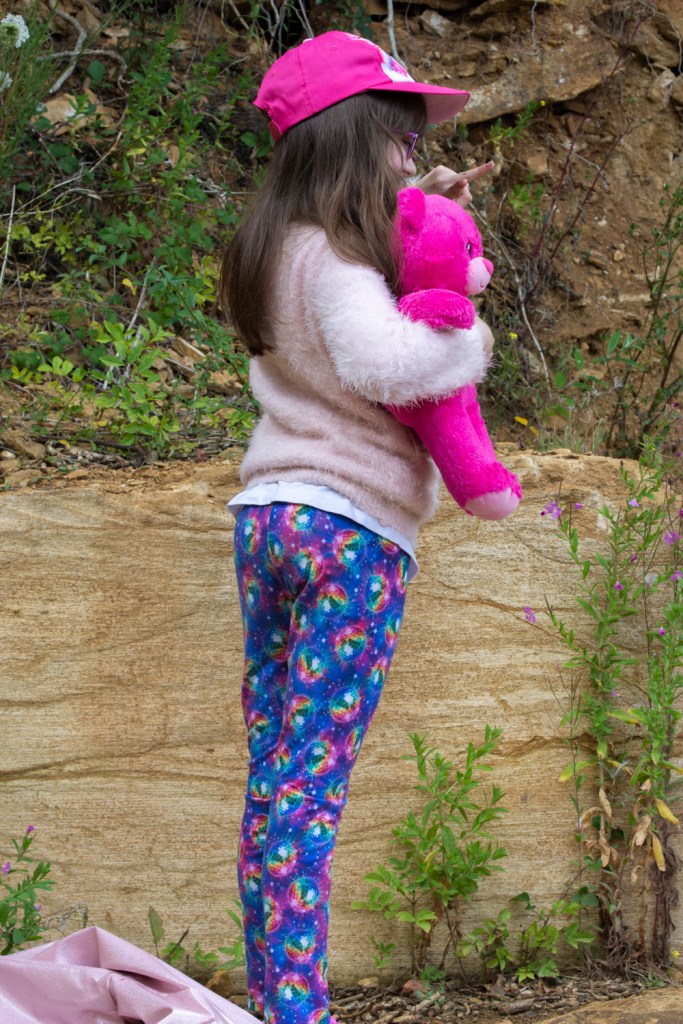

In the above photograph of Charlotte I believe I’ve managed to achieve an example of broad lighting.
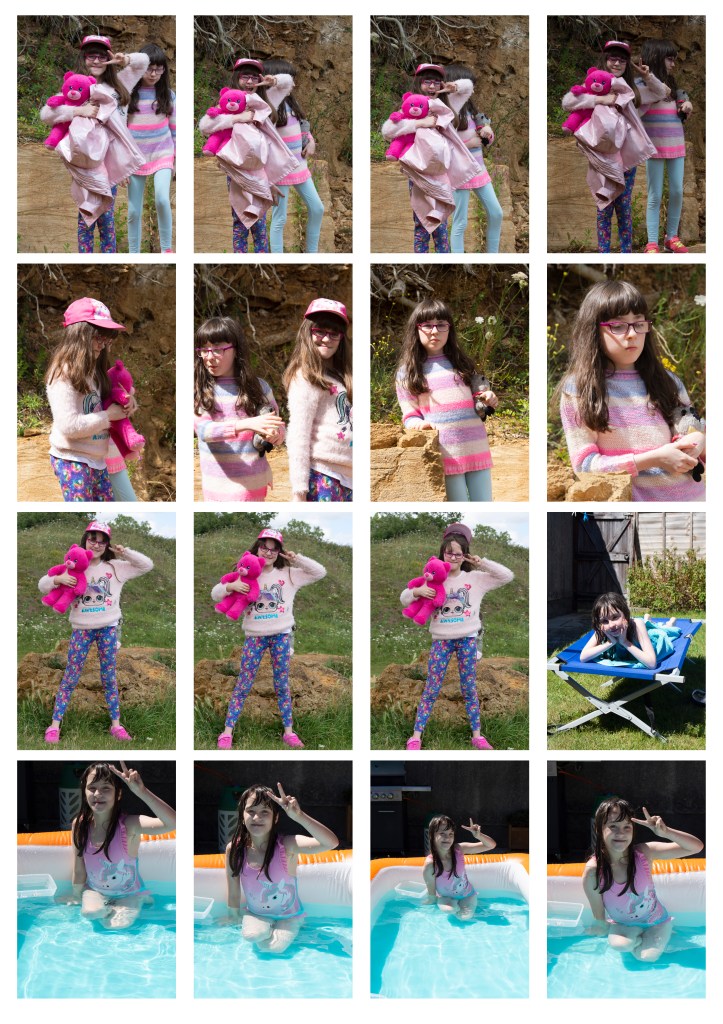
The set of images below were taken mid afternoon on a sunny, hot day. There were no clouds in the sky and so the only shade was what was provided by the garage wall that runs along the garden and the house itself.
The light was quite harsh because there were no clouds to diffuse the light and it was high in the sky.
The shadows produced by the girls body positions helps to counteract the light hitting them.

In the above photograph of Charlotte I believe I’ve managed to achieve an example of short lighting.


Using Sally Mann as my inspiration I think the subject matter is about the only thing that comes close to the work that she produced. I’ve used my nieces as the subject matter and have photographed them either at home or very close to home. Mann’s images are black and white mine are colour. The most important difference though is to do with the quality of the light. Mann talks about how the light where she lives is warmer than the light further north. In the UK we are further north and as a result, the light is colder. In addition to that I think that it can be more intense and because of where we live, changeable and so challenging to work with. More so even that where the weather, and therefore the light, can be more consistent.
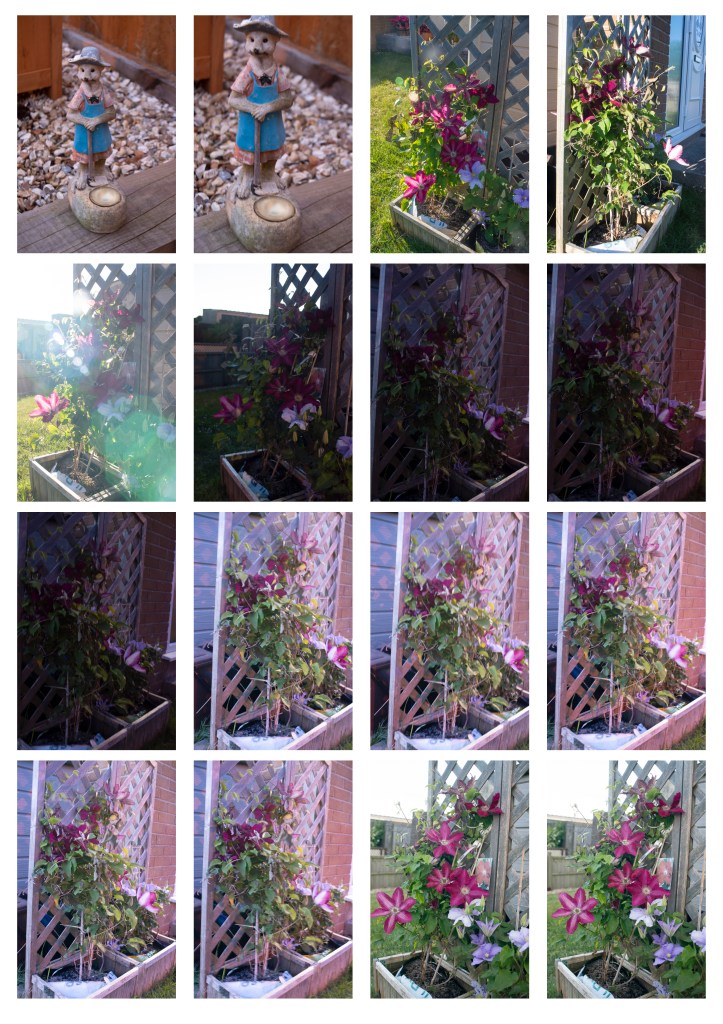
The images below were captured over a period of weeks and at different times of the day. They show the differences between light at different times of the day.

The above was taken just after sunrise during the Golden Hour.

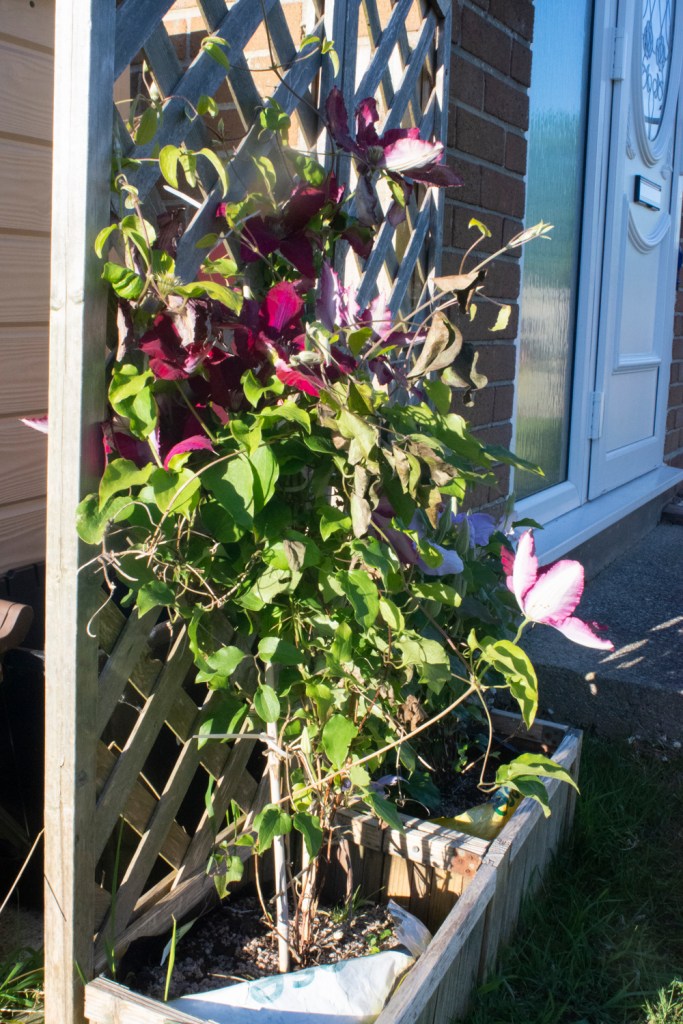
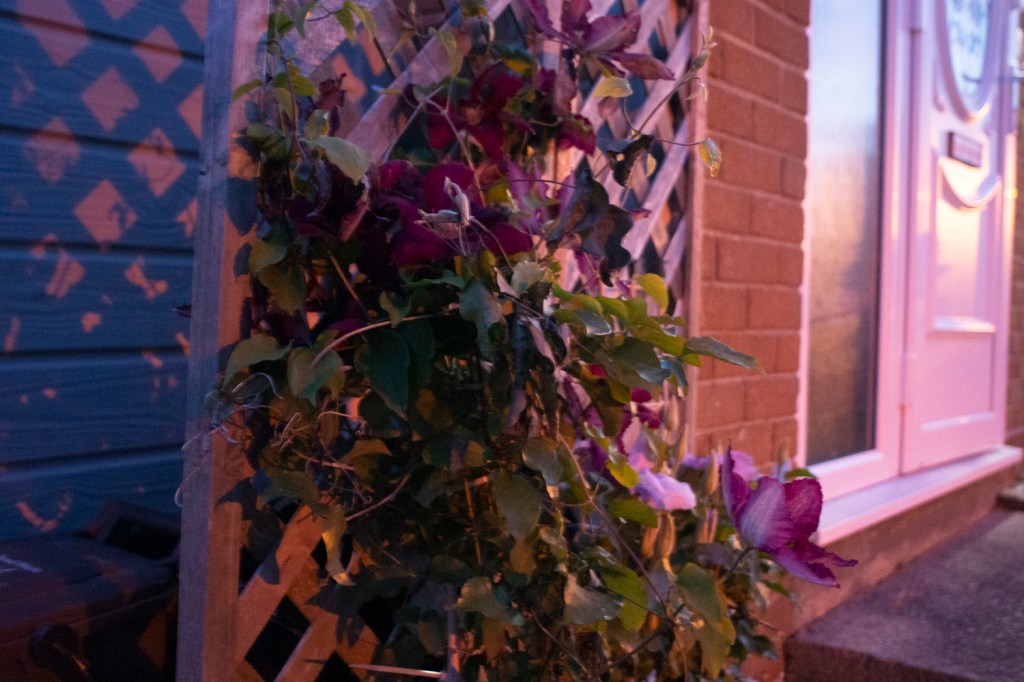
Another image captured during the Golden Hour. The red tinge to the light that occurs during the Golden Hour can be clearly seen on the door, brickwork and where it passes through the trellis.

Another image captured around dawn. However, this time the light is completely different. This image was taken four days and half an hour later that the previous image and shows how even such a small time frame can see the sun rise early enough that the Golden Hour can be missed and the quality of the light changes completely.

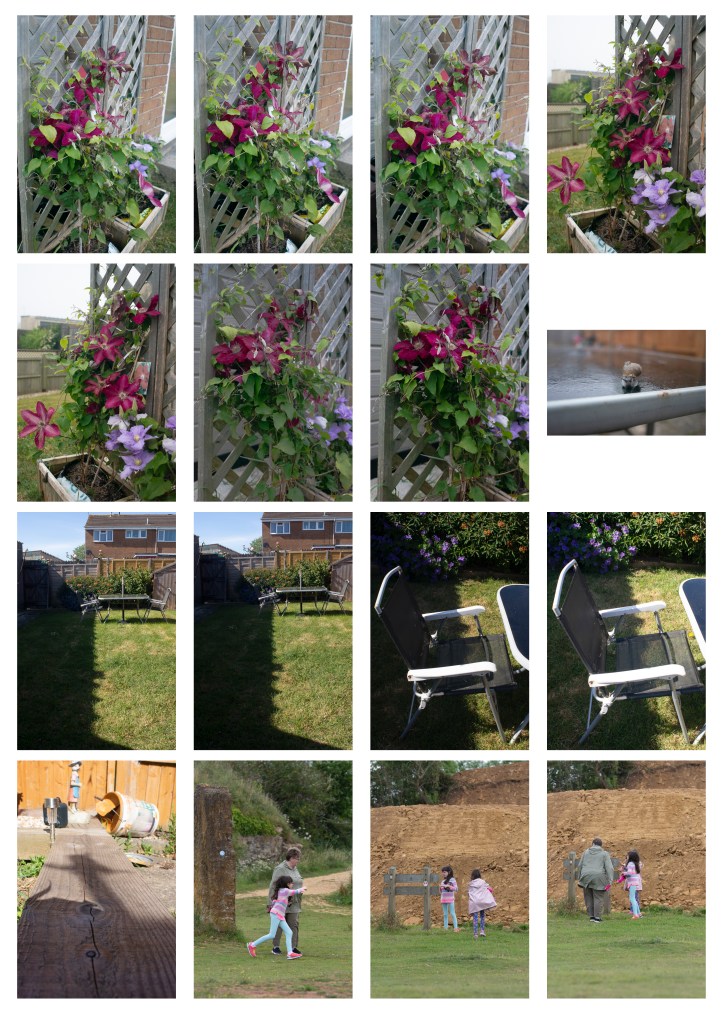
This chap paid regular visits to our garden table early in the morning over a few days. They’d made their home underneath the table as I discovered when looking under there one day. I like the reflection in the table surface and the glint of light reflecting off the water coating its surface.
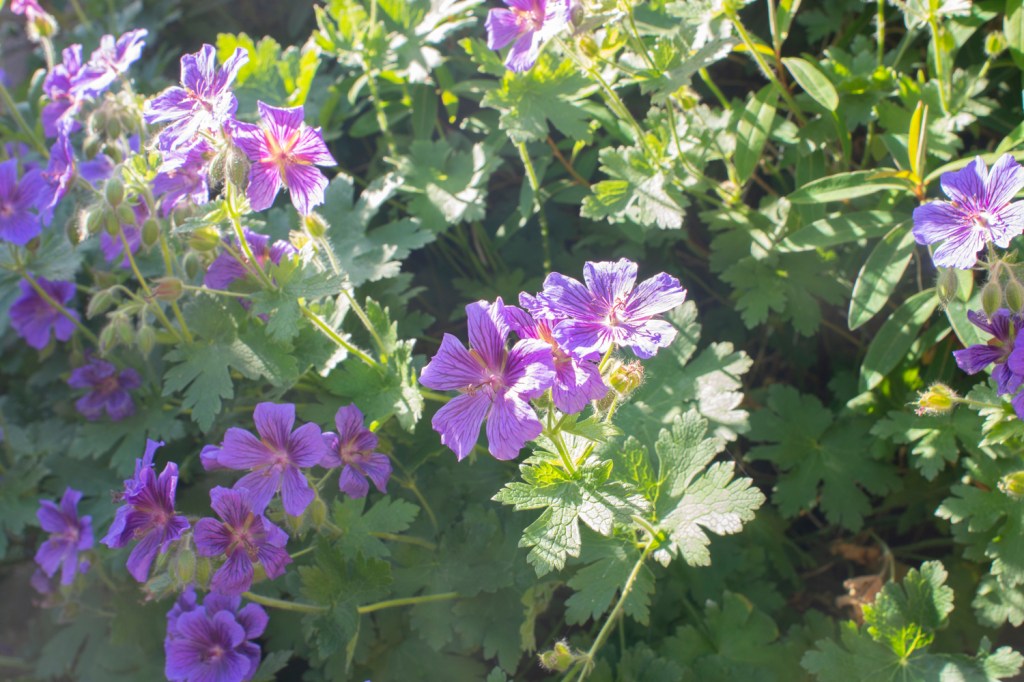


The last set of images above were taken early evening with the sun behind and to one side of me. The first image is in full sunlight and so a lot of the colour in the floors has been bleached out by the light. In the second image I shifted position so that the flowers were shaded which allowed some of the colour to return because the light wasn’t as intense.
In the final image I decided to try and use as much of the shade from the foliage as possible. The glints of light on the grapes is reminiscent of the catch points that can occur when light is reflected in a person’s eyes and draws attention to them amongst the rest of the foliage.
Contact Sheets
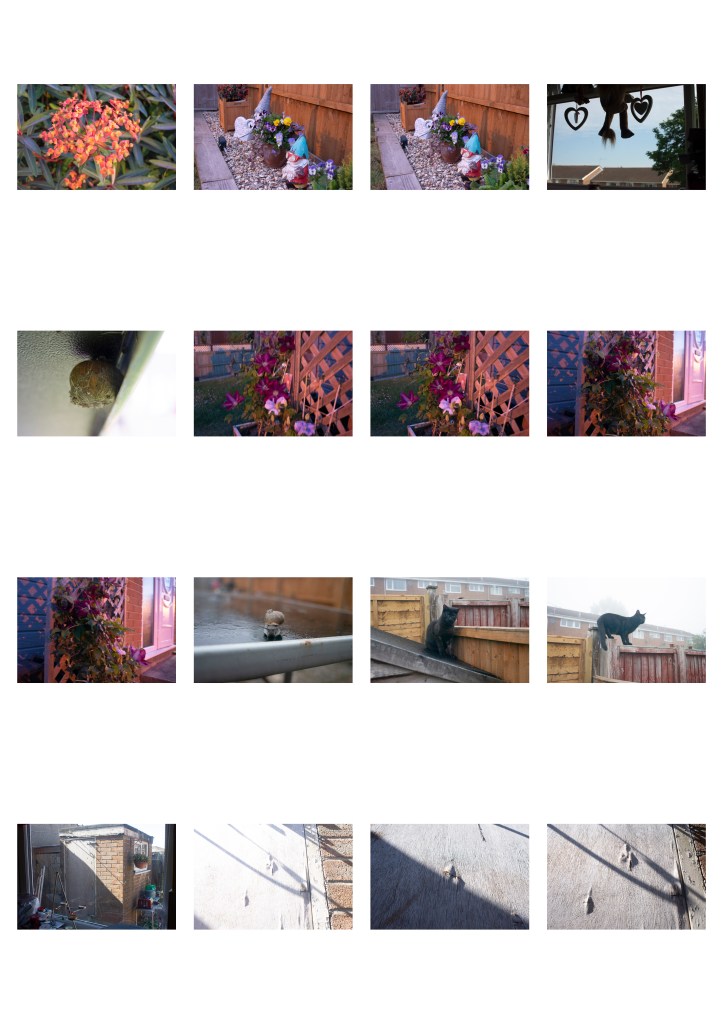
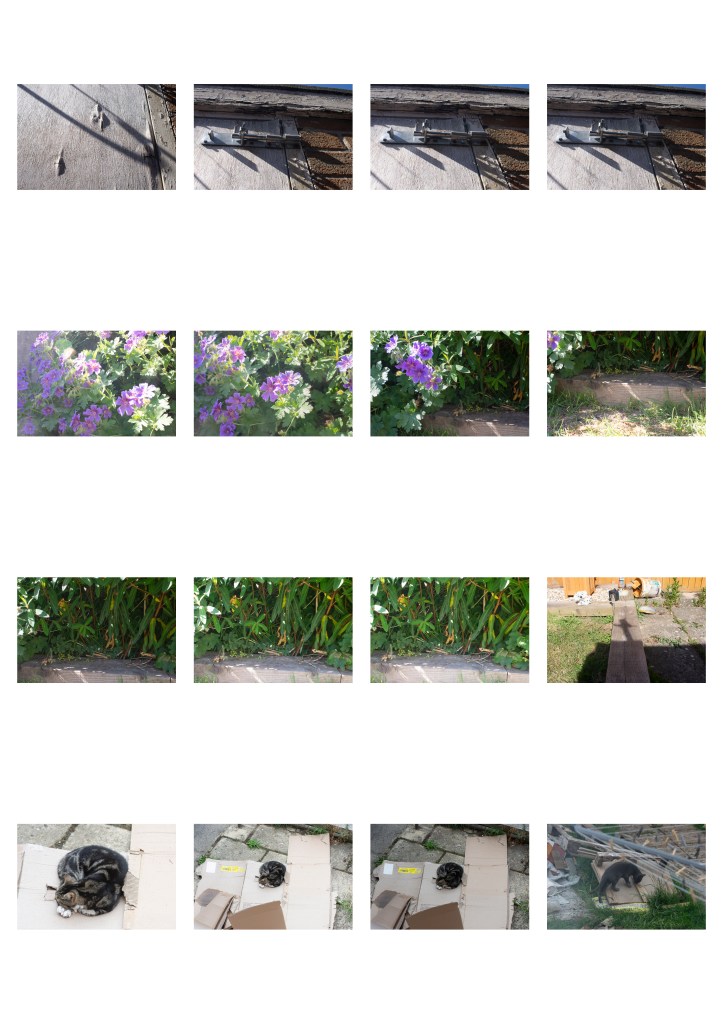
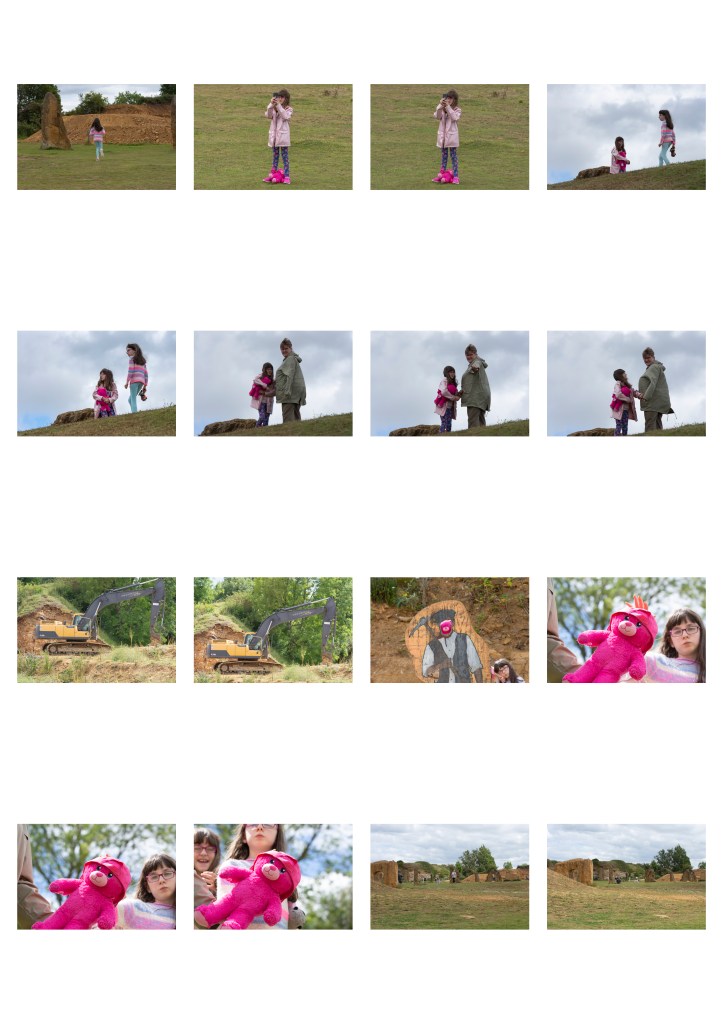
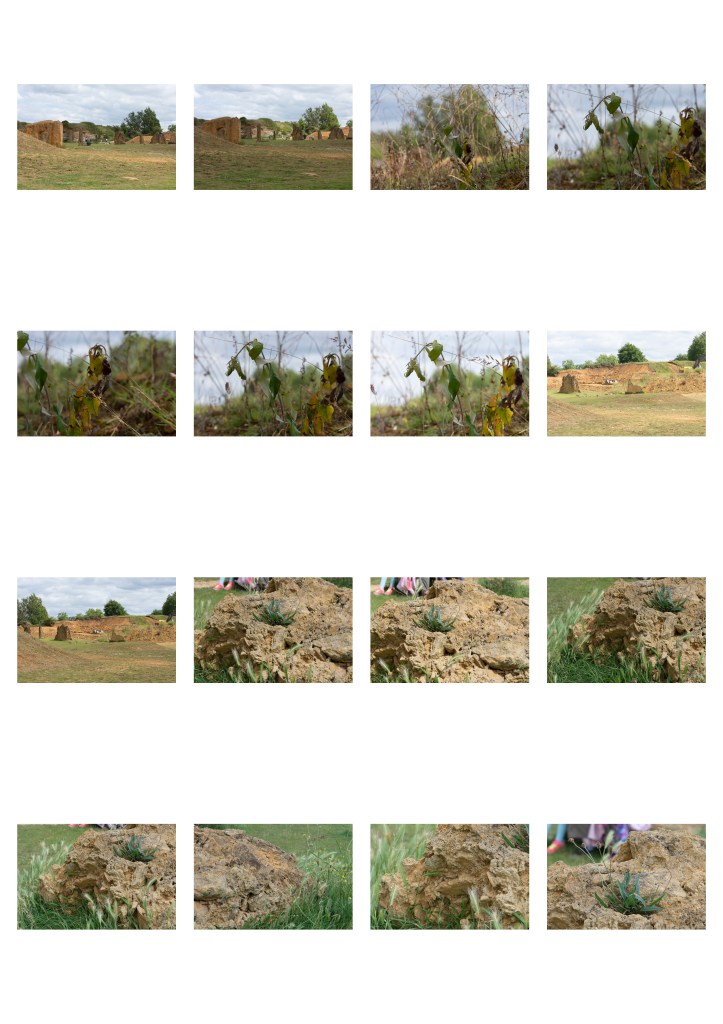
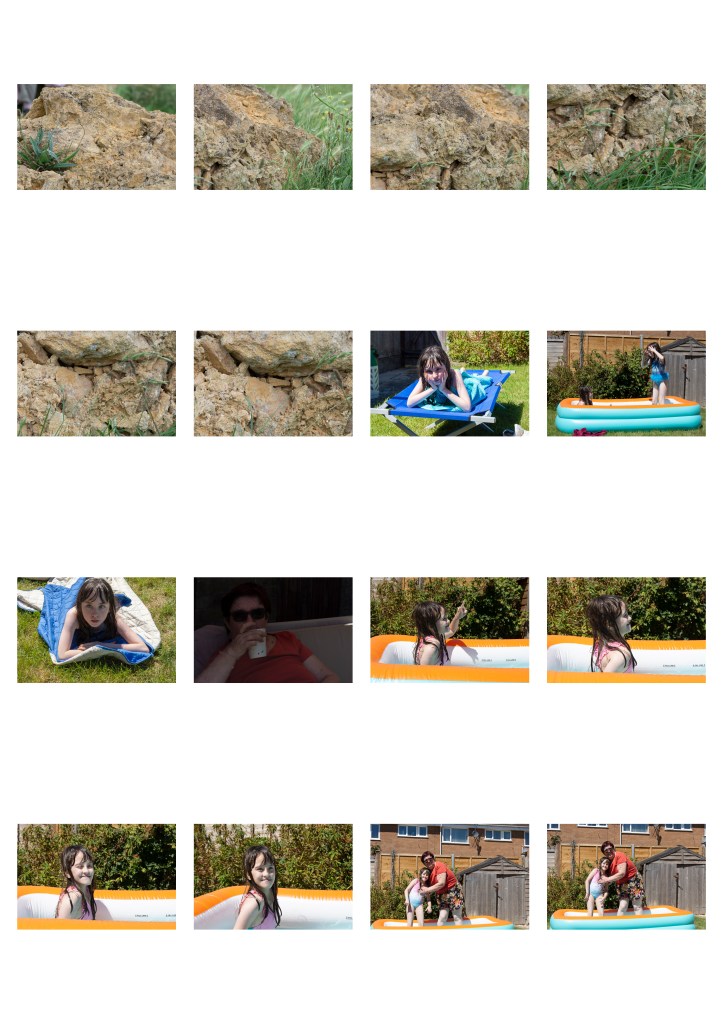
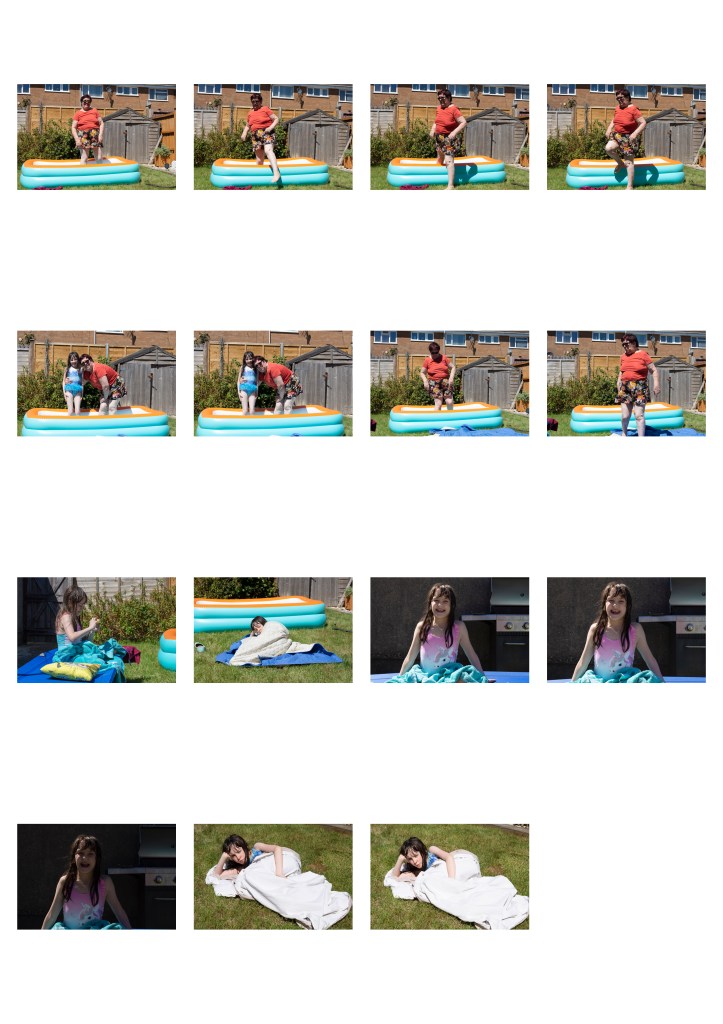
For this exercise I took over 160 photographs, experimenting with different objects and trying to capture images in different light conditions.
In the images of the shed door I wanted to capture the way that when light hit raised sections on the surface of the door it would result in shadows. The brighter the light, the less of the texture of the door’s surface was visible. Less is more in this case.
I moved away from this idea as the exercise and my research took shape as I didn’t see that it would be a sufficiently strong enough set of images in itself. Maybe if I took the photographs at different times of the day and under different conditions it might produce something stronger.
References
- ASX, E. @ (2010) Michael Schmidt: ‘Thoughts About My Way of Working’ (1979). At: https://americansuburbx.com/2010/10/michael-schmidt-thoughts-about-my-way-of-working-1979.html (Accessed 19/07/2020).
- ASX, E. @ (2013) An Exclusive Interview with Sally Mann – ‘The Touch of an Angel’ (2010). At: https://americansuburbx.com/2013/01/interview-sally-mann-the-touch-of-an-angel-2010.html (Accessed 19/07/2020).
- Gautrand, J. C. (2016) Eugene Atget Paris. (s.l.): Taschen GmbH.
- green ray by tacita dean (s.d.) At: https://vimeo.com/38026163 (Accessed 14/06/2020).
- Greenough, S. et al. (2018) Sally Mann : A Thousand Crossings. (s.l.): National Gallery of Art and Abrams.
- Michael Schmidt (2013) At: https://www.prixpictet.com/portfolios/consumption-shortlist/michael-schmidt/ (Accessed 19/07/2020).
- Southern Landscapes (s.d.) At: https://www.sallymann.com/southern-landscapes (Accessed 19/07/2020).
- Tacita Dean. The Green Ray from The Sun Quartet. 2001 | MoMA (s.d.) At: https://www.moma.org/collection/works/110983 (Accessed 14/06/2020).
- Badger, G. (1987) Gerry Badger » Another Brick in the Wall – Michael Schmidt’s Waffenruhe. At: http://www.gerrybadger.com/another-brick-in-the-wall-michael-schmidts-waffenruhe/ (Accessed 02/08/2020).
- Schuster, A. (1922) ‘The “Green Ray” or “Green Flash” (Rayon Vert) at Rising and Setting of the Sun’ In: Nature 110 (2759) pp.370–371.
- The Green Ray (film) (2020) In: Wikipedia. At: https://en.wikipedia.org/w/index.php?title=The_Green_Ray_(film)&oldid=961234012 (Accessed 02/08/2020).
 Jenna Powell - Expressing Your Vision