
“The Ballad of Sexual Dependency” “is the diary I let people read.” It is a visual diary of the family and friends that make up Goldin’s tribe.
Originally a slide show with a musical soundtrack, it was eventually made into a book.
In the forward to the book Nan Golding talks about why this visual diary exists.
“Preserving the sense of people’s lives, to endow them with strength and beauty I see in them.”
Nan Goldin – The Ballad of Sexual Dependency, p6
Golding states that we all tell stories and that stories can be rewritten but memories cannot. I agree with the first part but not then second.
Memory can be rewritten, especially the further in time you get from the events that shaped that memory. Even more so if there aren’t people around who were witness to the event to correct it, or even worse if they have different views of events that shape your memory of them, changing what you remember as you filter it through other people’s perceptions.
When we lose someone our memories of them can become faulty. We can attribute things to them, that without any way to contradict them, become ingrained in our memories.
Goldin’s photographs of people and events in her life is a way to lock those memories in place for ever. Snapshots of time will be there forever more, no matter how faulty the memory might become.
Many of the people in her photos have died. Through violence, through drugs, through AIDS, and through suicide.
“In the process of leaving my family, in recreating myself, I lost the real memory of my sister. I remember my version of her, of the things she said, of the things she meant to me. But I don’t remember the tangible sense of who she was, her presence, what her eyes looked like, what her voice sounded like.
Nan Goldin – The Ballad of Sexual Dependency, p9
I don’t want to be susceptible to anyone else’s version of my history.
I don’t ever want to lose real memory of anyone again.”
The photos in the book are intimate portraits of her friends and family. Nudity is not shied away from, but still done in a way that keeps some things private.
The image I feel are more intimate are ones where there is a sense of vulnerability, where a side of the people is revealed that would not normally be.
In “Suzanne in The Parents’ Bed” the dark shadows around the eyes give an impression of something who is not well.

Goldin’s subjects are reminiscent of Diane Arbus’ subjects. People who are on the fringes of society.
There is an honesty about Nan Goldin’s pictures and a sense of the time they were captured.
“The Other Side” is where Goldin pays homage to those friends of hers, her tribe, who blurred and even stepped over the line that marks the crossing point between male and female.
This book and its images are a snapshot of the drag scene from the 1970s and 80s and the people that inhabited that world.
When I first looked through the images in the book, I found myself pausing at the images of Greer. Her images are those of a confident, young woman, but some are tinged with sadness and a look of introspection.
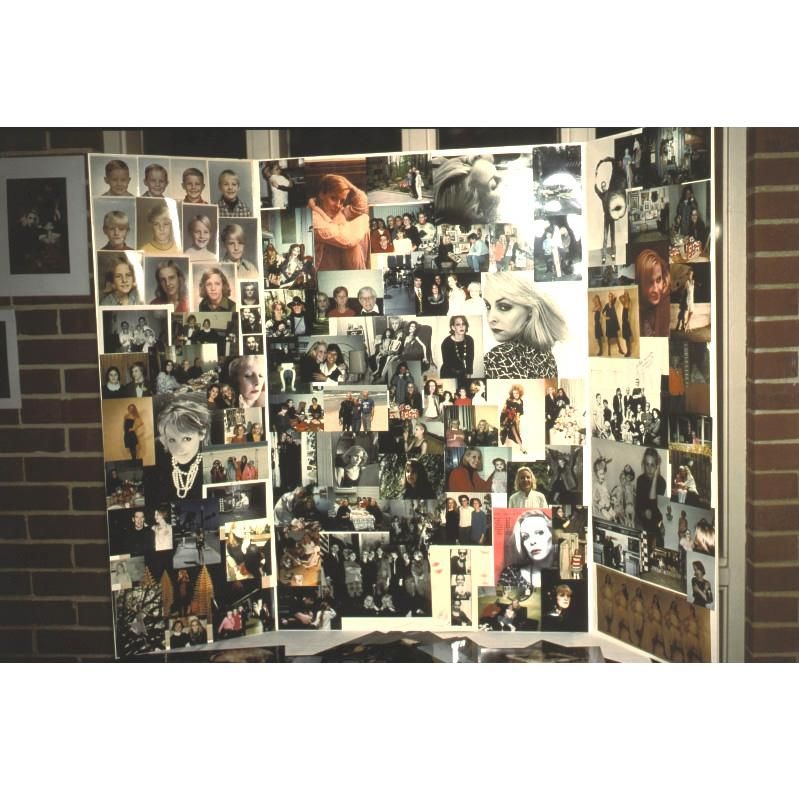
The picture “Greer’s life 1958 – 96” reveals someone who understood themselves from an early age, the transformation from young boy to young woman is there to see. They show someone who was not ashamed of themselves and their past.
That may seem like a lot to read from an image, but it is there to see.
Eleven photos of Greer as a child and young person, take up a fraction of the top left of the image. The friends of someone who rejected that part of their life would not have included those photos. It would have been painful for the deceased if they had known they were being used, but also would have been saying “we deny your identity.” The only way that images like those could have been used would have been if Greer, herself, was happy with that part of her life, or at least happy enough not to deny its existence.
There is a beauty, a strength in these images. There is also a sense that this is not all a world of glamour but hard work and boredom. A world of contrast that Goldin’s images reveal.
This book is a homage to people from a community that spans the world but is also a tribute to those who are no longer with us, through drugs, through AIDS and through violence. A violence that continues today.
A violence that can be seen in countries where such things should not be possible. Countries that have known oppression and how its feels to be oppressed. Except that now the oppressed are the oppressors.
References
- Goldin, N. (2012) The Ballad of Sexual Dependency. (9th ed.) Italy: Aperture Foundation.
- Goldin, N. (2019) The Other Side. (1st ed.) Germany: Steidl.
 Jenna Powell - Expressing Your Vision
Leave a comment