
The feedback for assignment 4 gave some suggested reading about colour and I have been exploring that through the websites provided and also several books and an article in Outdoor Photography magazine issue 263.
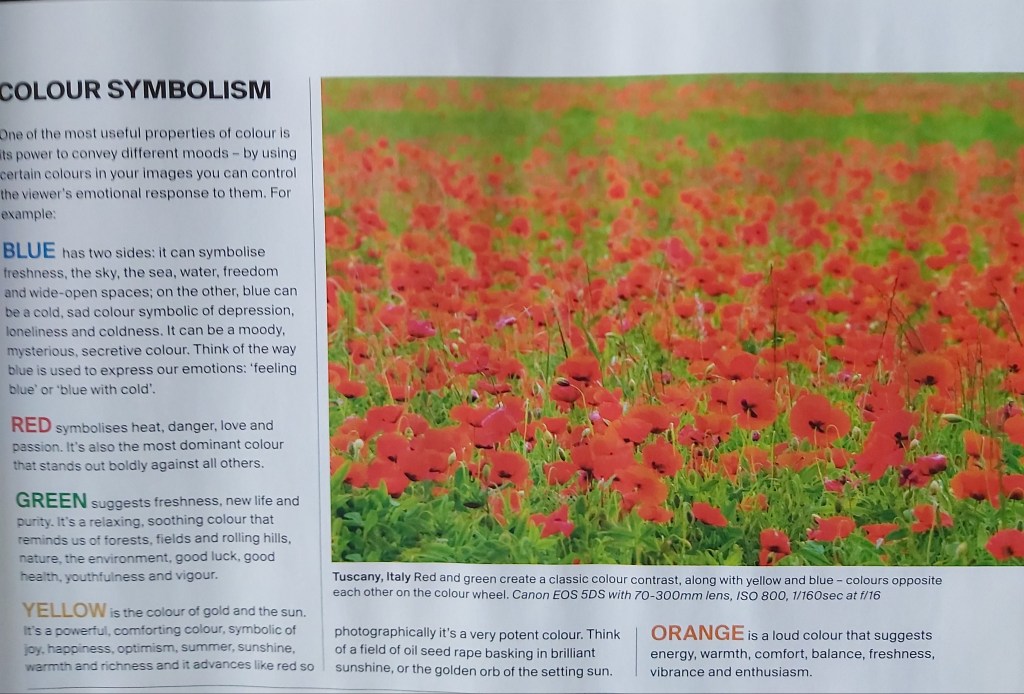
When we think of certain objects we immediately associate a colour with them. Sky – blue, danger – red, snow – white, the sun – yellow, night – black, grass – green. No matter where you go in the world or the age of a person you talk to, the colours linked to these items are universally the same. Ok, if you never seen grass or snow you might not associate those colours with them, so maybe not universally the same.
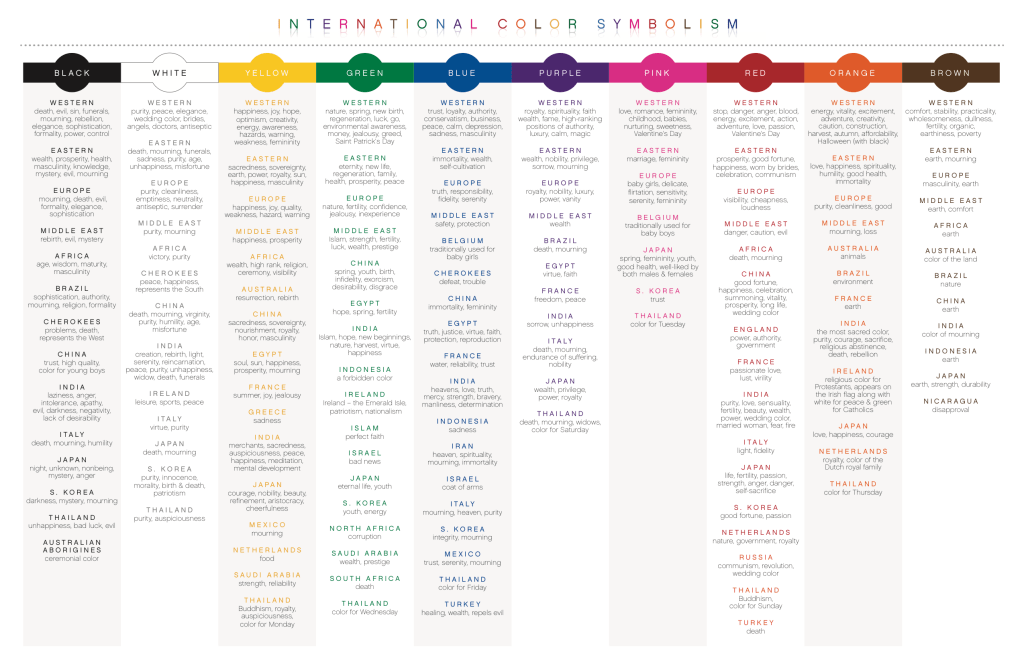
When it comes to concepts, however, the colour associated with some topics is different depending on culture. For instance in the Western world the colour black is associated with mourning, however, in Eastern countries it is white, in other areas around the world it is red, purple, blue yellow or even brown.
Josef Albers book the Interaction of Color, Albers, J. (2013), is based on the course on colour that he taught at Black Mountain College. The book teaches how to look at colour and how, by combining colours is it possible to see different things. The book is made up of a number of chapters which explore colour in different ways. Each chapter suggests exercises that the reader can perform, with colour plates at the end of the book so that you can see, without the need to re-create the exercises, what Albers describes.
At the point that I’m writing this I’ve reached chapter 16, and admit that, despite it being a bit heavy going, the colour plates make it worth the effort when you can actually see the effects that Albers describes.
In her book Color: a course in mastering the art of mixing colors, Edwards, B (2004, Dr. Edwards is aiming to teach painting students how to harmonize the colour they use to best effect. The book describes what Dr Edwards is aiming for the reader to learn, before providing a series of exercises before reinforcing this through practical experience.
For photographers the ideas are useful knowledge, particularly when discussing the impact that colour can have on the psyche. The main part of the book that I found useful was where Dr Edwards describes how colours mean different things to different people and different cultures.
Where the ideas in Dr Edwards book, and charts like An International Guide to the Use of Color in Marketing and Advertising, above, come in useful for me in the short term is in the rework for assignment 4.
Looking at the colour symbolism chart above, it is possible to see which colours different cultures associate with death and mourning. In assignment 4 I made use of different colours to illuminate the mask of my son’s face. When reworking the assignment I plan to use colours associated with death and mourning to illuminate the mask and then to overlay this on images and symbols that are linked to the particular culture.
For instance green is associated with death in South Africa, therefore the mask would be illuminate with green light and then this image overlaid on symbols that are linked to South Africa, for example images of Nelson Mandela, apartheid, and more recent post-apartheid images. In China, white is associated with death and so the mask would be illuminated with a white light, and then overlaid on symbols that were linked to China.
References
- Albers, J. (2013) Interaction of color. (50th anniversary edition ; 4th edition) New Haven [Connecticut]: Yale University Press.
- Edwards, B. (2004) Color: a course in mastering the art of mixing colors. New York: Jeremy P. Tarcher/Penguin.
 Jenna Powell - Expressing Your Vision